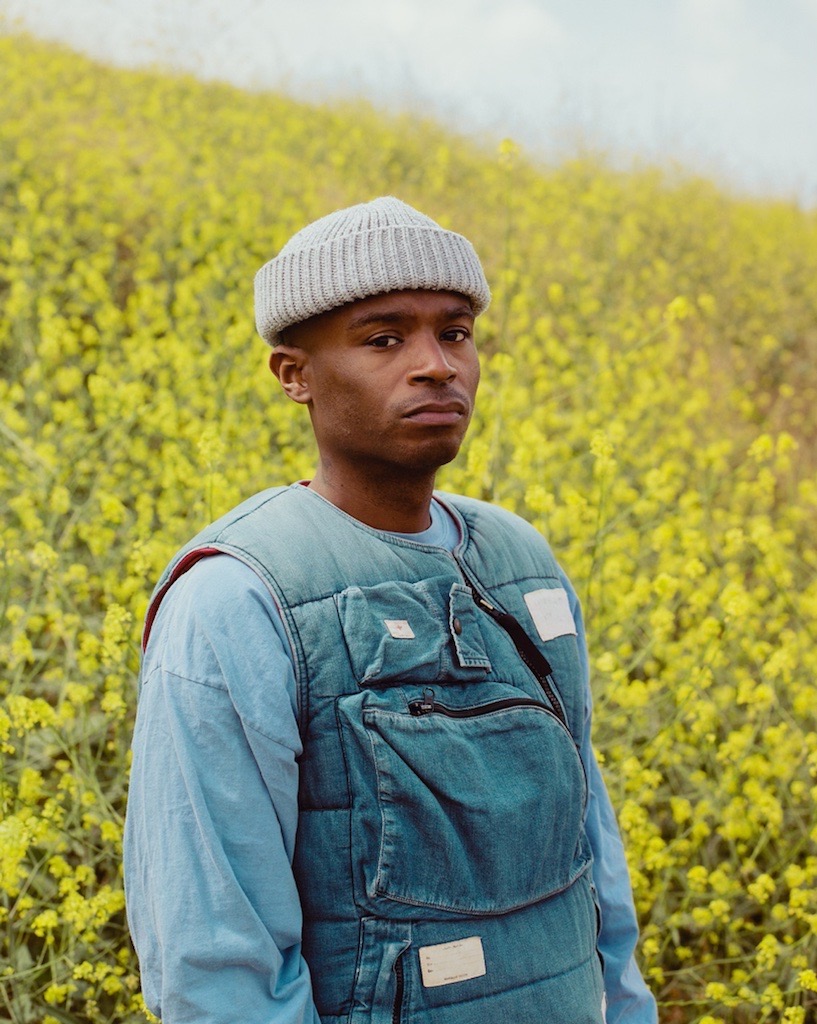

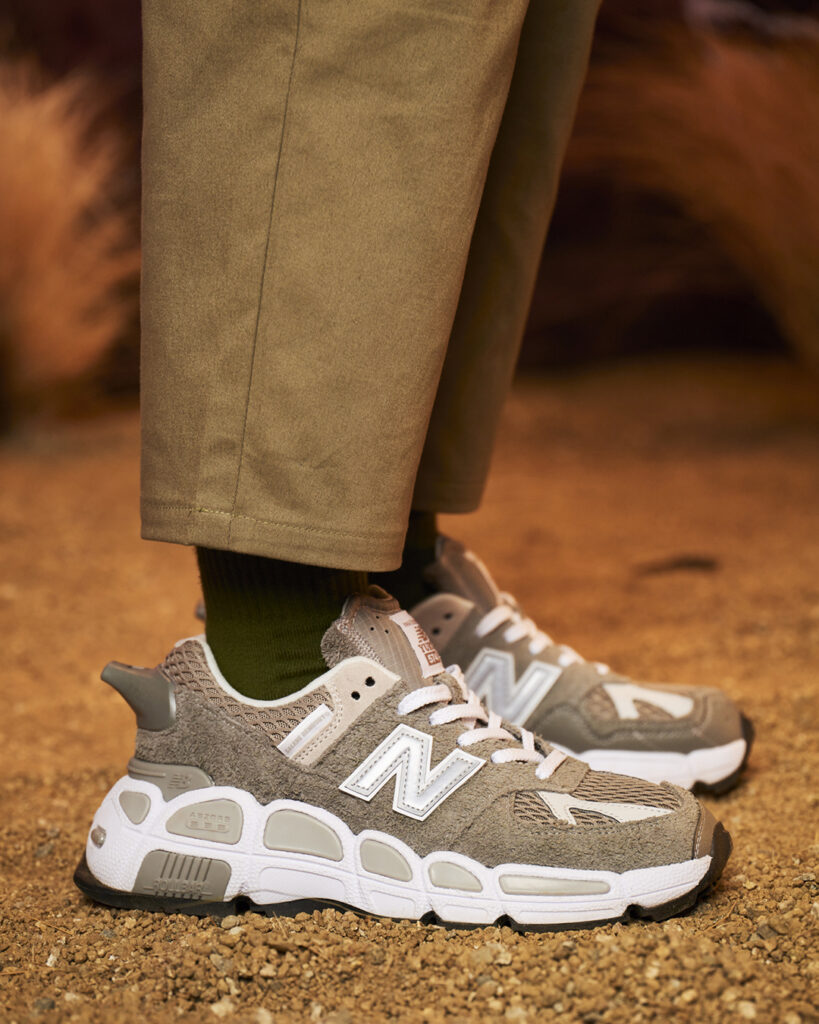
Not many people can get the sneaker world talking in 2021 like Salehe Bembury. Whether it’s his oh-so-fuzzy, outlandish and earthy New Balance 2002Rs, the Crocs with his fingerprint on them that made the once-maligned brand feel like high fashion, or his latest—a 574 called “Yurt” that feels like a totally new silhouette altogether, including the first whistle ever included on a piece of footwear—no one has turned heads away from the swoosh and three stripes like Bembury, cementing his personal brand and opening many up to a whole new world of both shoes and real-life experience.
If you don’t follow him on social media, fix that immediately. It’s not just an opportunity to get a better look at his designs, it’s a window into the lifestyle that inspires them. Salehe regularly brings his non-nature inclined friends out to explore the wild west, a passion he found once he left the Yeezy offices behind a few years back and started living for himself, a passion that he’s now trying to pass on not just to the people he knows, but to every person whose eye is caught by the shoes he’s designing—or ear happens to pick up a whistle in the distance.
And the man can’t stop making moves. Beyond his partnership with New Balance and now Crocs, LeBron James and Maverick Carter just named him the Creative Director of their brand Uninterrupted. With New Balance, he just launched his first full line of merch to go along with his Yurt 574, with more to come in the coming months.
If you have felt fatigued by the Fashion House designers who are leeching off of 80s sneaker designs or celebrities half-heartedly throwing a tiny stamp on a shoe and calling it their own, Salehe is the man who’s going to make you excited about sneakers again—or maybe bring you in for the first time.
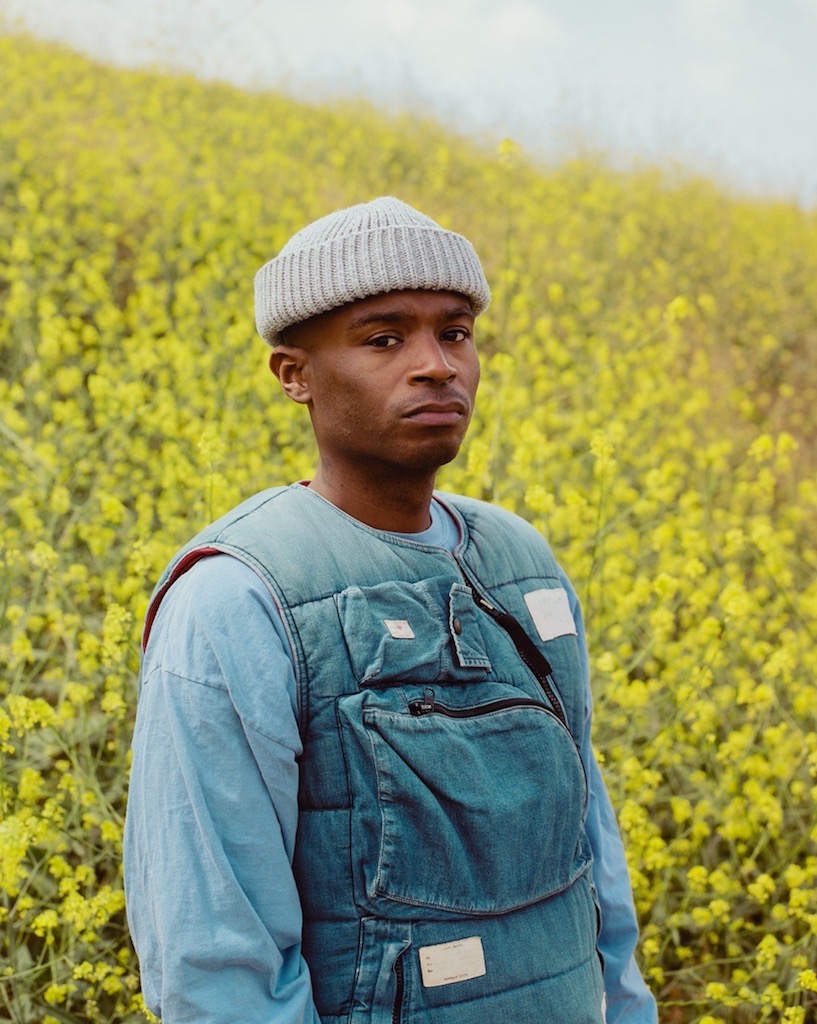
To put it simply, the man has put in the work to find balance in all things–business and party, work and life, artificial and organic.
Ahead of the release of the Yurt, we caught up with the designer from his home in Los Angeles about the inspiration behind the shoe, the origin of the whistle, and got personal about his own origins and aspirations.
If you’re in Dubai, head to the New Balance store at The Dubai Mall on Wednesday, 7:00 to 9:30 pm for the Yurt’s debut to pick up a pair of your own.
And in the meantime, read the full conversation here:
How different was the evolution of the Yurt from the Peace be the Journey and Water be the Guide 2002Rs? At what point did you get the idea for this?
The silhouette of focus for New Balance, for this period of time, is the 574. They use collaboration as a way to inject energy, momentum and excitement into those silhouettes, right? So the 574 was the silhouette that was given to me, and it was actually designed simultaneously with my first New Balance project, the Peace Be the Journey 2002R. So I’ve actually been staring at it for a while.
I’m really excited to finally see it on the shelf, if you will. The idea was basically to juxtapose the heritage of the 574 with the lifestyle of my brand, the identity of my brand and then the way that I prioritize function, and let function lead design. That’s what created the Yurt.
It does feel like you’ve made a shoe for your own hiking adventures, a shoe for function first and foremost.
When the iPhone was created, we already had a camera, we already had a calculator, we already had the notepad, if you will. The iPhone, put it all into one thing. I think it’s really cool to combine elements that are necessary for the outdoors into a singular product.
What’s the origin of the whistle?
There’s this shoe called the Nike Vomero. My buddy Samuel did a collab with his brand, A-COLD-WALL. I have two pairs sitting behind me, and I wear them often, I always get asked, ‘what is that? what’s that thing on the back?’ And I’m always like ‘nothing’. People always sound disappointed. That taught me that it was usable real estate. I was like, what if I did do something there?
Then it was following the fantasy, maybe it has lights or it tracks your running, and has a bunch of actual tech in it. But then that means your shoe is going to cost $1,000. So I thought to myself, how could I alter the plastic so that it does something without actually injecting true technology? And in comes a whistle.
The first time I actually brought it up was my first New Balance meeting. I glued a whistle into—I believe it was actually a 574, coincidentally. I told this whole story of hiking and losing your friends and it being almost dark. And then I raised the New Balance to my face and blew it, and everyone’s face in the room dropped.
I’m so sad we didn’t record that moment because everyone’s brain just started churning. I have definitely become attracted to introducing things in the footwear space. To the best of my knowledge, there has never been a whistle in a pair of shoes. I enjoy those moments of surprising the consumer.
Tell me more about the functionality—what else did you imbue in it to make it more functional?
I wouldn’t want to devalue the shoe by calling it a Mr. Potato Head, but the outsole is actually inspired by New Balance 755, which is actually not even a Google-able New Balance. I don’t know if that speaks to its rarity, or maybe it was created in such scarcity. It had a really organic, articulated outsole. I was really inspired by that, given my track record of organic, articulated outsoles, I wanted to honor the heritage of the brand, but then also put it through my lens. When you see that shoe, it’ll bring it together and make a little bit more sense.
In terms of diving into the New Balance catalogue, did that start once you were given the keys to the Chocolate Factory, so to speak, or is this something you did primarily on your own?
I think it’s both. I got to go to the office and see the archives and see what they’re working on and have worked on. And then additionally, I’m just a lifelong sneaker enthusiast I have a lot of knowledge myself. Google Images is every designer’s mood board. I definitely did a lot of Google Image researching for my personal knowledge, I have some vintage enthusiast friends. Sean Wotherspoon gave me a little education.
The thing about New Balance is that it requires a bit more effort and community to get into the history, whereas a brand like Nike is obsessively catalogued. As a sneakerhead, getting into New Balance is more difficult, but ultimately more rewarding, as a result.
Absolutely, and there’s definitely a heritage consumer that has a high taste level and as a brand they have a very specific design ethos. When it comes to introducing new product you have to make sure that you both respect the design lines and history of their product but then also balance that with some of your thoughts, your personal sauce.
Let’s talk about your personal sauce. What are the personal emotions you wanted to convey with these?
Any time I’ve discussed emotion in the past when it came to shoes, it was this intangible thing where you feel a certain way, you feel like Kawhi Leonard. With the Yurts, it’s actually a tangible function. It’s beyond intangible emotion, you’re actually going to be found, or you’re going to alert someone, or maybe you’ll like, be able to communicate with a bird. It actually gives you a function that otherwise was not there. I think that’s the opportunity.
But also, when people take out of the box, they’re going to be blowing it a bunch and whistling and recording themselves whistling it, but then I think it’ll stop and they’ll just wear the shoe. But it’s always nice to know that that’s there. Maybe friends will ask them to take it off and say like, oh, does it really work? Blah, blah, blah. But I think it’s more. The fact that it can be used for its intended purpose is really special. Five years down the road, 10 years down the road, the shoe may look horrible. But the whistle will still function exactly the same.
Yeah, it may turn 127 Hours in to Two Hours.
Exactly.
Have those conversations evolved in a time that you worked with New Balance since that initial meeting? How is the relationship different now?
I don’t know if they’ve evolved necessarily, because they gave me a decent amount of freedom when I entered the brand. They came to me perhaps from my accomplishments at Versace, I believe. So it was more about like, what do you want to do? I think it’s best to let creatives live in that space. So when I say I don’t believe they’ve evolved, that’s because we’ve we like started from a place of understanding and freedom and openness and color.
I would say now there’s more trust. I was joking with Joe, who’s the head of collaborations at New Balance, and saying that, I was both honored and surprised that they sent me the budget for my campaign, and then I didn’t hear from them. And I say that respectfully, because they trust my process, and they trust what I’ve executed in the past. For the first campaign, there was approvals and pictures, sendings of different things. And now they just let me go. And there’s proof of concept in that. It’s a special relationship.
How far down the line have you planned from here to continue that relationship?
I think I think the special opportunity is that I have an audience that is not only responding to the product, but they’re responding to the lifestyle. And more specifically, the outdoors lifestyle, hiking, camping.
That’s a specific opportunity, because normally people buy product just for how it looks or how it intangibly makes them feel. But people buy my product and they go and do things they go and hike and they go and camp and take pictures of the shoes in those environments, and you can almost even tell that they’re not familiar. Some are experienced hikers or campers, but a lot of the time it looks like they’re trying it for the first time because they have that product, it’s almost encouraging them to try something new. And I think that’s really special.
In regards to the conversations with New Balance, I think it’s going to be about leveraging that community, and really exploring what the outdoors can be. There’s not a lot of people of colour representation in the outdoors. There’s not a lot of female representation in the outdoors. I believe these to be all opportunities to explore.
How do you feel you’ve changed as a designer?
I wouldn’t say that I have changed. I think confidence has increased and that’s just from seeing projects come to fruition and seeing the reaction from the consumer and then that’s giving me more confidence to live my truth. The product offering experience has traditionally been an insecure one for me. I’m like, here it is!
Now, the things that I’m making I have extreme confidence in and I almost know what they’re going to be and that’s a really empowering feeling because it used to be scary introducing product to the world after living on your computer for six months and then you finally give it to the world. It was terrifying. It’s like giving birth. Now, when I create a product, I feel its potential and that’s both special and scary. I feel like I have power.
You’re also very careful about who you surround yourself with.
It’s interesting that you notice that.
How conscious is that for you?
I think you are who you surround yourself with. I am really attracted to learning and being inspired by the people that I surround myself with. And I’m lucky enough to have some extremely talented friends. I hike a lot with my friends and the conversations that we have on those hikes are so valuable.It really should be a podcast, because of the amount of gems that are being are being shared back and forth, and the amount of education that’s happening, is really special.
I try to make sure that the people I surround myself with are stimulating me on some level, whether it’s that they’re making me laugh, or they’re teaching me or they’re giving me perspective, or they’ve just walked a different life that I haven’t walked. In the end, there’s insight there. It could be selfish, or I’m just like trying to take from everyone around me. My brand is called Sponge, I think it’s important to absorb all around you. And I do that all the time.
What are the most significant things you’ve sponged up, so to speak?
I would say the most significant thing is really just seeing these projects play out, seeing the reaction to the chain reaction. I didn’t do that intentionally in the high fashion space. The high fashion space doesn’t really respond to sneakers period. So to see them respond to sneakers, especially when there aren’t too many black designers in high fashion. To be able to sell in that world.
Seeing the reaction of the consumer, and the lines and seeing the digital and social media chatter has shown me the potential of the product that I am creating currently and can create in the future.
There’s a lot of complaints in the current sneaker culture and streetwear world, and the way that brands are interacting with some designers, and the way that intentional scarcity goes overboard.
You are an example of someone doing it the right way, showing that sneaker culture is still thriving, and will continue to thrive into the future. New Balance as a brand straddle that line well too. What are your thoughts personally on today’s sneaker culture?
I mean, it’s weird because the world has evolved a lot and changed a lot. Strangely, I don’t consider myself to be a consumer in the space so much anymore. I buy shoes here and there, but a lot of the time they’re sent to me. My consumer experience was not when people talk about bots and Ls and all that stuff. My consumer experience was camping out and people physically showing up at 9am when the store opened and someone cutting in line would potentially rob you of getting the shoes you were supposed to get. It’s a different beast now.
I think I think it’s important for brands to maintain a balance between dancing with scarcity and marketing, to be sure they’re also supplying consumers with a product that they want.
New Balance, for example, recently put out preorders for the 650, the 550 high, through Aime Leon Dore. I was actually surprised to hear as a consumer, because I’m not sure if I would pay for something and then be willing to wait three or four months. But there’s a large consumer that is, and I think that’s really special, because now they’re able to make enough shoes for everyone.
At the same time, t’s the whole conversation of supply and demand. There to be a product that not everyone can get. I think that’s just necessary. But then at the same time, you have to maintain the balance. I’m on both sides of the fence. I get people’s frustration, especially in cases of winning impedes on safety and things like that. But I think there’s a balance that needs to be maintained too.
Honestly, it’s fun when things are limited. It’s fun to have something your friend doesn’t, or to be able to chase after something that your friend does but you couldn’t get.
I’m not going to say brands, but it’s the reason I don’t wear certain silhouettes that I wore all the time as a kid. They’re now very accessible. I don’t want to wear what every single other person on the street is wearing. So that’s another perspective, right? There are people that want to be individuals, and they would don’t want to, they want to search for what other people can’t find. That goes back to the balance. There’s a consumer that just wants to be able to get it. And there’s a consumer that specifically will not wear it if everyone else can happen. And you have to you have to cater to both.
What are your conversations like with other designers? Do you find there are a lot of kindred spirits out there?
I keep a small circle of designers I like to exchange ideas with. the top three one of the more fine artists but Thibo Denis from Dior, Daniel Bailey of ConceptKicks, and then Joshua Vides the painter.
I think it’s important to just constantly have people that you can share ideas with, potentially discuss contracts, have peers that are dealing with the same issues that you are to give you perspective and let you see it in a completely different light. My buddy Adam Lefkoe, he’s an anchor on NBA on TNT. And he’s not in the world at all. But sometimes I’ll show things to him or mentioned things to him.
And then his feedback will be completely out of the realm of anything I ever would have thought about because he’s not in the design world. He’s not in the fashion space at all. He’ll just say something and I’m like, holy sh**. I would have never thought of that. I think that it’s important, but as a sponge, going back to that, I try to absorb as much as I can.
At what point did having a brand to yourself become something you knew you had to build, rather than gaining a top job at a fashion house, for example?
I think it’s more about having witnessed opportunity. I had some people that in my life that told me to. My old manager told me to become independent earlier than I then I decided to, but I had to see it happen. I had to see the consumer react, I had to see the product introduced, I had to see the comments, I had to see the likes, I had to have the proof. Now that I’ve seen that opportunity, I have to capitalize on it. I’m a New Yorker.
Who do you see as your ideal consumer?
One of my peer designers often talks about the purists versus the tourists. I think that’s a pretty fascinating juxtaposition of consumer because a lot of the people that I think are buying my product in regards to the outdoors are not the purists. They’re the tourists. The purists would be someone that’s wearing Northface or Patagonia. They’re going to the top of Everest. The tourist is someone that maybe went camping with their family when they were young now they have a girlfriend and they want to go camping or they got a group of friends that want to go camping, and they never really have, but they like to dress well.
They don’t want to just get some grey fleece from one of the big brands. I think there’s an opportunity to really cater to that consumer. If it’s the tourist, it’s the person that really doesn’t have an experience with thing, but wants to try it. And I would argue that that’s what Sponge can satisfy. That’s why some of this collaborative product has been satisfying as well.
Opening the outdoors to a broader spectrum of people—I don’t like to call things ‘important’, but this honestly is.
Yeah, no, it is, it is. And it’s interesting because I’ve even hiked with LA people, people that have lived here for 30 years, and they’re like, ‘Oh my god, I didn’t know here’. And I’m like, what do you mean? You’ve lived here for three decades and you’re an adult? How did you not?
I think a lot of the time it’s just the hardest part about going to the gym is getting out of bed, right? I think when it comes to the outdoors, it almost needs to put a hand out and welcome you. And it doesn’t need to be literally, it can be done with product.
You realize this literally makes you a ‘trailblazer’.
Well, strangely I didn’t begin it with that intention. It was just more like, what I did with my life and most of us are, we put it on social media right? My audience just started to react to that and then it just seemed like a very appropriate authentic brand identity. But at the core, I’m a New Yorker that grew up taking the train so it’s definitely been an interesting evolution of a brand, for sure.
In the packaging for your New Balance collabs, you highlight specific places. Is that about capturing specific memories, or specific energies?
Iniitally, Peace be the Journey was Antelope Canyon. That was from a trip I went there, I was inspired by the environment, inspired by the color palette. Even the sky influenced the logo. With Water be the Guide, that was a trip to Havasu Falls, and then for the Yurt packaging, that was more like a combination of a bunch of trips. The top of the box is the Sequoia forests. And in the sides are other just different crops of old photos. My dad is a photographer, so I document a lot of trips.
I just love all those old photos. What did you shoot with?
I’m an iPhone photographer. I’m just like, popping off. My dad has been a photographer for 40 years, and he’s been everywhere from film to digital to darkroom in our home. And things I don’t even know about probably, he’s still shooting.
How much has your dad been an influence on your design?
I would say the biggest influence that my dad had on me professionally was he owns his own business. We lived in an open space, so the walls only went up halfway, but the ceilings are really high. It was a lot of open sound. I would constantly hear him cold calling clients. Just doing business. Back then, you’d hear it in voicemails, you’d hear business. And that was when I was a kid. I hadn’t even fully clocked into what was being said, but I got it on a subconscious level. I learned to grind and to just get after it. That’s been pretty consistent in my career. And I mean, I literally asked for my Versace job, you know. I think really having no shame and just really attacking your goal, I definitely got that from my dad, for sure.
When did your fingerprint become an important part of your design?
I’ve always loved woodgrain. More recently, 10 years at this point, I used to carry a full wooden briefcase. The fingerprint is almost the exact same line work, you almost can’t tell the difference between that and a fingerprint. I really put a lot of thought into what my brand identity could be, and I wanted it to be recognizable, and I wanted it to be authentic to me and in my brand. It’s not just about literal fingerprints, it’s about the connection to woodgrain and nature and organic forms. Visual identity is really important. And whether it’s the red bottom of a shoe, you know exactly what that means as soon as you see it. I just wanted to own something.
What has been your favorite personal connection that you’ve made based on these new balance shoes, being able to know you send your shoes to people? And which of those connections came from people reaching out to you, which are the ones that you created for yourself using the shoes?
Shoes are absolutely a nice gateway. At the same time, one thing that’s interesting is I remember when I first moved to LA and I had some opportunities to hang out with certain people and it felt like it was from a perspective of afan and then now it feels like peers. I think that’s an interesting evolution.
When did you first start designing sneakers on paper?
I mean, I just would always draw sneakers but I don’t think I was necessarily designing. I was just drawing the sneakers that basketball players were wearing.
You wouldn’t add any personal flair?
No, back then it was more about trying to draw what I saw because I grew up being an artist, so it was more about like trying to achieve the angle of that outsole and really making it look like what I saw. I wanted to learn the silhouette, figuring out the pieces, put this thing together that you love. In retrospect, yeah, I guess I was like exploring design but back then it was just like I want to draw it because I loved it.
What have been the best, new experiences that you’ve had or new things you’ve discovered new hobbies you picked up within this last year?
I would say pottery is something that I’ve always done on and off, but I was really inspired by Seth Rogen. His journey of like, making a really sh** bowl and now he’s like a master potter is so f***ing cool. They’re insane. I have one in my office. I got to do it with him maybe like two months ago, and he gave me like a couple pieces. And he’s just insane.
And I just love that journey. Like, it’s the 10,000 hour rule. If you devote 10,000 hours to anything you can master and I love the fact that it’s actually documented, because he was horrible. And now he is amazing. I guess I won’t say I’m on that journey, because I’m too busy to be on this specific journey, but I want to make some cool pottery as well.
If you can bring back any archival shoe, what would you bring back?
The West NYC 580.
Great shoe.