
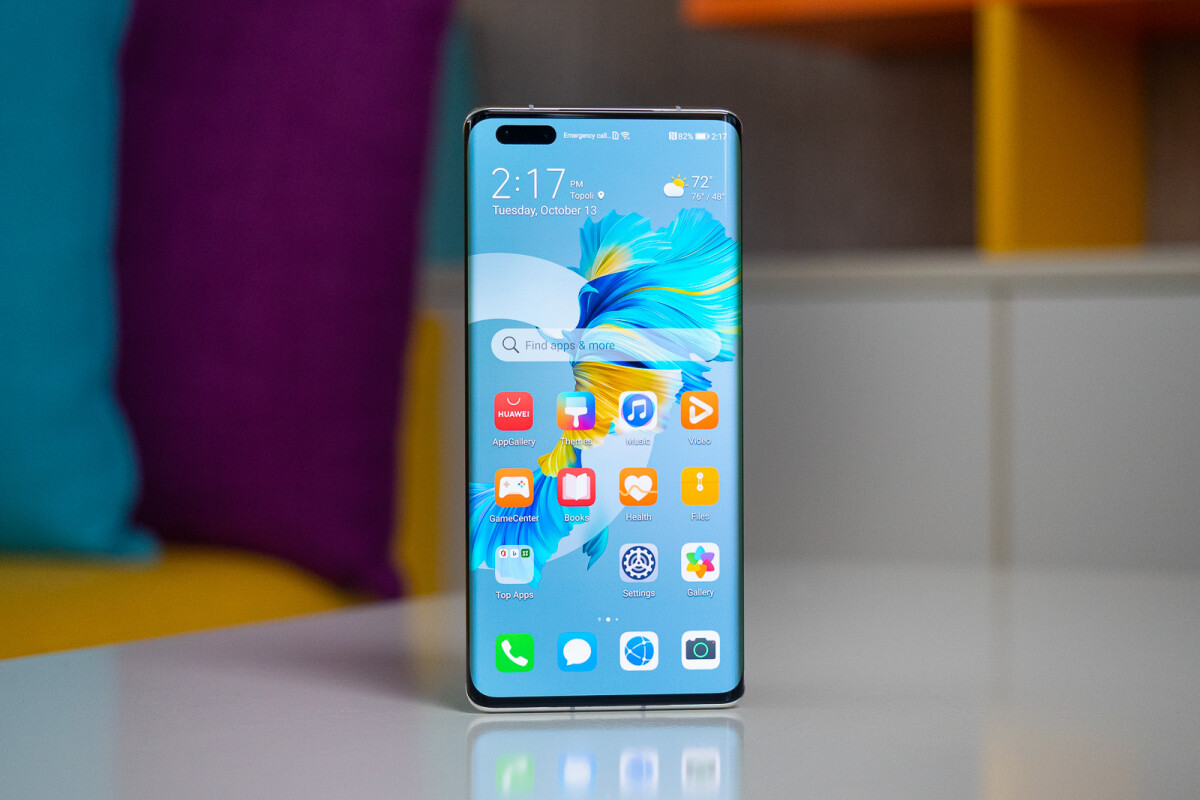
It’s fair to say that most phones these days look very similar. Stick some glass on the front, give it a metal frame and then bolt the cameras to the back. Job done.
But Huawei has decided to go down another design route with its new flagship phones, the Mate40 and Mate40 Pro, as it has ditched the now familiar camera bump for a new ‘space ring’ camera setup.
Elsewhere, the new phone packs a bucket-load of ultra-premium features, including 3D face recognition, and under-display fingerprint reader, a whopping 6.76 inch 90 hertz OLED display, as well as Huawei’s speedy 5G Kirin 9000 processor.
Naturally, it’s the cameras here that are the real star – and most of that is down to the space ring. The camera sensors were created in partnership with Leica, as proven by the huge logo right in the middle of that ring.
You get a total of three cameras here, a 50-megapixel main camera, a 20-megapixel Cinecam and a 3 times telephoto camera on the regular Mate 40, and a 5 times telephoto lens on the Pro model. That extra sensor is a dedicated autofocus sensor, of lightning fast lock-on.
All in all, it is a hugely impressive camera setup – and it comes with a bucket load of other abilities such as steady shot image stabilization, tracking autofocus and a three thousand eight hundred slow-mo mode.
Huawei says that the Mate 40 can now use its front-facing sensor with gesture support, so you can flip up and down navigation menus by waving your hands in the air. We are not 100 per cent sure why this was so highly-touted by Huawei, because quite frankly it seems almost the same amount of work as physically touching the device, but I guess it would be useful if you were cooking or something?
From a performance perspective, this thing is blazing fast. You really aren’t going to be able to slow this thing down, and that goes for heavy muitlitasking like swiping through games, movies, web browsing and more.
Unfortunately, Huawei still is not able to integrate Google Mobile Services or the Play Store into its devices anymore. Huawei has made a inroads into this, however, with new first-party apps that will replace Google’s own versions.
The biggest of that is probably Petal Search, which lets you look up public APK files from your favourite apps – such as Facebook and WhatsApp – and install them, despite no Google support. It is a clever around that isn’t a total fix, but does make Huawei devices that much more attractive to regular Android users.
It continues to be tough to review Huawei devices, especially with them lacking Google support. From a hardware perspective, this thing absolutely rocks. It has stellar cameras and is hugely powerful, and is certainly a 2020 flagship phone to beat.
But without native Google Support it makes it hard to 100 per cent recommend. Fortunately, Huawei is making inroads in its own app store and that petal search, which makes getting your favourite apps very easy – where it used to be impossible.
And for that reason – along with the incredible camera – makes this a proper smartphone contender.

Esquire now has a newsletter – sign up to get it sent straight to your inbox.
Want up-to-the-minute entertainment news and features? Just hit ‘Like’ on our Esquire Facebook page and ‘Follow’ on our @esquiremiddleeast Instagram and Twitter account.


_1.jpg)
.jpg)