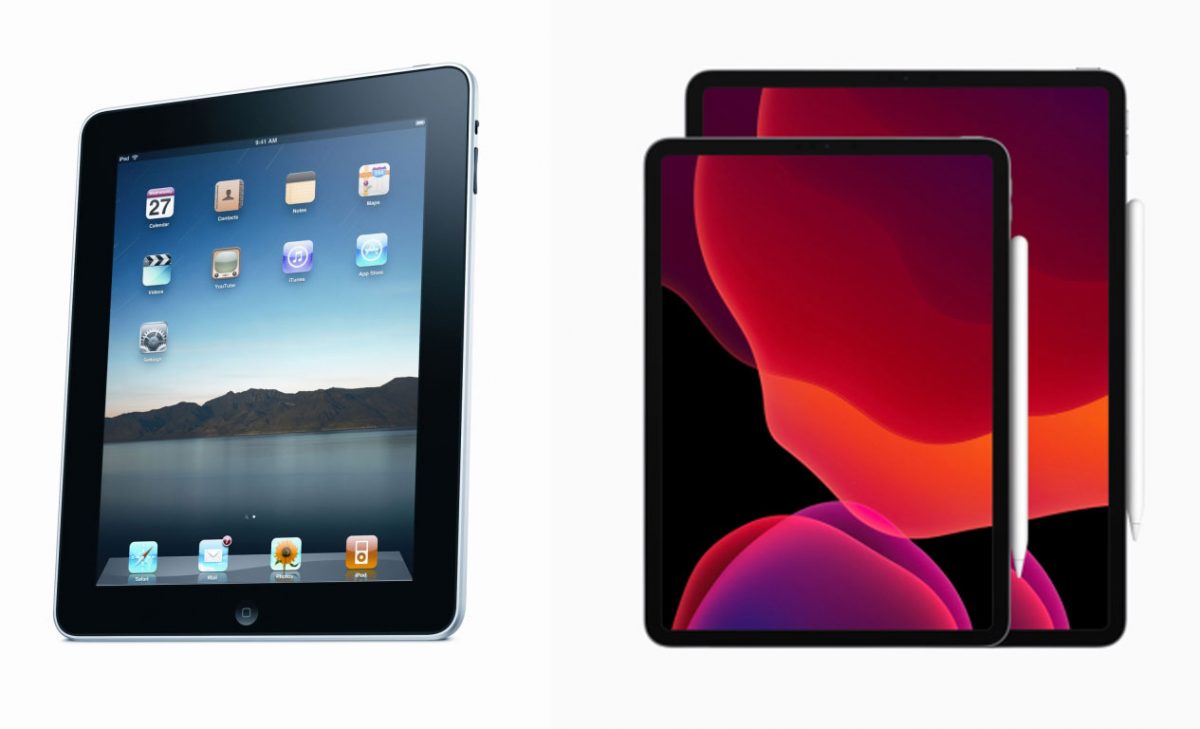
Ten years ago, Apple announced the very first iPad.
But at the time, the launch was marred with confusion and lots of jokes about the name. The world didn’t know what the gadget was for, and many thought it was Apple’s attempt to replace desktop computers and phones in one fell swoop.
The world was wrong.
A decade later – and with almost 20 iPad models under its belt – Apple’s impact on the tech industry has never been stronger, and neither has the iPad.
Now it’s clear that Apple was attempting to create an entirely new genre of gadget. After the laughing settled, other technology firms slowly got into the tablet game. Today, the world is awash with copycat tablets – from some of the largest companies in the world right down to fledgeling firms.
The first generation

Steve Jobs unveiled the first iPad in January 2010. It was released a few months later in April. Two years later, it produced the iPad Mini: “a completely new iPad design that is 23 per cent thinner and 53 per cent lighter than the third-generation iPad” Said Jobs.
That same year in 2013 the company unveiled the iPad Air, a much smaller version that weight a single pound. Each version has been updated since then, until 2015 when the latest version of the iPad landed on shelves: the iPad Pro.
Enter the professional

The 12.9-inch iPad Pro was announced alongside Apple’s Smart Keyboard and Pencil. The model was the first to take on PCs, packing both performance and the means to produce proper content.
This marked Apple’s first tablet push into the proper desktop market, and just last year, the company unveiled a dedicated operating system: TabletOS.
TabletOS added functionality that PC users had become accustomed to, including multitasking and a proper file browser. New features include the ability to use a mouse with the iPad (kind of) as well as home screen widgets and shortcuts.
The iPad’s true purpose revealed

Over the years, the iPad has slowly but surely been learning new skills to better perform certain tasks than laptops and smartphones.
By using a tablet, it is already easier to store, manage and edit photos. Watching videos is super simple, thanks to that bigger screen, and reading and buying books has always been a doddle on an iPad.
Apparently, that was Apple’s plan all along.
To quote Steve Jobs during the official launch of the first iPad, If there’s going to be a third category of device it’s going to have to be better at these kinds of tasks than a laptop or a smartphone, otherwise, it has no reason for being.”
The future of the iPad

Despite the fact that smartphone screens getting bigger while laptops are getting even smaller, the future of Apple’s tablet category remains strong.
While little is known about Apple’s future plans for any devices, it’s expected that a new breed of iPads is on the way. They will sport better cameras, a faster processor and 5G capabilities (eventually).
And if Apple’s product launch calendar is the same this year as it has been in the past, we won’t have to wait very long for new iPads – the company usually reveals its latest models each March.
.jpg)

.jpg)