
Chances are, sometime in the last few weeks your YouTube videos have been full of un-skippable ads of vast unexplored seas reminiscent of the Great Barrier Reef, rolling green hills that look like Bali, arid desert expanses similar to Arizona, and all asking the question “Where in the world” is this?
The punchline of the advertisement is that it’s actually Saudi Arabia.
The Kingdom has long inspired fear and not wanderlust among travellers. Known for its anti-women’s rights regime, super-conservative laws, and all-around bad press for the last few years, the fact is that Saudi Arabia hasn’t been high on the list of places to visit for a lot of people.
Historically, travel to the Kingdom was reserved for religious tourism. But now that’s all about the change.
In the span of a year, women have been allowed to drive and get licenses, travel unaccompanied without a male guardian and cinemas have launched to huge fanfare for the first time within the country.

But the crowning glory and a definite good PR win was two weeks ago on September 27, when Saudi Arabia, through the help of social media influencers on a holiday within the country, revealed that it’s e-visa system was now open for citizens of about 49 countries. The e-visas and visa on arrival are both prices at SAR 440 (AED 430.8) plus VAT. A fee of SAR 100 will be applied for each day that a visitor overstays their visa.
“Opening Saudi Arabia to international tourists is a historic moment for our country. Visitors will be surprised by the treasures we have to share…“
Saudi Arabia’s crown prince, Mohammed bin Salman announced the country’s Vision 2030 project in 2016 to a sceptical global audience and in just three years has managed to launch a tourism strategy that has garnered a lot of eyeballs.
“Opening Saudi Arabia to international tourists is a historic moment for our country,” its tourism chief, Ahmed al-Khateeb, said in a statement.
“Visitors will be surprised … by the treasures we have to share – five Unesco world heritage sites, vibrant local culture and breath-taking natural beauty.”

One of the first travellers to Saudi Arabia, freelance journalist Georgia Tolley had a remarkable adventure and was struck by the warm welcome she received.
“The woman at passport control seemed excited as she told me I was one of the first tourists to come in on the e-visa, a man offered me a bottle of water as I stopped to take a picture in Al Balad, the historic district of Jeddah and everyone I met asked me where I was from,” says Tolley, when asked what it was like to be one of the first to experience Saudi Arabia.
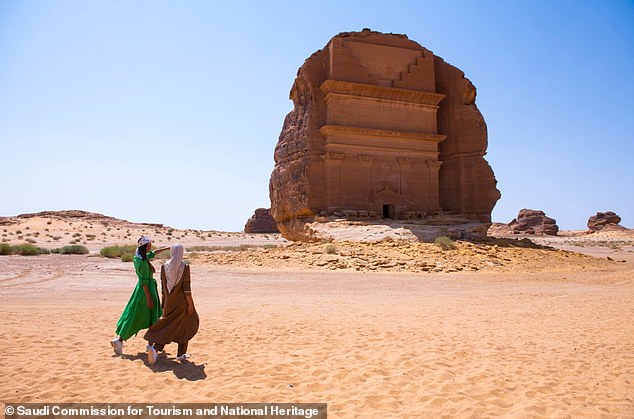
But most of the tourism sites like Al-Ula and Edge of the World were introduced to the world through the lenses of Instagram influencers like Murad and Natalie Osman with their famous #followmeto series.
Some of the sites are still being developed though and there will be staggered launches throughout the next few years while the country completes its famous Red Sea project likened to the Maldives and the futuristic city of NEOM.
But according to Tolley, there’s plenty to see if you’re slightly intrepid.
“You’ll need to wait for winter to go to Al Ula, which is the real stand-out attraction. It’s not open to the public yet, but it’ll launch with a music festival that’s top of my wish list,” she says.
In just the first two weeks about 30,000 tourists have already entered the Kingdom via the new visa scheme.
“I kept my abaya on because I didn’t want to seem culturally insensitive, and it felt quite elegant while I was floating around the historic districts.”
And there have been a lot of changes already. Previously, single men and women have been able to share a room in Saudi Arabia only if there was proof that they were related to each other, as sexual relations outside of marriage have been traditionally banned in the country.
Now, the conservative country has announced that they will allow unmarried foreigners to book and share hotel rooms together when they come to visit the country for tourism reasons.
In a move to change the perception of the country, the Ministry of Tourism has also reassured foreign women that they don’t need to wear abayas while travelling in the country.
“I kept mine on because I didn’t want to seem culturally insensitive, and it felt quite elegant while I was floating around the historic districts,” says Tolley.
“However, it got a bit hot during the day, so maybe on my next trip, I’ll wear it a bit less. The two women I was travelling with didn’t wear theirs, and although they sometimes got a few negative glances, no one said anything” she added.
However, for some travellers, it is still a country of cultural contradictions. Most of the hotels’ pool and spa facilities are for men only but in the beach clubs just outside Jeddah, it’s completely normal for Saudi women wear a bikini, and sunbathe on the beach alongside men.
The e-visas and visa on arrival are both prices at SAR 440 (AED 430.8) plus VAT.
Al-Khateeb has said that the country expects a hundred million visits by 2030 which will make Saudi Arabia one of the top five destinations in the world. That’s almost triple the country’s population of 33 million people.
“There are few places in the world that can offer somewhere that has not been previously seen by tourists and Saudi is definitely one of such unexplored lands. We are proud of the natural beauty of our incredible country, but also very excited to welcome people not just into our home, but into our hearts. Rest assured, you will receive the most incredible hospitality in a land that is renowned for offering the warmest welcome to all its guests.”
Dubai’s ‘build and they will come’ strategy seems to have been picked up by Kingdom and thousands of hotels have already been signed up to be launched in the coming years.
Saudi Arabia received almost 30,000 new tourists in just 10 days
Saudi Arabia will allow unmarried foreigners to share a hotel room
The most beautiful images from Saudi Arabia as it welcomes tourists for the first time
ProTenders’ GCC Hospitality Construction Report 2019 says US$183bn hotel projects are active in the kingdom.
The top hotel operators from Marriott to Hilton and Accor have all got a piece of the pie and are currently building hotels in the country to cater to this growing demand. And the fact is, tourists will go.
Given our globalised 21st century world, where almost every nook and cranny of the globe has been circumnavigated multiple times, there are hardly any few unexplored places left to see.
Even Lonely Planet has dubbed Saudi Arabia the “last frontier” of tourism.
So it should come as no surprise that we’ll all be seeing a lot more about Saudi Arabia in our YouTube videos for years to come.