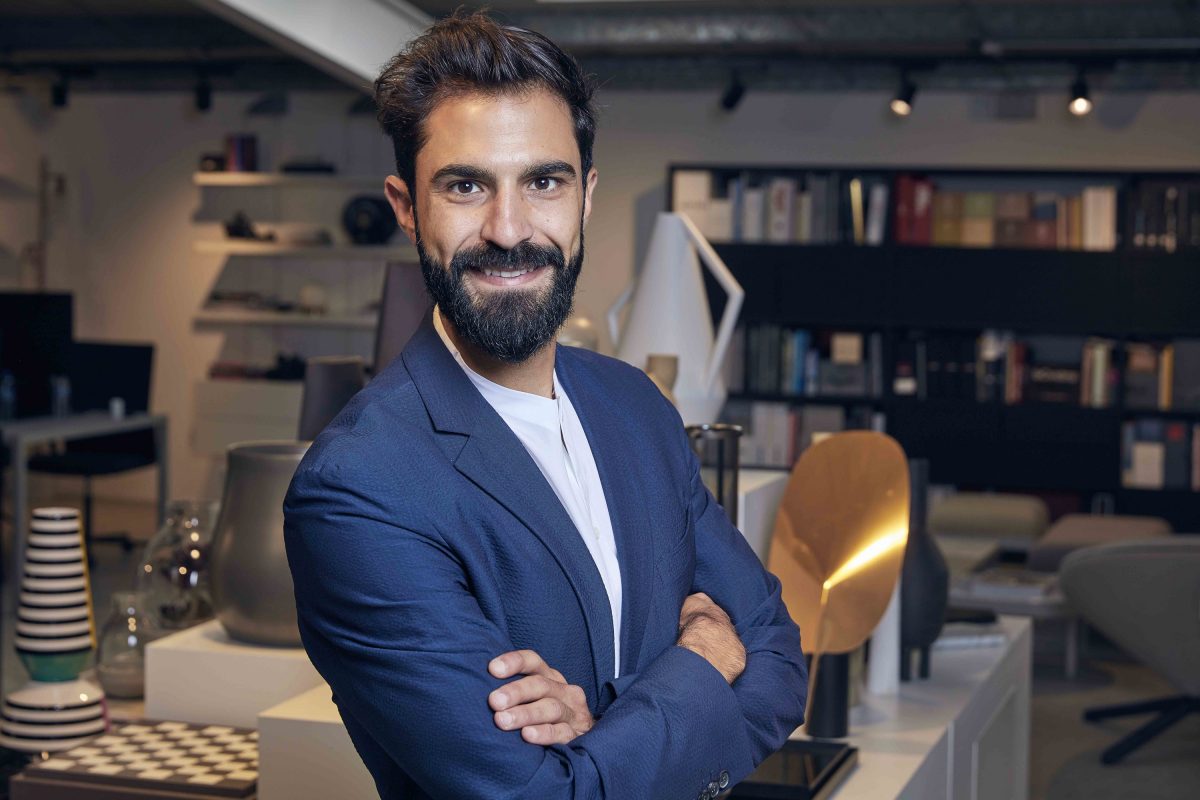

When Ramzi Moujaes and Ali Dib opened Designitch in Al Quoz in 2016, they weren’t sure what to expect. After all, the UAE’s design industry was still relatively nascent, and they were unexperienced newcomers.
In the three years since, Dubai’s design industry is booming and Moujaes believes Designitch has carved out a niche for itself as ‘disrupters’ within it.
Its success is even more impressive when considering that Moujaes fell into the industry.
A Lebanese national who grew up in both Beirut and Montreal, Moujaes was a political science and marketing major with no design degree. These days, however, he’s become a key player in the trade:
Esquire: What made you want to work in design?
Ramzi Moujaes: I’m not a designer nor have I studied design. My father happens to be an architect, so from a very young age I was exposed to the industry and I absolutely love it. Ultimately, the house is where you live; where people spend most of their time and where people’s characters become a physical manifestation of who they are, their habits, their identities and everything in between.
ESQ: Why did you decide to start Designitch?
RM: Myself and my co-founder Ali Dib felt like Dubai had so much soul and appetite for design. But we felt like there lacked a curated one-stop-solution where people could find their personality and identity reflected in the things they bought. We carry such a large portfolio of brands under one roof, and we’re able to really understand the different nuances that each personal identity brings. We tailor offerings to who they are and create spaces that are really resonant with how they like to live.
ESQ: What do you attribute the growing interest of design in Dubai to?
RM: You have to give credit to a lot of very progressive early founders of Dubai. The early seventies and eighties played quite a pivotal role for what we know today as Dubai. A lot of architects back then were quite experimental and the clients were progressive in what they looked for. That allowed for experimentation and for a natural evolution of design to take flight.
ESQ: What sets you apart from a larger-scale. mall-based furniture stores?
RM: We’re quite different from mall retailers and mono-brand furniture showrooms. They tend to have conventional business models whereby they hold exclusivity for certain brands. This exclusivity, tends to be an excuse to add on a hefty mark-up when it comes to the pricing. We don’t. We actually believe that someone should be paying the same amount for the same piece in Dubai as they would in London. There shouldn’t be any surcharge. That’s really where the idea of Designitch began. In today’s market, thanks to the advent of technology and the internet, the power is back with the consumer. Everything is accessible to everyone everywhere.
ESQ: You are a self-styled disruptor in the design industry. How so?
RM: We consider ourselves disruptors for two main reasons: Firstly, sheer diversity of our portfolio. Not being a mono-brand furniture shop, we don’t need to push a brand for the sake of making a profit. Instead we try to really understand who the customer is and what the project identity is, based on that, we tailor an offering accordingly. The second is our pricing. Because we carry more than a hundred brands, we’re able to offer the most competitive prices for this quality of furniture in the region.
ESQ: So in a way you champion transparency?
RM: Exactly, we have all our prices online and we encourage comparison. It’s one of the main reasons why we’ve been able to show steady growth in a market that’s quite tough at the moment. A lot of stores have a “price on request” policy, where instead we encourage people to compare us to other platforms in Europe.
ESQ: What are the big trends for the industry in 2020?
RM: Personalization is a very, very big one. More than ever, people want something tailored to them. Lots of people are very interested in experimenting and developing an interior that is reflective of who they are. They’re not just going with what they’ve seen in the overall design world. Another very interesting trend is an appreciation for heritage design in modern spaces. The blend between antique and modern put together.
ESQ: What are the plans for Designitch for the next decade?
RM: Our plans for the next decade would be to really raise awareness about what we’re doing. Because the reality is that we’re not located in a big mall space with a lot of foot traffic. People find us and they say, “Oh, I should have known about this place. How do I not know about it?” They fall in love with a piece or concept, so we want to make sure the name is as far reaching as possible. Besides that, it’s growing the standards that we’ve set. We’ve been extremely detail oriented about how the sales approach is done here. So maintaining that level of quality and service is something that we’re going to ensure, while obviously driving the name to the wider public.