Ask any hypebeast what the most coveted menswear brand in the Kingdom is and most will answer ‘Galag’. It is a brand with built-in swag, a fervent fan base and just enough mystique around it to drive its desirability. And, ‘drive’ is the correct term to use here, because the Galag story started out on the road. Literally.
Back in 2011, a rogue band of photographers, videographers, filmmakers, and petrolheads came together thanks to a common passion for powerful performance cars and the thrill of the wide-open road. On the weekends, they would meet up, grab coffees and talk cars. They would plan road trips across the Kingdom’s lesser explored areas, plot routes along Italy’s Amalfi coast and Route 66 in the US—some of the most iconic driving roads on the planet—and even enter the world-famous Gumball 3000 car rallies, creating and driving custom-built vehicles from Dublin to Bucharest.
Like any form of burgeoning subculture, they documented their adventures—partly to share their experiences with a wider audience; partly to preserve the memories of their trips and the people that they had met along the way.

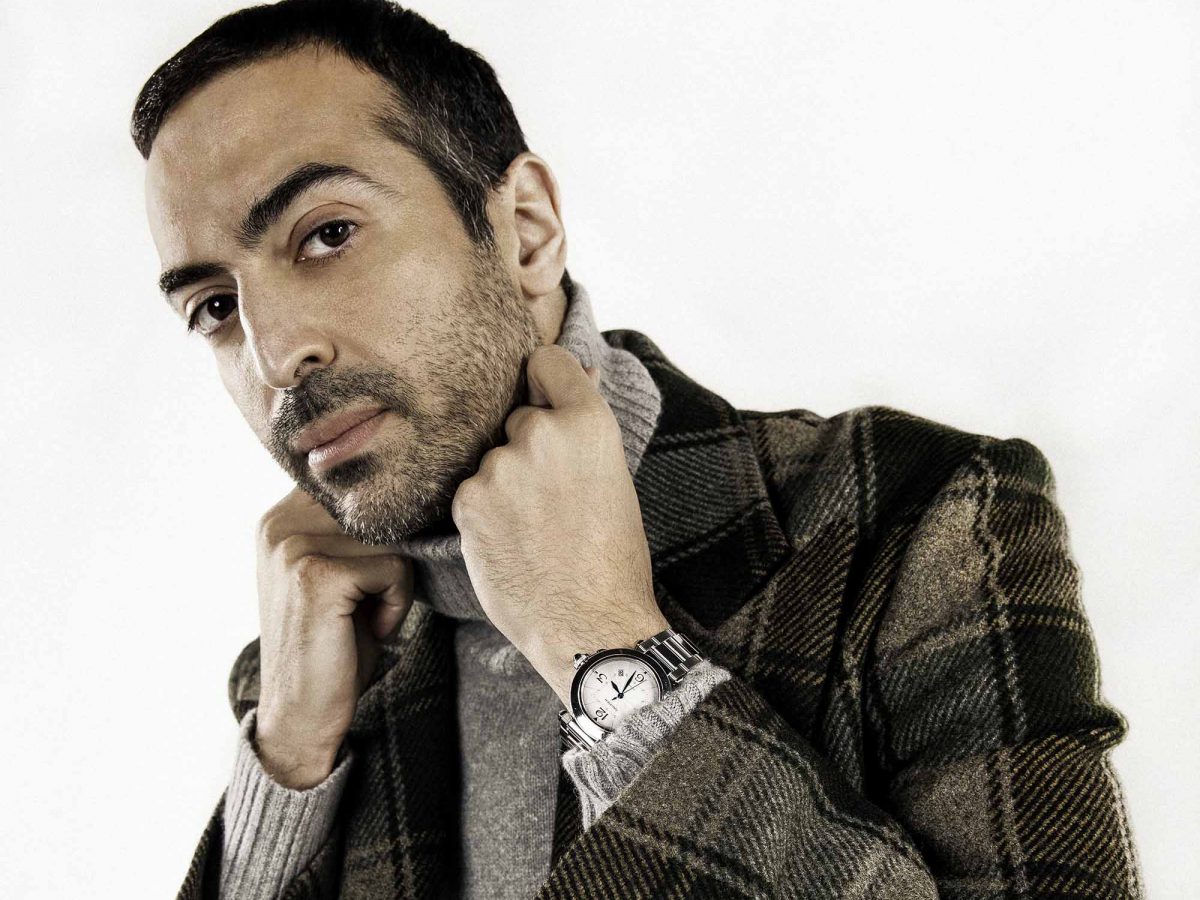
“It started out as a collective of motoring enthusiasts, but developed into a sort of incubator for talented people that we met along the way,” says Sultan Al Saud, one of the group’s founders. “Photographers, videographers, YouTubers, people would reach out to us and we would bring them on board. Pretty organically it became a platform allowing content creators to practice and improve.”
As the collective’s membership grew, it naturally developed into a community, one that people were proud to be a part of. They called themselves, Galag—a word chosen because it can be pronounced in any language.
There was an undeniable buzz growing around Galag. People weren’t sure exactly what it was, but they’d heard about it—and wanted to be involved, somehow. Here were a bunch of Saudi guys going on wild adventures in crazy cars and people wanted to be associated with them. “Essentially, without really planning on it, we’d created an identity and a platform,” says Al Saud “…but we didn’t have a product.”
So naturally, following the form of most young, digitally-obsessive communities, the product they were searching for became ‘Merch’

There are very few words that encapsulate the connection that content creators have with the Gen-Z fanboy more than ‘Merch’ does. Sure, buying branded merchandise with slogans and/or logos plastered on them is by no means a Gen-Z phenomenon, however today it is an almost considered a mandatory revenue stream for any digital content creator with a sizable audience—whether they are YouTubers, Podcasters or TikTok stars. Due to a lack of any actual physical contact to internet celebrities, fans of their channels or communities will buy up limited-edition drops as a way to show that they are part of the group—much like sports fans do with their teams.
“You know you’ve made it when you start seeing stickers you created being up-sold on EBay!” laughs Al Saud. But stickers are only the half of it. With big motoring events like the Gumball 3000 rally, the fast cars, loud engines and healthy slathering of celebrity tends to attract a crowd. It was at these events that the Galag guys would create t-shirts for their team members to wear, and any additional ones made they would hand out to the gathering crowds for free. It wasn’t until they started getting inundated with requests for the t-shirts on social media did the penny drop that they could be on to something.
“We never sat down and said that we wanted to create a clothing brand,” explains Al Saud, “but there was clearly a demand for what we were doing.” Naturally, with the people involved—notably Al Saud and his chief collaborator Quinner Baird— being creative by nature, they saw the opportunity of clothing design as a way to branch out from the themed merchandise, and soon started treating it as its own entity.

“In 2017 we started creating coherent collections, and developing pieces that were more experimental than just logo tees. We really wanted to make something that went beyond merch, and we actually have reached a stage where a large portion of our current customers aren’t even aware of the brand’s motoring history and origins—they only know Galag as a clothing brand.”
The shift in audience from motoring enthusiasts to style-savvy Saudis came as an unexpected development for Galag, but one that ended up having a significant effect on the evolution of the brand. While the range of Merch was expanding to niche motorsports fans, it wasn’t until 2019 that Galag was introduced into the Saudi market. It was a pivotal moment of opportunity colliding with preparation, and one that Al Saud saw as an important step in allowing them to introduce a brand into the Kingdom that was different from what had existed before.
“Once we introduced the clothing brand to the Saudi market, it evolved again,” he explains. “I wanted to create pieces that incorporated Saudi elements into them—ones that are accessible to both Saudis and non-Saudis alike.” During a hugely positive movement of creatives in Saudi wanting to open up and export the country’s fascinating culture, what is interesting with Galag is the desire to retain that collaborative spirit that fuelled it from the start.
“Do I want to share my culture with the world? Absolutely, but I want to do it in a way that people can incorporate their own aesthetic into our clothes and collections. We want to help encourage self-expression by offering things that are more elevated rather than just hoodies and caps and t-shirts—the fact that it has been accepted by a young generation of Saudis is a good sign.”

While certainly considered the beginnings of a success story, it is still very much a learning process for the young, self-taught brand. As the Brand Manager, Baird, handles the more technical aspects of the clothing, fabrics and logistics, Al Saud sees to the design and creative lead for the collections. So far the collections—notably ‘Cosmopolis’ and ‘Night Drive’—are described as self-contained stories, like chapters in a book or, as Al Saud prefers, “a film with a coherent story running through it”, because, despite his inexperience, Al Saud understands the importance of controlling the narrative of his designs. This is particularly relevant in an age where the term ‘cultural appropriation’ is thrown around rather loosely for any elements of creativity that are inspired by other cultures.
While a lot of new streetwear brands seem to focus on a more European or American aesthetic, Galag’s latest creations have taken inspiration from a more East Asian source. “I take a lot from Japanese and Korean street style,” admits Al Saud. “Travelling a lot and seeing where I can merge the exciting feeling of progressive Asian design and adding a Saudi element to it. That, to me, is exactly the stuff I would be looking to buy for myself.” So as the old adage goes, if you know what you like, and you can’t find it out there, make it yourself.
Interestingly enough, Al Saud resists calling himself a ‘designer’. “There are a lot of people who are trained to do this, and know a whole lot more than me, they who deserve that title,” he explains. “I more see myself as someone who conceptualizes ideas and tries to realise them with what we create.”

Mirroring Al Saud’s creative process, Saudi men are going through their own self-discovery into menswear and how to express themselves via their personal style—creating a circular loop of expression and creativity. For Galag’s Cosmopolis collection it was focused on imbuing traditional Saudi clothing into easy-wear pieces that are inspired by a generation of Saudi youth and their experimentation with fashion. Designed as versatile pieces that can be combined with pretty much anything the wearer wants—the origin of the garments and designs come from different places but come together much like what happens in a cosmopolitan city.
With the contemporary clothing industry in Saudi still very much in its budding stages, one of the more frequent challenges to a growing brand like Galag, is a streamlined manufacturing process—or lack thereof. Large scale levels of local manufacturing are currently not in place, so Galag navigates a globe-spanning manufacturing process with different items made in different continents (coats in Italy; hoodies and t-shirts in Los Angeles etc.), however it insists that any pieces that feature traditional detailing—such as the Bisht embroidery from its more upmarket ‘cut and sew’ pieces—are all done locally.

The successful expansion of Galag from a group of adventurous petrolheads into a clothing brand rapidly gaining both plaudits and hype, has been an impressive one. The difficulty for Al Saud and co. is maintaining its identity within the brand’s pivot.
“I see them as a separate, but having a symbiotic relationship,” says Al Saud. “The core purpose of the automotive side of Galag was always that desire to explore different places, whereas the clothing side is about exploring different styles from different places. By nature they both falls under a banner of curating creativity with curiosity.” And with what Galag has achieved so far, they certainly have grabbed our attention—and the attention of young Saudi hypebeasts too.

Esquire now has a newsletter – sign up to get it sent straight to your inbox.
Want up-to-the-minute entertainment news and features? Just hit 'Like' on our Esquire Facebook page and 'Follow' on our @esquiremiddleeast Instagram and Twitter account.