Throughout his life, the path taken by Hamza Hawsawi has rarely been the easy one. The singer shot to fame in 2013 after his X-Factor victory won him the hearts of audiences across the region, but as Esquire finds out when it comes to Hawsawi, things are never that simple…
Born and raised in Jeddah, the R&B singer is steadfast to not only expressing himself in a genre that is not overly popular in the country, but choosing to sing in English rather than Arabic. Through talent and tenacity the 30-year-old has succeeded where others around him have slid away, and today as we strive towards Vision 2030 he has become a role model for other creatives across the Kingdom for who the future is bright.
****
As a musician from Saudi, is there a part of you that feels like you’re standing on the edge of history?
Oh, absolutely. Back in 2008, when I started, things were so different. As an artist, you didn’t have a stage or platform to perform on. Social media wasn’t big so you couldn’t speak to your fans and tell them that you were having a concert. But the moment that Vision 2030 was announced, one of the first things that got full support was entertainment, which meant that artists like me were going to be given the platforms that we dreamed about. In the last three years, I have performed more times in Saudi than I had done in the previous 10 years! Standing on the edge is a good choice of words, because I feel like I’m actually looking over the edge and seeing exactly what’s going to happen and how big it’s going to be for everybody, especially artists.

What kind of goals have you set for yourself?
A few years ago I played a gig opening for Justin Bieber. It was great because at the time I was trying to be on every stage I could. The thing is, most of the things that were happening to me were happening by chance, there was no real plan. Since then I have become more focused and my goals have become bigger, and I know what I really want to achieve.
What is that?
I recently turned 30, and it made me realise that I want to have an impact that is wider than just me as an individual artist. I want to try and help lay the ground for other artists like me who want to do different things here musically. In Saudi Arabia, there aren’t a lot of people who are singing R&B, and even less of them are singing it in English. So it is important for me to show others that this is a way forward. It is possible and we can do it.
What made you decide to sing in English instead of Arabic?
My whole life I grew up listening to western music. Michael Jackson, Prince, Marvin Gaye and R&B music from the ’80s and ’90s. It’s through music that I actually learned to speak English so for me it comes naturally to sing in English. Strangely, if I sang in Arabic I feel like I would be forcing it.

Do you think it has helped or hindered your career?
I’d say that it actually helped make my career. Being from Saudi and singing in a genre that isn’t mainstream in a minority language—I think it made me standout.
Of course being on X-Factor put a huge spotlight on my career. But it was actually winning it that made me stop and think ‘wait, there is clearly an interest in a Saudi artist singing in English’, because the public had voted for me. To me, it felt like an unpaved road that I knew I wanted to go down.
Are you proud to be a Saudi artist?
Yes, I’m very proud, especially doing the art that I’m doing because it’s different. I want that difference to show that there is a huge variety of talent in this country. When I first started back in 2008, I actually went by the name ‘AYZEE’ — back then I thought it sounded more appealling internationally, and perhaps I was trying to hide that I was from here. But when I went on X-Factor, I took the decision to embrace my name and to celebrate my own version of my culture. I feel it is important to express who I am and my experiences as a Saudi man in the best way I know how to and that is through my songwriting.

What is the creative scene like in your hometown of Jeddah?
There are plenty of talented people there but, as there is no real music ‘industry’, things are pretty raw. A lot of what is being created comes out from the artists coming together to try make music that we like. Hip-hop in Arabic is certainly a bigger genre, and there is a ‘semi-industry’ there that is growing because people are starting to see it make money, which is a good thing.
It feels like the parallel between you and NEOM is a fitting one with regards to the future vision of Saudi Arabia. What was it like being there?
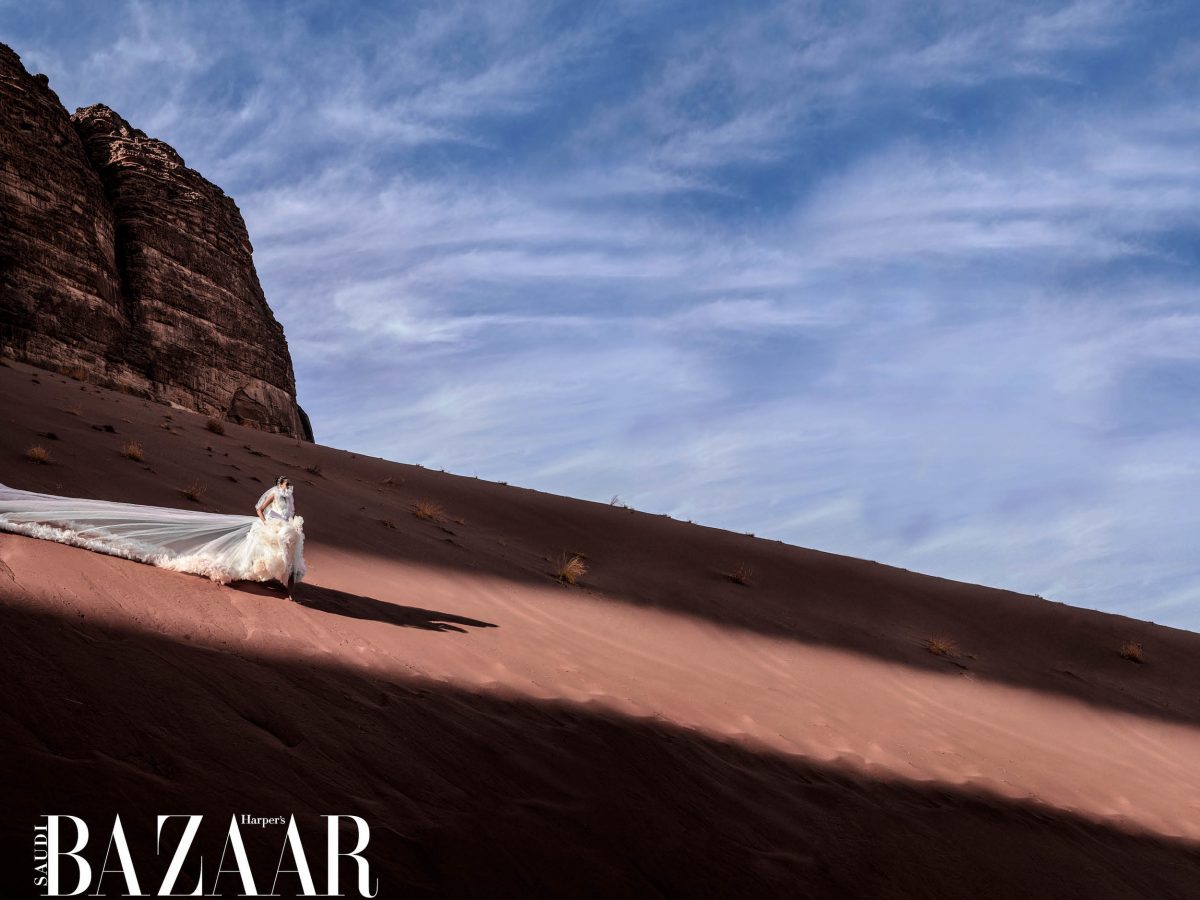
It was incredible. It is the smallest that I’ve ever felt in my life. We were shooting in a valley and the humbling experience of being so physically small in comparison to everything around me was such an eye-opening experience for me. I’m really just a simple guy. Put me in a black t-shirt and blue jeans and I’m happy—but the idea of being such an ancient place dressed in modern clothing just gave me such positive energy.
What were you like as a child?
I was extremely introverted. I’m an only child and grew up only with my mother, as my father was in a different city that I would only get to visit every once in a while. I spent most of my time either playing PlayStation, watching movies, or watching music videos on VCR. It’s crazy because if you asked me to guess what career I would have, I would have never said anything to do with performing! I was a very shy kid, but at school I always excelled in art and creative writing classes.

Were you active as a child?
In elementary school we didn’t have access to a gym, but because I watched a lot of movies and played video games, every time I saw ninja doing a flip, I though ‘I have to do that flip!’ I started doing it at school and my teacher saw it and decided that we should start a gymnastics team! I wasn’t really within the school curriculum but I think he saw that it was an important outlet for me.
Do you still do gymnastics today?
I’m much more into martial arts now. I do Muay Thai and boxing—I like high intensity training.
Back in 2013, you quit your job so that you could audition for X-Factor. What were you working as?
I had just got a job at one of the biggest banks in Saudi, working in facilities management. I had done, like, seven job interviews and met all the top management. It was one of those jobs that if you get, you stay in for life. I was only there for a month and I had to make a very quick decision, to stay or to take the risk for an audition and follow my art.

What convinced you to do it?
I spoke to a lot of people, but it was one of my friends who just said: “what have you got to lose?” It really struck me. So I quit, jumped on a plane and I’ve been flying ever since.
Where does your creativity come from?
Recently I’ve been very interested in studying human behavior—trying to understand why people do what they do; why men do what they do; why women do what they do; and how we all interact with each other. It was something that intrigued me, and I want to write more about it. I don’t like to write things that are going to be in your face. I try to listen to people and interpret what they are really saying.

Does the writing process get easier or harder the older you get?
It’s a kind of paradox, because sometimes it feels like the more you write, the less content you’re going to have, because you’ve already exhausted all the ideas. However, you certainly develop more writing skill the more you write. When you write a song, you put so much energy and creativity into it, that it can be hard to think you will ever write a better one. Think of it like being an athlete, at first it sounds hard to run 10 miles, but after you do 10, you could probably do 11 or 12…
So what does 2021 have in store for you?
We had a very tough year in 2020, and I feel like it made all of us reevaluate things. Over the past few years I was really focusing on performing on stage as much as possible—festivals and concerts, and performing as much as possible. Now, obviously that didn’t happen with lockdowns and live music being cancelled.
So we spent most of 2020 in the studios— refocusing on what we could do if we removed live performances as an option. We spent a lot of time creating visual content and music videos, and pushing social media to the fans who are on the flip side of things and not able to go see their favourite artists perform. It’s been challenging but creative, and I cannot wait for what the future will bring.
PHOTOGRAPHY BY NORAH ALAMRI / STYLING BY NINORTA MALKE / HAIR BY SAWSAN LILISH / MAKE-UP BY EILAF SABBAGH / PRODUCTION BY AAMAR SHAWWA AND JOHANA DANA / LOCATION: NEOM

Esquire now has a newsletter – sign up to get it sent straight to your inbox.
Want up-to-the-minute entertainment news and features? Just hit ‘Like’ on our Esquire Facebook page and ‘Follow’ on our @esquiremiddleeast Instagram and Twitter account.