
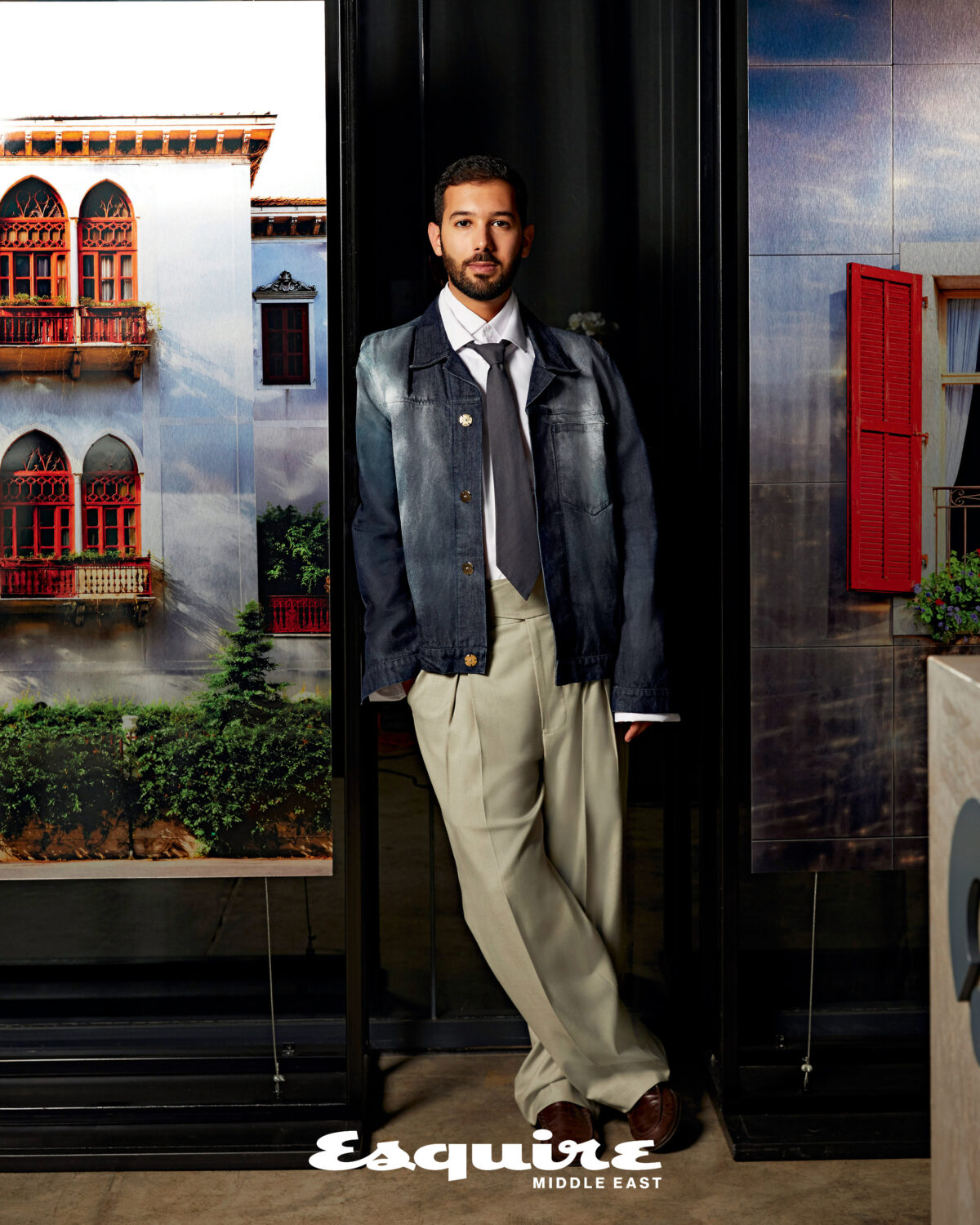

Chafic Mekawi doesn’t separate architecture from art, or design from dressing. To him, they’re all part of the same conversation. The Lebanese-Canadian multidisciplinary designer, whose work explores memory, place and identity through installations, objects and visual art, approaches clothing with the same attention to proportion and material as his work.
“I don’t think a creative language is ever fully established,” he says. “It’s something that evolves constantly.”
Growing up between Beirut, Dubai and London, Mekawi’s visual vocabulary was shaped by the details that define cities long after skylines change: Persian rugs, triple arches, palm trees, oxidised balconies, Zellige tiles. Today, those familiar forms continue to surface throughout his work, including Beirut Balconies, his recent immersive exhibition that transformed one of the city’s most overlooked architectural features into an emotional archive of memory and absence.
That sensitivity extends to what he wears. “Beirut taught me the value of individuality and personal expression, while Dubai introduced me to a more global and refined approach to luxury,” he explains. “I think my style sits somewhere between those worlds.”
Chafic Mekawi describes it simply as “relaxed sophistication”. Comfort is essential, but never at the expense of elegance. His wardrobe favours craftsmanship over logos. “I’m drawn to pieces that feel timeless rather than trend-driven,” he says. “Good materials, statement cuts and quiet confidence matter more to me.”
That thinking runs through his wardrobe: a linen shirt on constant rotation, black trousers anchoring most looks, a leather wallet always in hand, running shoes for function, suede clogs for everything in between.
Chafic Mekawi’s relationship with fashion has evolved alongside his career. Architecture school initially pushed him towards monochrome dressing, but experience taught him to see clothing differently.
“Over time, I’ve become much more interested in texture, proportion and materiality,” he says. “The same way architecture is experienced through light, shadow and surfaces, clothing is experienced through fabric, movement and how it sits on the body. I now approach getting dressed less as assembling an outfit and more as composing a balance of materials, moods and contrasts.”
The accessory he values most isn’t luxury at all. Instead, it’s a tiny Japanese notebook, barely larger than a credit card, where ideas are captured before they’re forgotten.
“People always smile when they see me pull it out because it’s surprisingly small,” he says. “It’s probably the closest thing I have to an external hard drive for my brain.”
Here, he tells Esquire about his 3 fits…
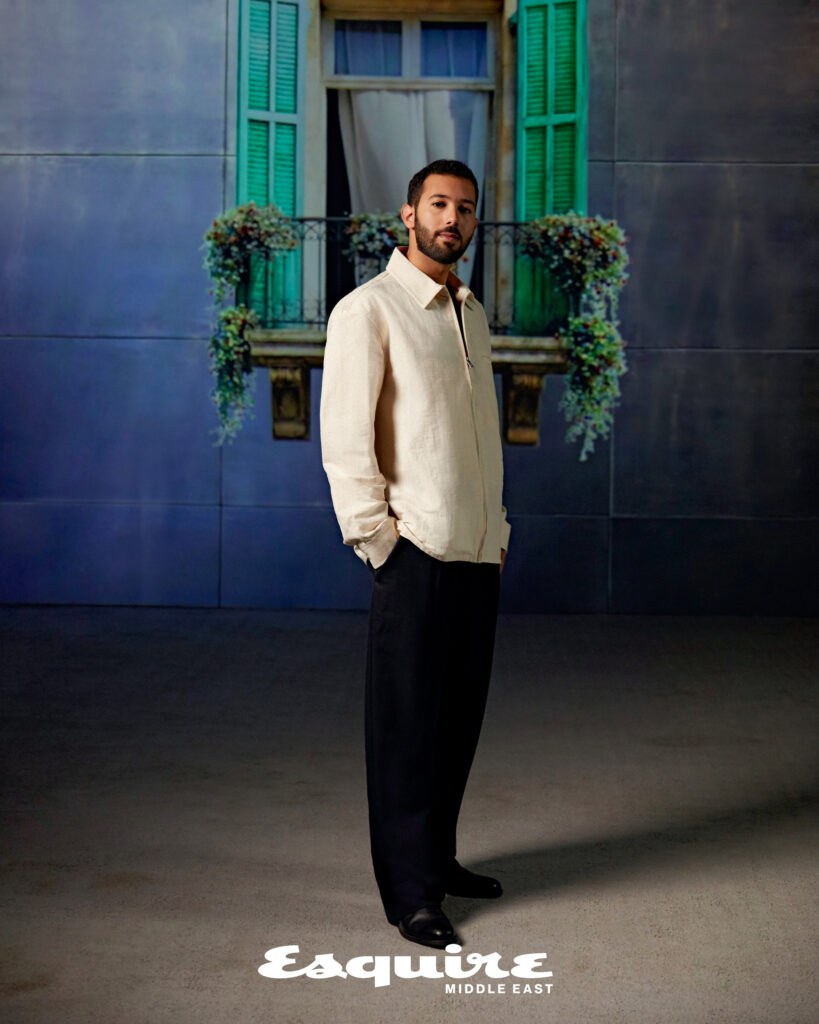
Look 1
This is my go-to for a day out. Works well for a long lunch by the Mediterranean coast. It’s relaxed but still feels put together, that easy Riviera mix of comfort and polish.
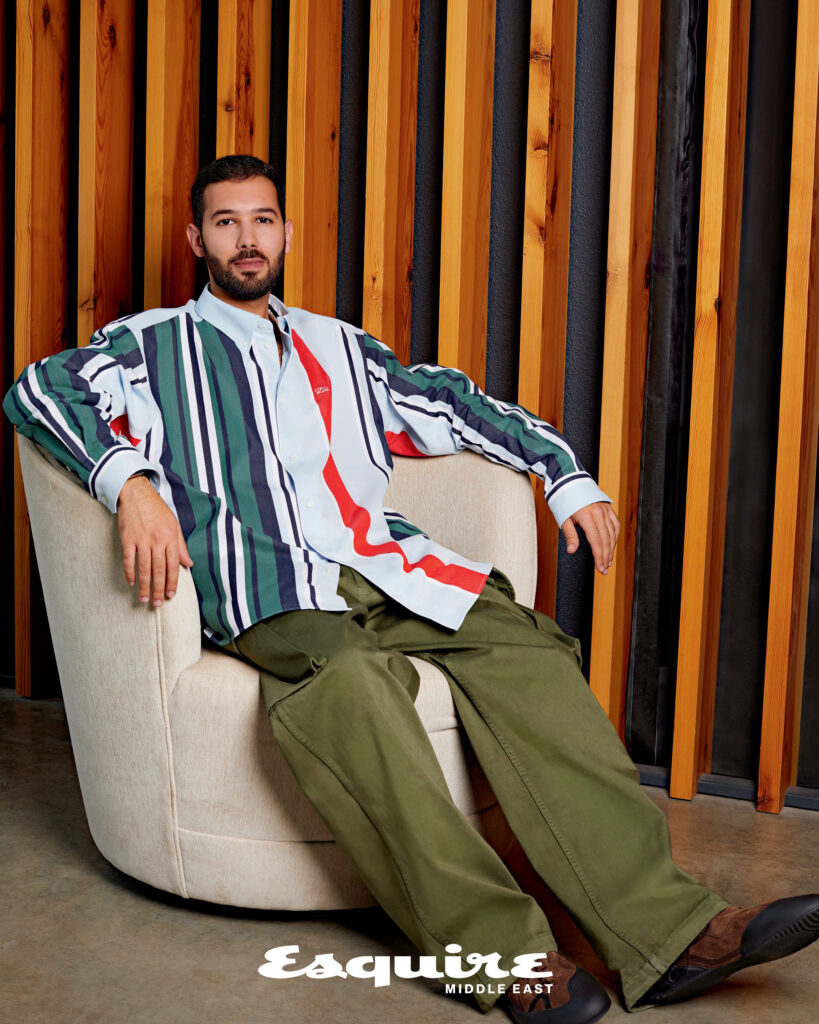
Look 2
I’d wear this to an exhibition opening. It feels creative without being too much, and just sits well in an art space. There’s a nice balance between the shirt and the cargo trousers that keeps it interesting.
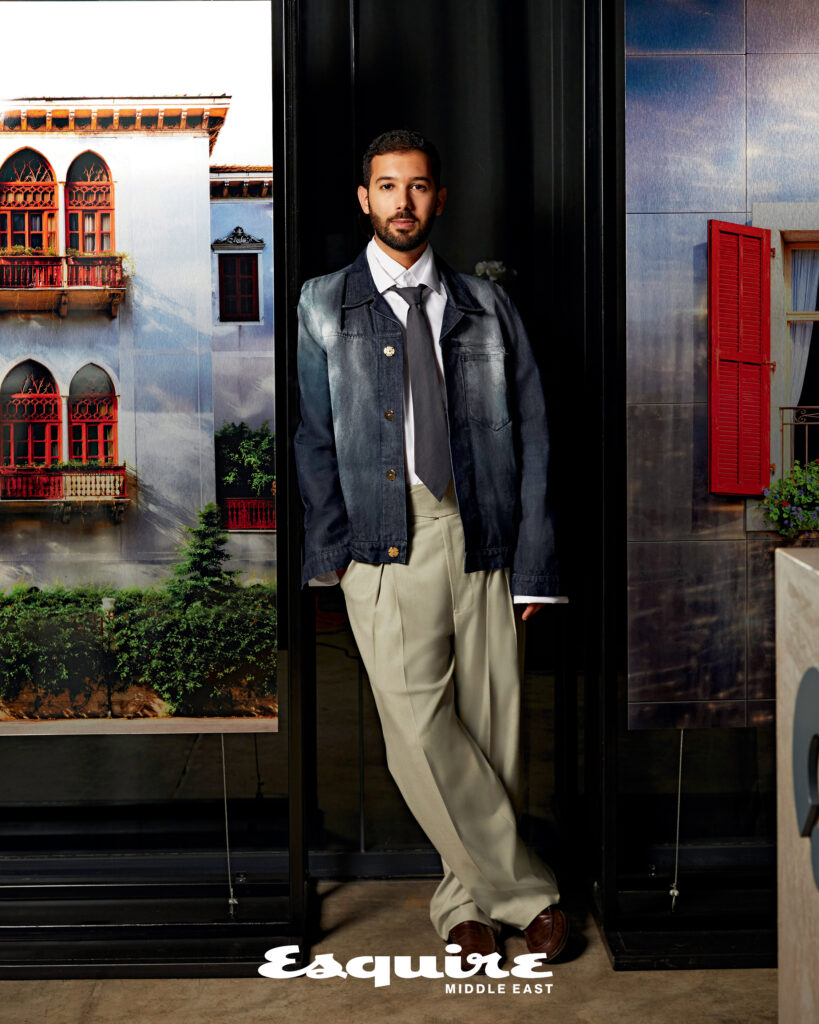
Look 3
A signature Zaid Farouki look that works for a night out, put together enough to feel right for the evening without ever feeling overdressed.
Location: Kanvas Dubai, Al Khayat Avenue, Al Quoz 1