
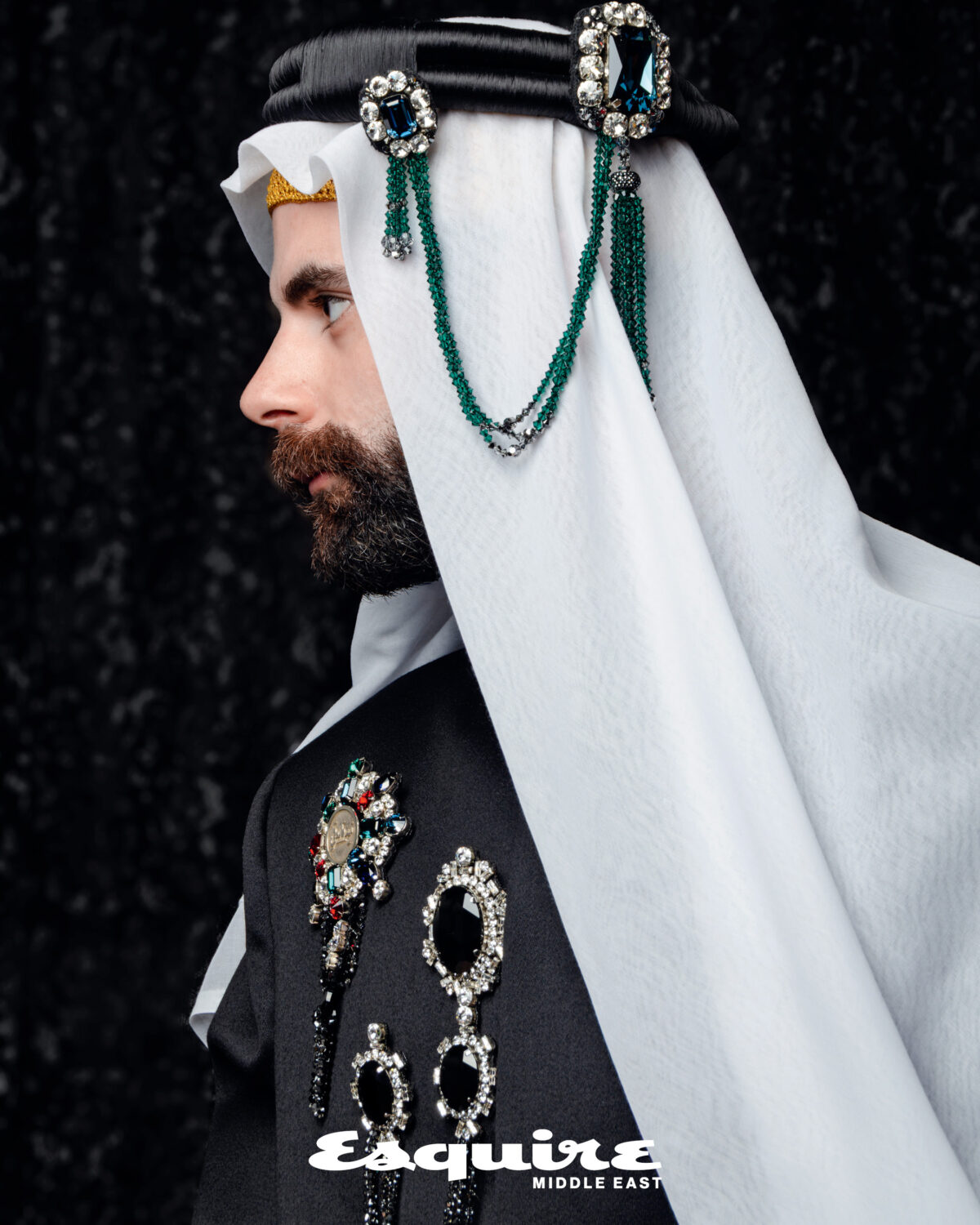

Early 1900s, Palestine. My ancestors stand with a stillness that is composed, deliberate. They are dressed in finely tailored cloth and embroidery so intricate it looks like a painting. And then you notice it, small details catching the light. Not as decoration, but as declaration.
In those photographs, the men wear every detail with certainty. There is no hesitation, no need to justify adornment. A pin on the lapel is simply part of being composed. That clarity has largely disappeared from modern menswear, where ornament was stripped back in favour of restraint.
Historically, that wasn’t the case. Across the Ottoman Empire and Persian courts, men wore jewelled adornment as part of formal dress on the chest, on the turban, as markers of rank and identity. What feels new today is, in reality, a return.
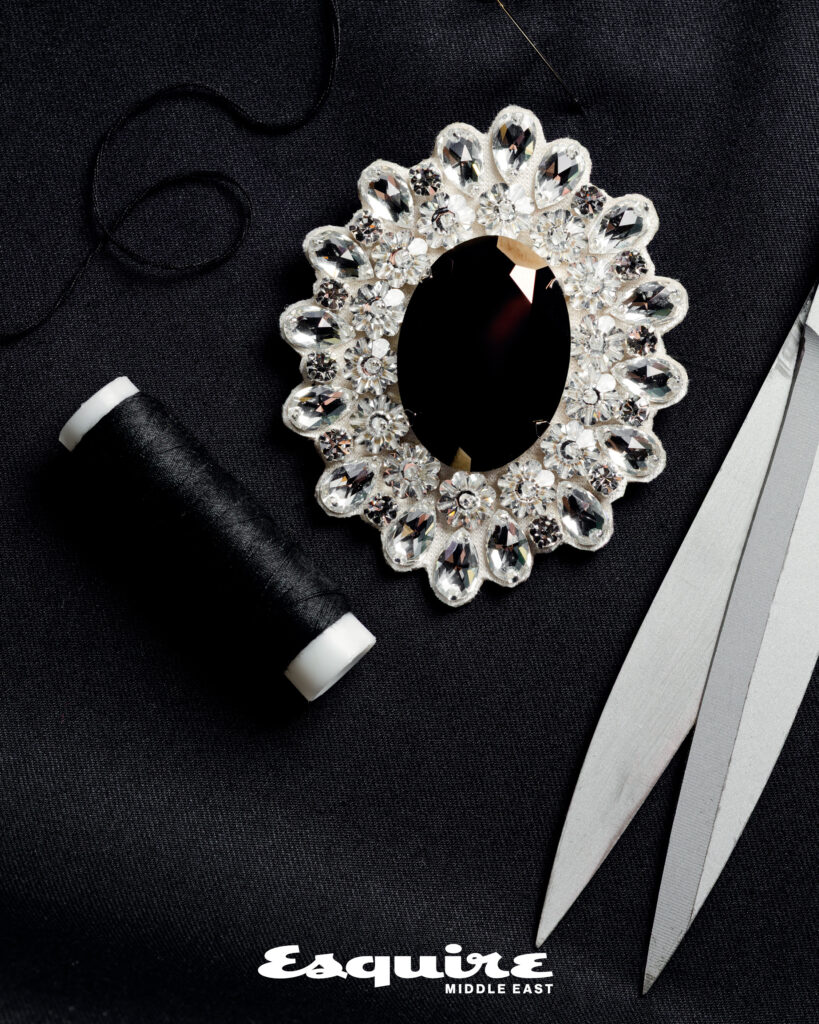
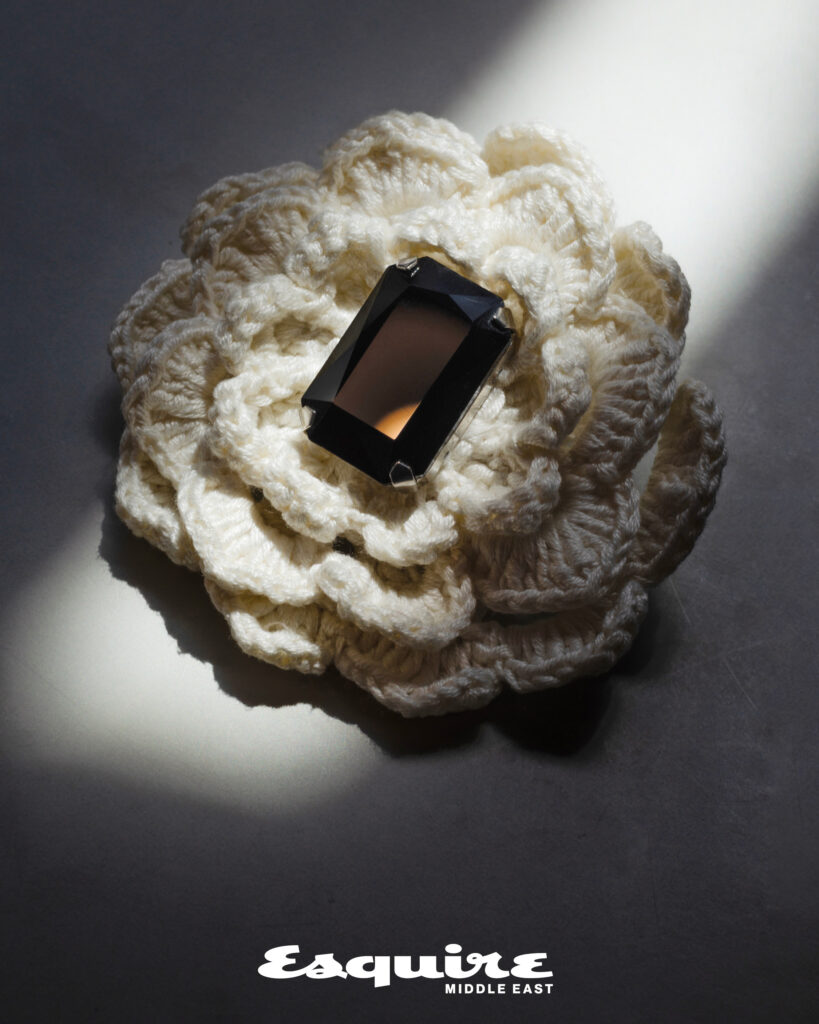
When I began designing brooches, I was not chasing a trend. I was asking a question: what does that pin in my great-great-grandfather’s photograph look like today? What is its contemporary form? What materials, what stones, what weight and scale would carry the same authority on the lapel of a man who celebrates his culture and heritage?
The modern man is reclaiming something historical when he pins a brooch to his lapel. He is not being adventurous or avant-garde. He is, if anything, being traditional in the truest sense of the word.
On my website, I describe my brooches as symbols worn close to the heart. I mean that literally.
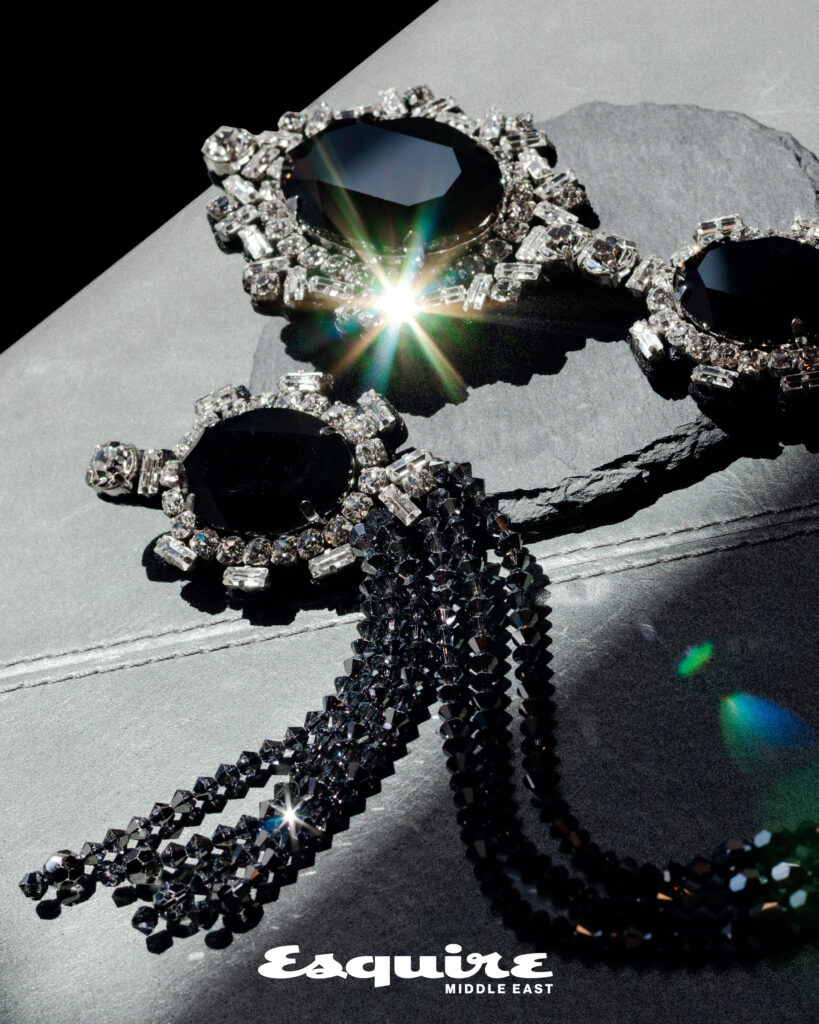
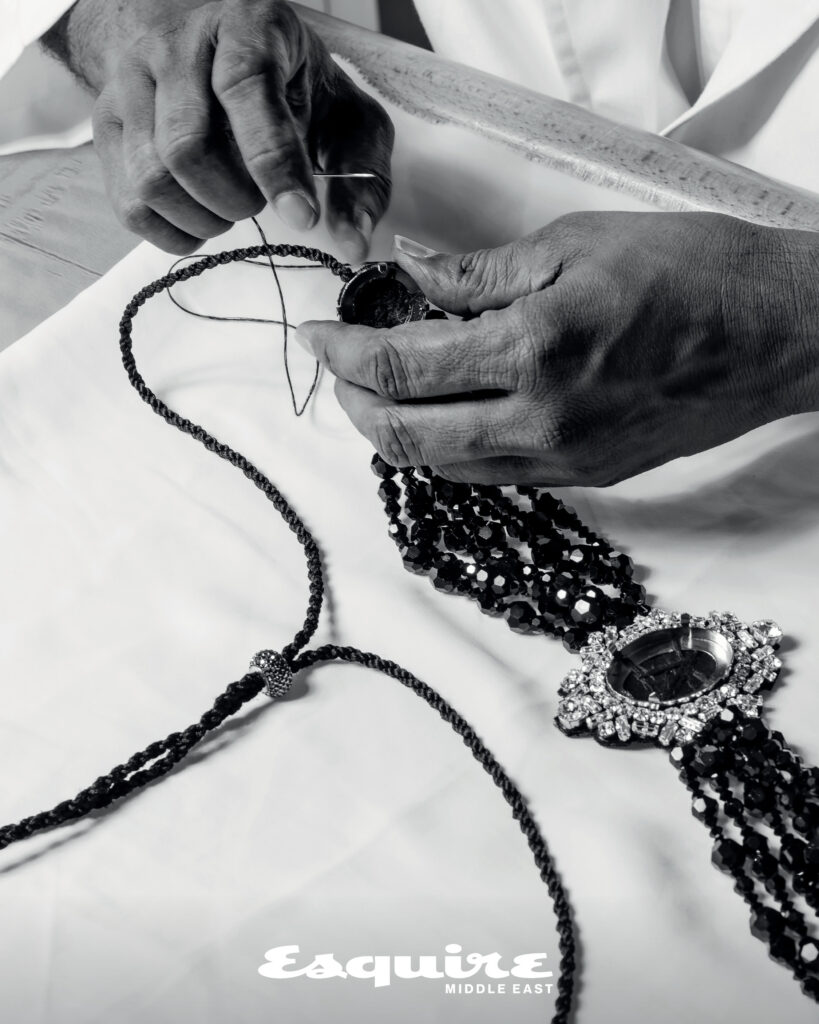
The left lapel, where a brooch sits, is centimetres away from where a man’s heart beats. In the photographs, the adornment is always in the same place, always deliberate. Adornment in Palestinian and broader Arab dress has always existed. It just has not been consistently carried forward in contemporary menswear narratives. As menswear became increasingly codified through Western minimalism, anything ornamental was gradually removed or reduced.
So, our work with brooches is not about introducing something new. It is about restoring continuity. Each piece begins almost like a small sculpture. That is not a romantic decision, it is a structural one. The irregularities, the weight, the tension in the thread, the crystals, the sterling silver. We want that artistry preserved.
I made a decision early in my career: I would not preserve this heritage behind glass. We would design it forward.
Zaid Farouki brooches are handmade to order and available worldwide at zaidbyzaidfarouki.com
Words by Zaid Farouki