The professional wrestling world is full of jargon. Marks, Heels, Gimmicks, Cheap pops, High spots, Chin music and Dusty finishes – these are all things that will mean very little to the average person, but a dialect that fans of the sport are fluent in.
For most people, pro-wrestling means the WWE – not just the world’s largest pro-wrestling company, but now a publicly listed veritable entertainment juggernaut – and, yes, I did refer to it as a sport.
As a form of (very) physical activity done to entertain millions around the world, it is an important clarification to make. There are very few forms of mainstream entertainment that seem to be viewed upon with such ire by those who don’t watch it. Simply by describing it as a ‘sport’ will have irrationally angered some of you reading this because, as I’ve found, either you like watching wrestling, or you sneer at those who do.
I like wrestling. I have watched wrestling more-on-than-off for the past 25 years. Through its almost unique ability to weave storytelling narrative into breath-taking athleticism, with a dash of amateur dramatics – it has given me some of my favourite sporting memories.
BONUS: Random Interview with Finn Balor
Every match is an interpretation of the eternal conflict between the good guy versus the bad guy, with the result pre-determined to maximise the drama or keep the storyline rolling. Ask any wrestler, and they will tell you that wins and losses don’t matter, all that matters is entertaining the audience – and that audience shows up to be entertained.
“I normally just say ‘Yeah, I know!’” laughs WWE superstar Daniel Bryan when I asked him how he deals with people telling him wrestling is ‘fake’. “I think when people say things like that, they are trying to insult you, so agreeing with them puts them on the back foot. I mean, I’m not pretending to get slammed on my back! It’s just a matter of taste. If it’s not your style of entertainment, then that’s cool by me.”
That ‘style of entertainment’ is one that continues to grow on a massive scale. The five years ago the WWE successfully launching its own Netflix-style, content-driven streaming platform, the WWE Network; it has started searching for future talent in huge untapped non-traditional wrestling markets including India and China; and, closer to home, last year signed a 10-year agreement with Saudi Arabia’s General Sport Authority to host major events in the Kingdom. Online the WWE fosters a fiercely loyal internet community that recently surpassed one billion followers and subscribers across its combined social media platforms. News about the industry is regularly covered by the likes of ESPN, Forbes and Sky.
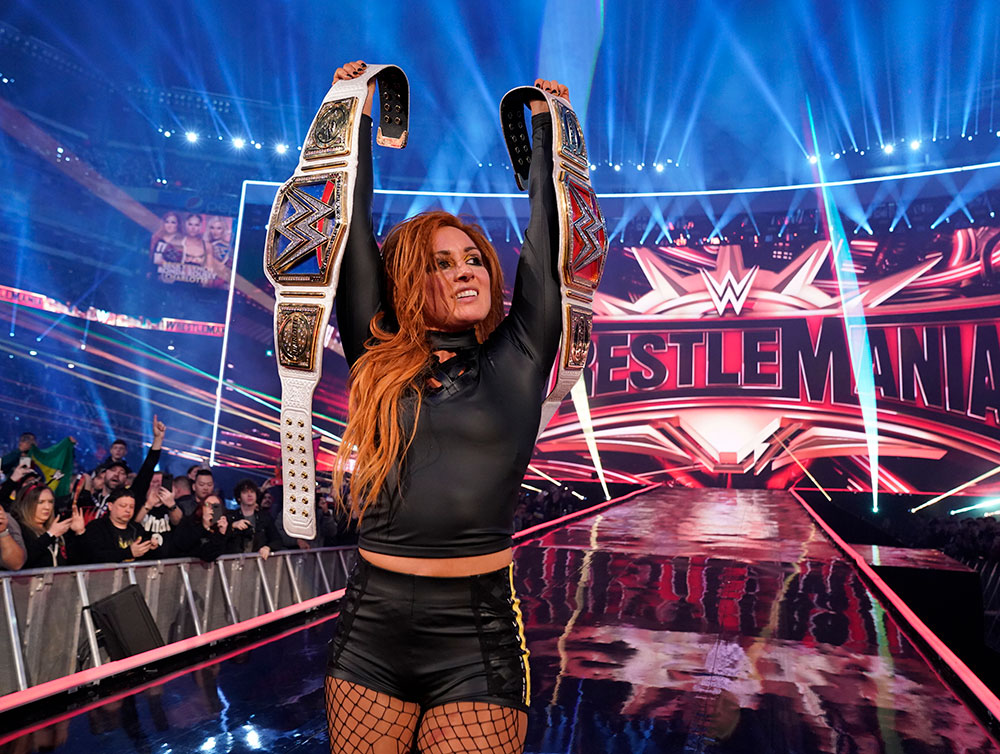
Last month, the WWE hosted Wrestlemania – its showpiece event held annually since 1985. So integral is it to popular culture that a Forbes report labelled it as one of the ‘most valuable sports brands in the world’, comparable to the FIFA World Cup, Superbowl and the Summer Olympics. The one-night event in New York generated $16.9 million in gross revenue, and I was one of the 82,265 people in attendance who were treated to a near seven-hour onslaught of action, drama, chair-shots, fireworks, blaring music and all-around feel-good Americana – even Hulk Hogan and John Cena showed up. The final match of the night was the culmination of the #WomensRevolution – a years-long movement to help elevate gender equality and the status of women’s wrestling – with Becky Lynch, Charlotte Flair and former UFC megastar Ronda Rousey, becoming the first women to headline a Wrestlemania card. To use wrestling dialect, it was the ‘granddaddy of them all’.
While fans are turning away from other sports citing either complaints about boring dominant franchises, or worse, fan violence, racist abuse and political protests – but wrestling, now you show me another sport that offers as much.