
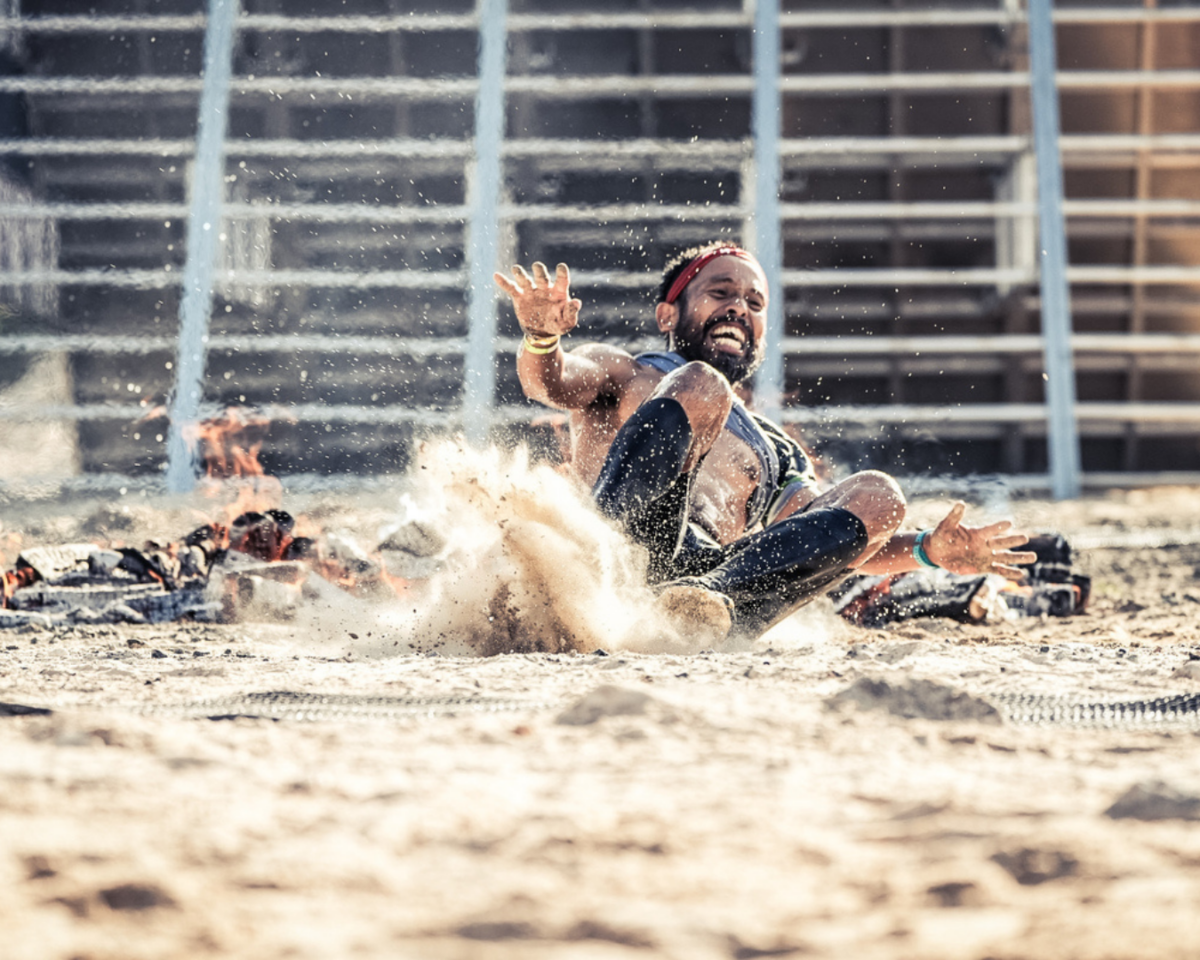
As the New Year broke, I decided it was time to engage in something arguably foolish. I wasn’t looking for a spiritual awakening or a radical reinvention of the soul. I just needed to know if the machinery still worked.
Signing up for a Spartan race felt like a realistic gamble. I am generally in decent shape for a man of my vintage, but like many residing north of 50, a certain malaise had set in. A double hernia operation last summer had become my “Get Out of Jail Free” card for taking it easy. Too easy, if I’m honest. I needed a shock to the system. A gruelling Obstacle Course Race (OCR) at the crack of dawn on a chilly January Saturday would either shake off the cobwebs or finish me off entirely.
I was aware of the Spartan reputation, of course. I’d seen the marketing tableau: phalanxes of six-packed Adonises in headbands, swinging from monkey bars and hauling Atlas stones as if they were groceries. It was, frankly, intimidating. For the brave (or unhinged), there are tiers like the 21km “Beast,” but naturally, I opted for the “gentle” introduction: the 5km Sprint. But let’s be clear—a 5km run on pavement is a jog; 5km on shifting soft sand and gravel is a distinct form of leg-shredding torture, punctuated by wall climbs, barbed wire crawls, and muddy swamp wades.
I have been navigating a “mid-life fitness crisis” for several years now. It is far less glamorous than the standard mid-life crisis. There are no fast cars or illicit affairs; just the sudden, visceral realization that the workouts of your thirties no longer pay dividends. Or worse, that the engine simply lacks the combustion to perform them.
Enter the Spartan.

It was a chance to light a fire under my 52-year-old chassis, give it a firm, wet slap across the face, and laugh at the concept of a “sell-by date.” Training began in earnest: off-road running, lifting dumbbells heavy enough to regret, and pull-ups until failure. A few specific classes at The Warehouse Gym taught me the dark art of rope climbing without immediately plummeting to the earth. By race day, I harboured a quiet confidence that I could finish the 5km in under an hour—a target that felt equal parts optimistic and respectful of gravity.
We are constantly badgered by self-help gurus to “leave our comfort zones.” It is advice easily digested when you are sinking into a sofa with a cup of tea. It is an entirely different proposition when you are standing in a starting pen, flanked by several hundred strangers screaming “AROO!”—the Spartan battle cry of excitement, motivation, and a willingness to suffer. At that moment, standing amidst the noise, fuelled by adrenaline, coffee, and Red Bull, I felt genuinely electric.
There is a danger here, known as the “schoolboy error”: sprinting off the line like a greyhound only to pay for it when fatigue and lactic acid come to collect their debt. I avoided that trap but perhaps swung too far the other way, starting so conservatively that fellow Spartans streamed past me like water around a stone. Eventually, though, you find your rhythm.
My strategy was simple: parasitism. I latched onto a competitor who looked like a veteran—a spirit guide in compression gear—and mimicked his approach to the obstacles. It worked until the herd thinned and I was forced to navigate the chaos alone. With every wall scaled, confidence grew, but so did the exhaustion. I stopped counting obstacles. I simply focused on the one in front of me. Don’t look at the horizon; just look at the wall.
Without waxing too philosophical, a Spartan race is a tidy metaphor for existence. It is a series of hurdles, literal and figurative. You must find your own pace. You must know when to accept a boost up a slippery wall, and when you are truly, solely on your own.
By the finish line, assuming you make it, you are caked in mud, dust, sweat, and—in my case—a tasteful amount of blood. It is the “desert warrior” aesthetic: a badge of honour accompanied by a medal, a t-shirt, and the undeniable proof that I had faced the mid-life fitness crisis head-on. And won.