
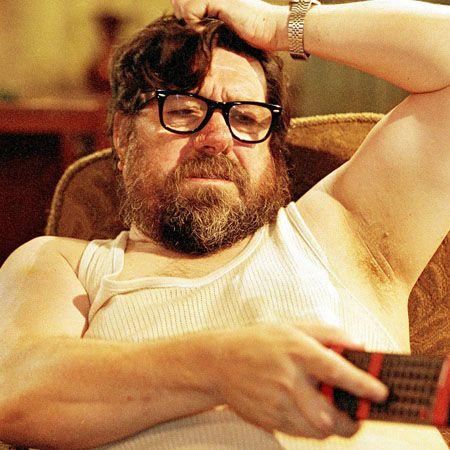

There is no shame wanting to look good [ED: it is one of our pillars here at Esquire]. I mean, who doesn’t want to look as young as possible for as long as possible? A recent US survey showed that it is a common concern across the world, with over two thirds of men concerned about looking, and feeling, older than their years. The good news is, there are plenty of things we can do to hold off the aging process; the bad news on the other hand, is that the modern man has a lot of poor habits – many of which are having precisely the opposite effect. Let’s take a look then at the four biggest culprits – the sure-fire ways to look old before your time – and the science behind how they steal our youth and looks.
1. Smoking
Let’s get what is perhaps the most obvious offender of making us look older out of the way first. Aside from the obvious fact that smoking will most likely shorten your life span and increase your risk of lung cancer and heart disease, it also plays havoc with the skin.
Long-term smoking, which is highly prevalent in the UAE where smokers tend to start very young (a third of those under 18 smoke), speeds up the ageing process by attacking the skin’s enzymes and destroying its elasticity.
Additionally, the nicotine from that pack of smokes causes the blood vessels to narrow, stifling blood flow to the skin. Less blood flow means less oxygen and less vital nutrients reaching the skin’s surface – which has a tremendous negative impact on the skin’s appearance.
Permanent changes to the skin can take effect after only five years of smoking, and while the early signs may be difficult to spot, make no mistake about it – the more you smoke, the older you’re going to look.
2. Drinking
Recommended daily allowances vary wildly from one country to the next, and what is considered ‘moderate’ for one person may not be right for another. Alcohol should most definitely be enjoyed in moderation, but the best advice for managing this is to listen to your body. If you feel you are drinking too much, cut down – because once again your skin will certainly thank you for it.
Drinking dehydrates the body’s organs, and as your skin is the largest organ you have, its effects will soon be clear as day when you look in the mirror. This dehydration occurs every time we drink, which is why a hangover leaves you reaching for the moisturiser as well as the water.
So how can knocking back one too many drinks cause us to dry out?
The answer lies in alcohol’s diuretic properties, which causes us to urinate – flushing out not just waste, but vital nutrients as well. Nutrients such as vitamin B12, which helps to metabolise the alcohol in your system. The effects of this dehydration over the long-term can lead to serious, permanent skin conditions, including rosacea – characterised by the reddening of the skin on the face due to dilated blood vessels.
3. Diet
There are so many don’ts here: Sugar, dairy, grains, artificial sweeteners and colourings, processed foods, trans fats, and so on. These all go a long way in making you look and feel a lot older. But how? Well, to take one example, sugar attaches itself to collagen throughout the body, which, like smoking, causes the skin to lose its elasticity – making young skin look stiff and inflexible and causing older skin to wrinkle and dry out.
Wheat, on the other hand, causes imbalances in the blood glucose, causing free radical damage to cells and leading to a process of silent inflammation throughout the body – a root cause of ailments such as heart disease, diabetes and depression. All of these no doubt combine to speed up the rate of aging.
4. Stress and lack of sleep
It turns out it was true all along – we really do need our beauty sleep. In a recent study by the Journal of Investigative Dermatology, researchers took two sets of participants – half with poor sleeping patterns and half with regular sleeping patterns – to look at the correlation between lack of sleep and the aging process. The result showed beyond any doubt that those with poor sleep patterns had far more visible signs of aging – such as sagging skin and wrinkles, as well as those very common dark circles under the eyes caused by dilated blood vessels.
Skipping those Z’s also robs your body of a vital chance to replenish and allow skin cells to renew and repair. What’s more, all sorts of positive and necessary hormonal and metabolic changes occur throughout the body when we sleep. Not getting enough sleep disrupts this, which causes hormone depletion – a major factor when it comes to aging.
But there’s one more devastating side effect of sleep deprivation: stress. Stress is more often than not a contributing factor in every major non-communicable disease (NCD), from obesity to heart disease. But what many people may not know is just how significantly it can leave its mark on your face.
Stress shortens the telomeres at the end of chromosomes – causing cells to die or become damaged. This sends the aging process into overdrive, causing those wrinkles and dark circles that the vain among us want nothing to do with.
So how important are your looks to you? That youthful appearance is more in your control than you think. Genes play a role, sure, but a bad lifestyle is the real enemy here. As is just about always the case when it comes to health and appearance, it is your level of discipline that is the ultimate decider.
– – –

Graham Simpson, MD is Chief Medical Officer and Founder of Intelligent Health, a preventive medical centre located in Jumeirah. Dubai. He graduated from the University of the Witwatersrand Medical School in Johannesburg, South Africa, and is board certified in Internal Medicine and Emergency Medicine. As a founding member of the American Holistic Medical Association (AHMA) Dr Simpson is also a licensed homeopath.