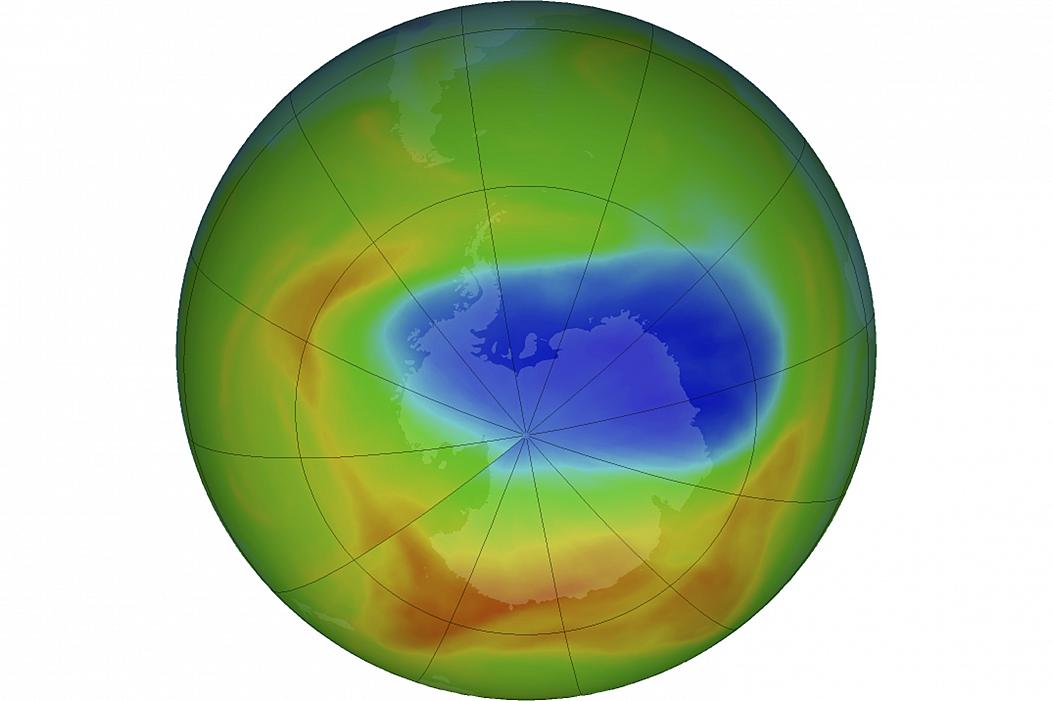

Almost 33 years ago, 197 countries signed the 1987 Montreal Protocol. Three decades later, we’re now reaping the benefits: the ozone layer above Antarctica seems to be healing.
In 1985, scientists discovered a large hole in the Ozone layer caused by human use of substances known as chlorofluorocarbons (CFCs). It was found in hairspray, refrigerators, and more aerosol cans. It caused such major damage to the ozone layer that in 1987, an international treaty called the “Montreal Protocol” was adopted to ban them.
Why was the hole in the Ozone layer such a big problem?
ENDANGERED SEA TURTLES HATCH ON DESERTED BEACHES IN BRAZIL, INDIA AMID COVID-19 LOCKDOWN
THE BEST CORONAVIRUS MEMES TO GET YOU THROUGH SELF-ISOLATION
According to the scientists, the state of the ozone layer had caused drastic changes in the air currents called jet steams that flow toward the planet’s north and south poles at high altitudes. Due to ozone depletion, these jet streams have been driven further south than their usual patterns causing rainfall over South America, East Africa, and Australia, and to changes in ocean currents and salinity.
However, a recent 2020 study from the University of Colorado Boulder has said that last year, the ozone hole was the smallest it has been since it was discovered in the 1980s.
However, according to the lead author of the study, we shouldn’t classify this as a win just yet.
You can access your free copy of Esquire’s boredom-busting issue via the Apple App Store or Google Play.
Lead author Antara Banerjee, ihas said that further recovery of the ozone layer will only take place if we tackle rising greenhouse gas emissions.
“We term this a ‘pause’ because the poleward circulation trends might resume, stay flat, or reverse,” Banerjee said. “It’s the tug of war between the opposing effects of ozone recovery and rising greenhouse gases that will determine future trends.”
A 2018 report from the United Nations says that the hole in the ozone layer could be totally healed by the 2060. In some areas of the world, it could be as soon as 2030.

Esquire now has a newsletter – sign up to get it sent straight to your inbox.
Want up-to-the-minute entertainment news and features? Just hit ‘Like’ on our Esquire Facebook page and ‘Follow’ on our @esquiremiddleeast Instagram and Twitter account.