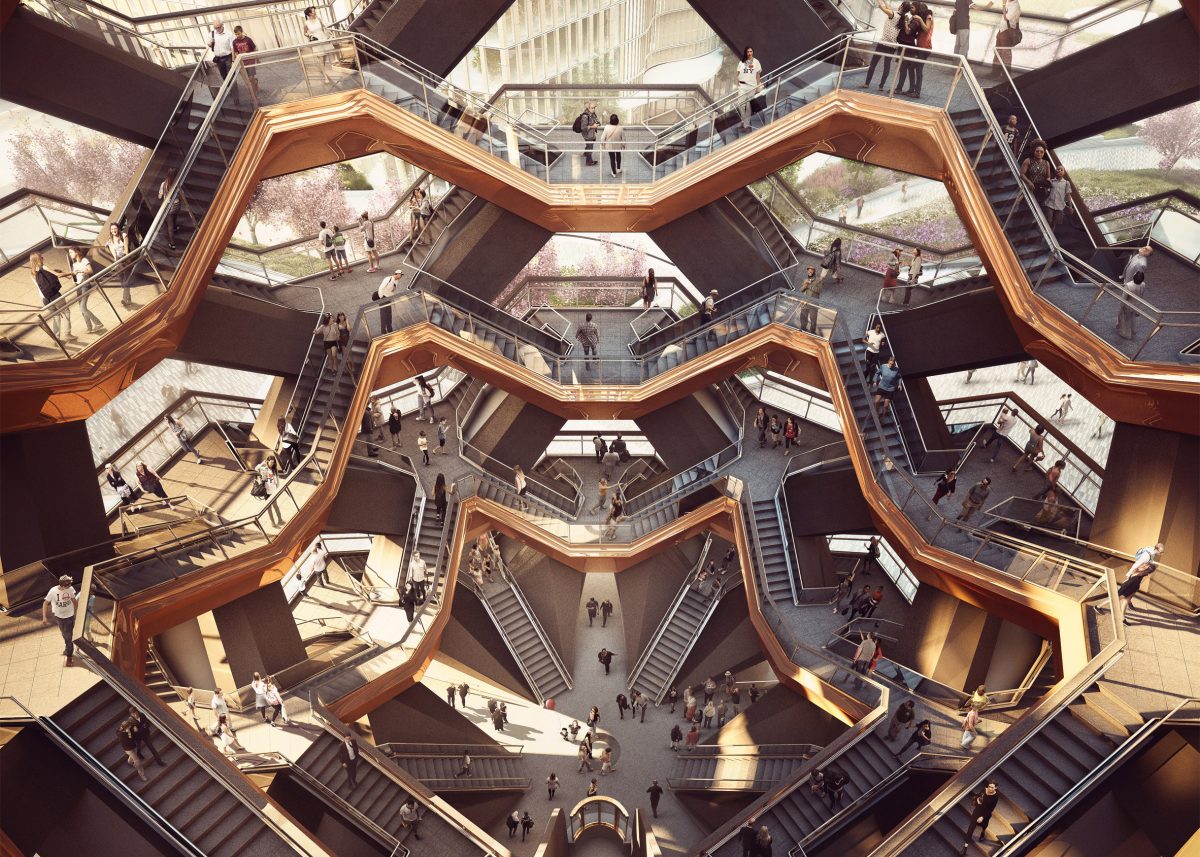

- The Vessel will be tourist centrepiece of the massive Hudson Yards real estate project in New York made up of 154 interconnecting flights of stairs
- Nicknamed the ‘New York Staircase’, the Shed is an independent arts centre
- The project is designed by the same people who helped design the High Line
The developers of Hudson Yards describe the project as the largest private real estate development in US history. It certainly looks that way.
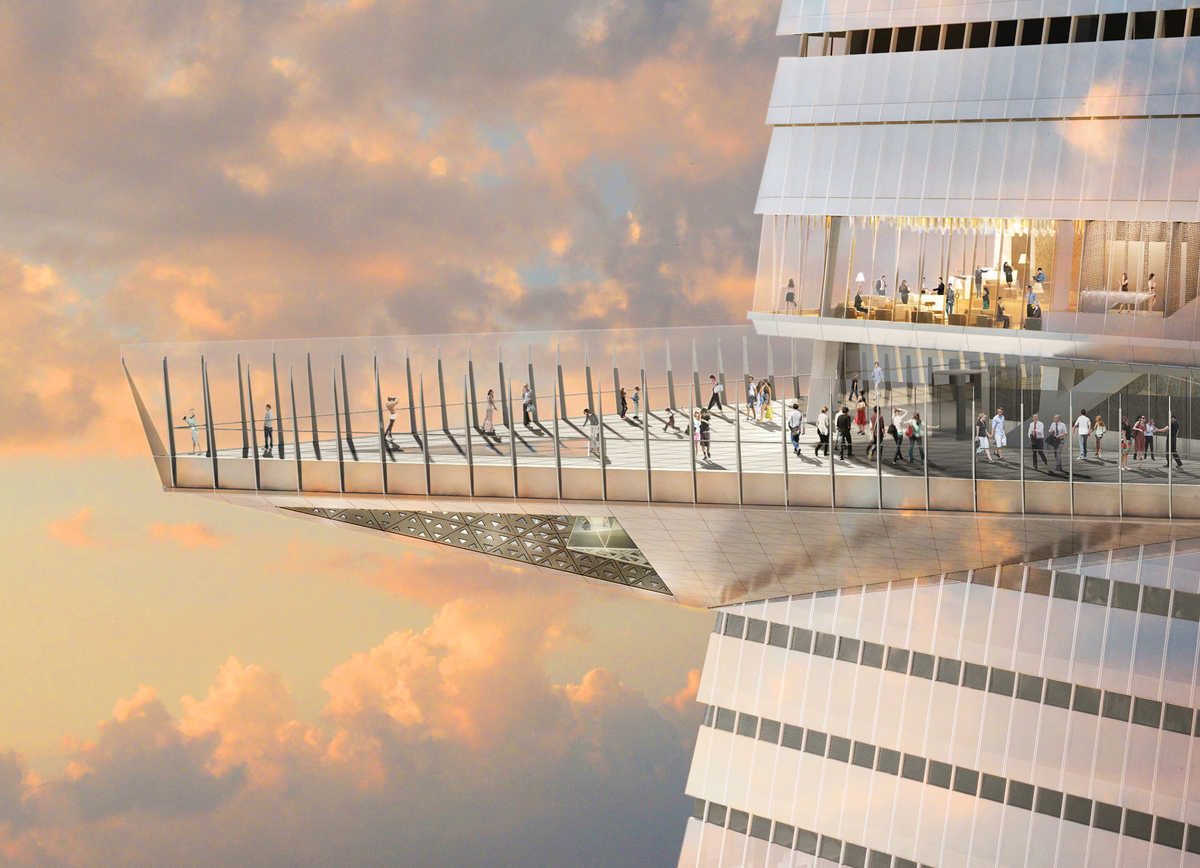
Built on two platforms that bridge Manhattan’s West Side Rail Yard, the 28-acre site will contain 1.7 million square metres of office and residential space. Visitors can admire the city from 335m up on the observation deck of 30 Hudson Yards’ office tower, or from Thomas Heatherwick’s urn-shaped structure of 154 interconnecting flights of stairs and 80 landings. Dubbed New York’s Staircase, and with a budget north of $150 million, it may be one of the most expensive selfie magnets ever built.

But in contrast to the Vessel, the architectural surprise here is the Shed, an independent arts centre designed by Diller Scofidio + Renfro in collaboration with Rockwell Group. (DS+R also helped design the High Line, which wraps around Hudson Yards’ southwest corner.) The 18,581-square-foot structure is covered by an enormous telescoping outer shell. Made of steel and translucent Texlon-based polymer, it rolls away, motor-driven, on rails to cover an adjoining 1,726-square-metre plaza, creating a 37m-tall performance space called McCourt. (The plaza, minus the shell, can also be used for outdoors events.)

The Shed is a nonprofit cultural institution located on city-owned land on West 30th Street between 10th and 11th Avenues on Manhattan’s west side, where the High Line meets Hudson Yards.
The idea for the Shed was hatches a decade ago; to David Rockwell, its successful completion proves that “the mark of a good design idea is that it survives reality”. Elizabeth Diller, one of DS+R’s founders, acknowledges that “the Shed would never have happened without the development of Hudson Yards”, which afforded the project more open space than it might have had on a typical infill site. To be versatile, she adds, it had to be “a building of infrastructure” but one “with an opinion”, avoiding the bland neutrality of many black-box theatres and white-cube galleries. She believes that it will “come to life in a way that we can’t predict”.
Watch this (flexible) space.