It’s been one long year since Apple unwrapped the groundbreaking iPhone 12.
That release brought with it bold design changes, include a flat-edged boxy finish that harked back to the iPhone 4 and 5 of yesteryear. The iPhone 12 also introduced us to Apple’ MagSafe cases, chargers, and other accessories – along with a slew of performance and camera upgrades.
But that was then, and this is now. And Apple’s newest and nowest smartphone – the iPhone 13 – has arrived right on schedule.
Apple faithful will no doubt be aware of the way Apple cycles between big upgrades such as the iPhone 12, and iterative ones (a tweak here, a polish there). And before we go any further, it’s worth noting that this is very much the latter.
The iPhone 13 takes everything that was good about the previous model, tidies it up a bit, packs more power under the hood and then slaps a fresh coat of paint on it. It is almost certainly Apple’s best iPhone – that tends to happen year on year – but the real question is whether or not it’s worth the upgrade.
iPhone 13 design – how’s it look?
Remember the bit about this being an iterative upgrade?
The iPhone 13 is pretty much on par with the iPhone 12, just with a few clever tweaks that make it identifiably different (although, you’ll need a pretty good eye to spot those differences from across the room).
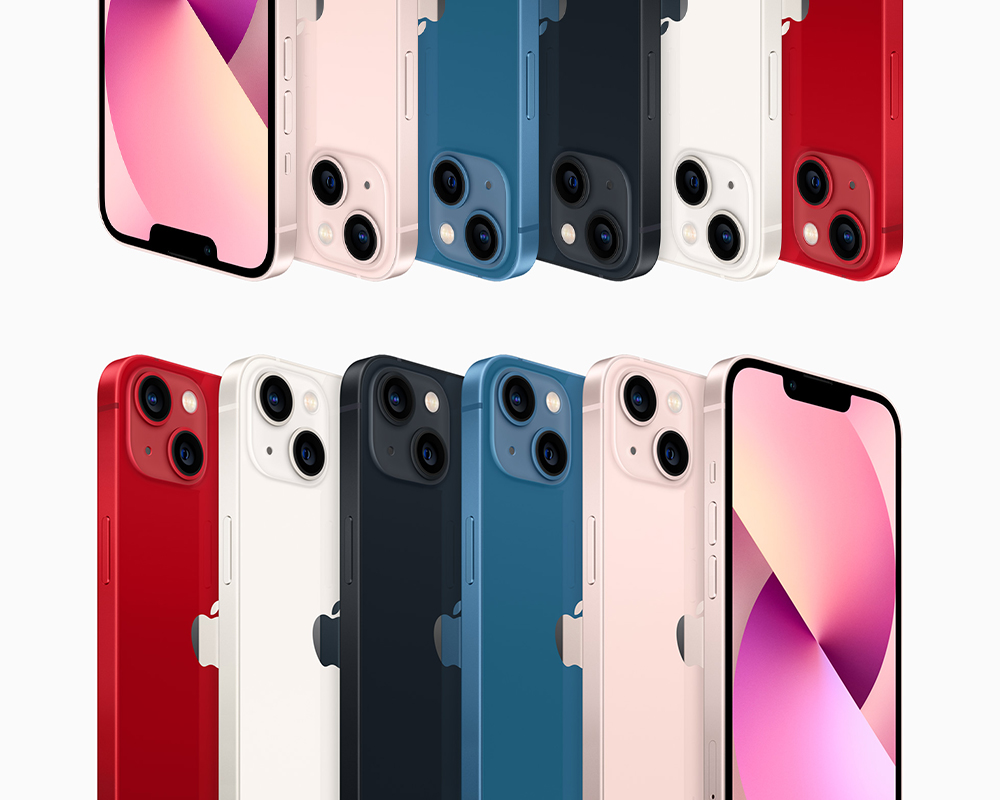
The new iPhone is the same size and dimensions of the previous model, along with the same design. What you do get are a few new colours; like pink and a lighter shade of blue.
The camera array has also been fiddled with, to allow Apple more room to include a larger camera sensor. Now, both backward shooters are arranged diagonally. The notch too has been tweaked; Apple has made it 20 per cent smaller.
Now, there have been a few different takes on the notch over the years. Some people love it and others are driven mad by it. Most people though aren’t really bothered. You should strive to be one of those people.
Anyone who makes a smartphone decision based on the size (give or take 20 per cent) of a notch at the top of their phone, really needs to get a hobby. Or at the very least see a specialist about the irrational obsession of notches.
iPhone 13 display – how’s looking at it?
The iPhone 13 comes in two sizes. On the little end of the spectrum sits the iPhone 13 Mini – with a screen size of 5.4-inches. While the regular version sits at 6.1-inches. Both make use of Apple’s new Super Retina XDR OLED display, which makes for even brighter screens.
Otherwise, it’s all pretty similar to the iPhone 12 – but that’s not a bad thing. It’s responsive, packs punchy colours and features deep, rich blacks. However, it is worth noting that it does not have the same buttery-smooth ProMotion display as its more professional cousin – the iPhone 13 Pro.
Whereas the iPhone 13 Pro has an adaptive refresh rate, which allows the screen to go from 10Hz to 120Hz, the iPhone 13 has a standard 60Hz refresh rate. And if you don’t know the significance of screen refresh rates, then it’s safe to assume that you won’t really notice the difference between the two (basically, if you don’t know what a Hz is, the iPhone 12 will do just fine).
iPhone 13 camera – how’s the snapper?
Arguably the biggest update the iPhone 13 gets over the iPhone 12 is in the photographic department. And that comes in the form of trickle-down camera technology form last-year’s iPhone 12 Pro max.
The iPhone 13 comes with the same souped-up camera system that hit the Pro models last year, with a physically bigger sensor that can suck up more light to produce excellent photos in low light.
There are two cameras on the back, a regular and a wide-angle, and both clock in at 12-megapixels. Apple has added its sensor-shift stabilization technology to the mix, which physically moves the sensors to reduce vibration – making for clearer, less fuzzy photos and video.
Moreover, the cameras will now benefit from what Apple calls ‘photographic profiles’ that will let you customize the look of your photos. Think of it like your own personal Instagram filter, but one you can program into the screen before you take a photo.
Apple has also very cleverly built a cinematic mode for video that allows you to create that professional-looking blurred out background look. Yes, you could already do that with portrait mode, but now that’s come to the video department, also.
When activated, cinematic mode will automagically adapt the focus while filming in real time, intelligently shifting focus when people enter or leave the frame. You will also be able to manually change focus or lock focus, and all of this is directly editable – which should mean you’ll never get a blurry frame ever again.
iPhone 13 performance – does it run smooth?
Every year Apple releases its “most powerful smartphone ever” and the iPhone 13 certainly stays true to that.
Under the hood you get an A15 Bionic, which Apple says is up to 50 per cent faster than the competition, and feature graphics that are 30 per cent better – but hasn’t mentioned who that competition really is.
Regardless, the iPhone 13 will keep pace with even the fastest of furious multitaskers, with nary a slow-down, stutter or lag in sight. Swapping between apps and games is lightning quick, as it should be.
Having a phone that is physically better in some way over the previous model should be expected. It’s why you would upgrade in the first place, so we’re not sure why Apple bangs on about it so much.
The real benefit of the new processor can mainly be seen in its power efficiency. The iPhone 13 Mini will edge out an extra 1.5 hours of use over the previous model. And the larger iPhone 13 will get up to 2.5 hours more battery than the previous model.
iPhone 13 software – what’s it run?
The iPhone 13 comes with Apple’s iOS 15 right out the box – and much like the rest of the device, the new software is an iterative and incremental upgrade over the previous one.
The big new features include the ability to use FaceTime with non-Apple users. You can now create a link to a FaceTime call and then send that to Windows or Android users, who can participate via web browser. You also get a new grid view, which makes for easier group chats.
Safari has seen a big update, with a freshly located tab bar now at the bottom of the screen and the ability to have extensions. And there are new focus modes that will customize which apps can send you notifications depending on the time of day, or where you are.
For example, you can have your work emails and slack channel ping you during the regular nine to five working day. But come home time they will be automatically muted and removed from the home screen. And you can set these up for all sorts of scenarios, such as driving and hitting the gym. In essence, if there are a few apps that you use lots at certain times of the day – Apple has made using them that much easier.
These are all worthwhile additions to the iPhone, but ones that are not exclusive to the 13 model. iOS 15 is compatible with devices all the way back to the iPhone 6s.
iPhone 13 verdict – sold yet?
The iPhone 13 then is marginally better than the previous model. Big whoop.
It has more colour options, a better camera and performance, as well as a slightly better screen. It is by far the best iPhone you can buy right now – especially if you aren’t concerned with screen refresh rates – and the fact that this is just an ‘incremental’ update is more a testament to how good last year’s iPhone 12 was, over this one lacking in any way.
Should you upgrade? If you still have a shiny one-year-old iPhone 12 in your pocket, probably not. iOS 15 (which can be installed as of today) will give your current blower a few new tricks. But if your iPhone currently sports roundy-edges, then the iPhone 13 is well worth the upgrade.