-1200x594.jpg)
Yesterday saw Apple pull the wraps off three new iPhones, two of which included the ‘Pro’ moniker generally reserved for Apple’s top-of-the-line technology.
The iPhone 11 Pro and iPhone 11 Pro Max instantly made headlines, mainly down to a new camera module on the back (which brings the total camera tally on the Pro models to four). Apple also threw in an almighty display, new colours and better audio support. And – as per usual – the tech press ate it up.
But while everyone salivated over the high-end models, Apple’s most basic blower – the iPhone 11 – quietly sat in the corner, biding its time. Because it – ladies and gentleman – was the real star of yesterday’s show.
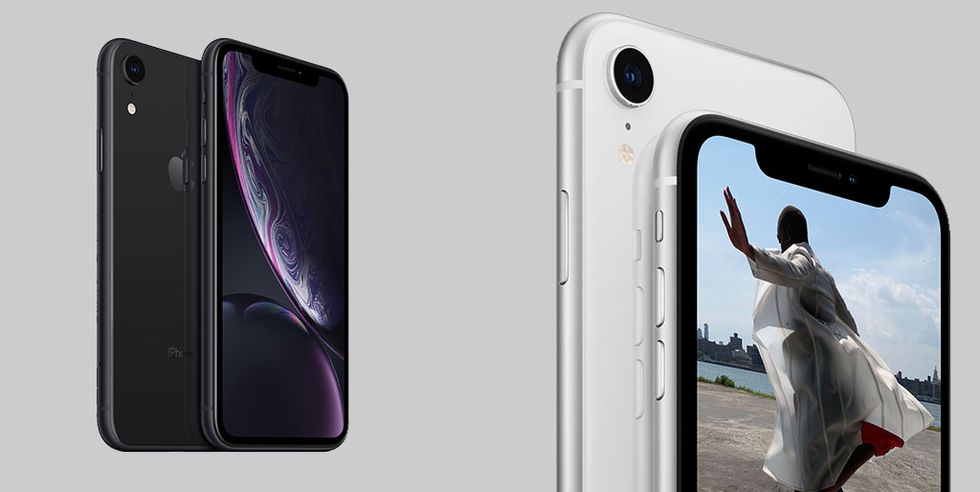
Last year’s iPhone XR (the spiritual sibling to the iPhone 11) out-shipped every other phone in the first half of 2019 – including the likes of Samsung’s Galaxy S10 and Huawei’s P20. And of the last generation, it’s also Apple’s best-selling iPhone.
.jpg)
The largest difference between Pro models and the basic one is an additional camera sensor
The iPhone XR (the previous version to the iPhone 11) out-sold every other phone on the planet in the first half of 2019
Taken at face value, that’s because the XR was the cheapest. But in reality, it gave the tech masses a chance to embrace Apple’s all-screen design and camera upgrades, at a reasonable price. It may have been cheaper, but it represented incredible value, which is why it sold in droves.
After yesterday’s launch event in California, it seems that Apple has embraced the ‘ain’t broke, don’t fix’ philosophy of thinking – as the new iPhone 11 has doubled-down on everything that made its predecessor great.
Here’s why Apple’s iPhone 11 is a nigh-unbeatable smartphone package:
.jpg)
Unlike the iPhone 11 Pro, the basic model comes in six light, bright hues
The iPhone 11 (thankfully, Apple dropped the confusing X+R naming convention) packs the same Liquid Retina LCD as the previous model, measuring a plenty-big 6.1-inches.
Yes, the Pro models do sport an OLED display, but if you don’t know your organic diodes from your liquid crystals, you’re hardly going to notice the difference.
You also get the same boosted audio, courtesy of Dolby Atmos, which should make sound more spatially-aware (similar to how a surround sound system works but built especially for dinky smartphone speakers).
The iPhone 11 uses the same quality camera sensor as Apple’s Pro models, it just has one less of them
Apple has abandoned 3D touch across all its devices because most people forgot the feature existed at all. It let you push hard against the screen for additional menu options (such as to go direct to the selfie camera via the standard camera app).
The largest tradeoff between recent year’s higher-end models and the XR was in the camera department.
The major difference was the X / XS packed dual-cameras on the back, while the cheaper options had just one. Without that second lens, the phone had to rely on software to estimate things like white balance and depth of field – which did lead to some less than stellar images (particularly in low light).
.jpg)
The new night mode features is available on all three of Apple’s new iPhones
Fortunately, the iPhone 11 now includes two 12-megapixel cameras on the back: a 26-millimetre regular snapper, and a 13-millimetre ultra-wide sensor.
That second camera gives the iPhone 11 all of Apple’s portrait mode features, including the new ones announced just yesterday (such as High Key Mono and automatic Night Mode), as well as QuickTake: which lets you capture video by holding down the shutter button, instead of having to swap modes.
On the front-end, the selfie camera has also seen improvements – you can capture 4K video at 60 frames per second.
.jpg)
Apple is calling the iPhone 11’s A13 Bionic Chip ‘the fastest ever in a smartphone’
Under the hood, the iPhone 11 even sports the same A13 bionic processor. Apple says it’s the best chip on the market today and boasts the “fastest ever graphics ever put in a smartphone”.
Most wallet-friendly smartphones tend to use last year’s technology to keep costs down, so it’s good to see Apple including its latest chipset into the iPhone 11. However, given the company’s push toward gaming, it’s not surprising it would want to ensure that as many devices as possible are compatible for developers.
In summary, there are two main differences between Apple’s Pro models and the iPhone 11: that screen (which is LCD over OLED) and that it has two cameras over three (note: all models use the same quality sensors, the iPhone 11 has just one less).
Which brings us neatly to the price. The smaller of Apple’s Pro model starts at AED4,219 (US$1,150) while the iPhone 11 comes in at AED2,949 (US$800).
That makes the basic iPhone just over 30 per cent cheaper than the Pro models, but with 90 per cent of the features. And that math is hard to argue with.
.jpg)
The Apple iPhone 11, iPhone 11 Pro and iPhone 11 Pro Max are all available for pre-order starting tomorrow at 4:00 PM, Friday 13, 2019. Head to apple.com for more.