
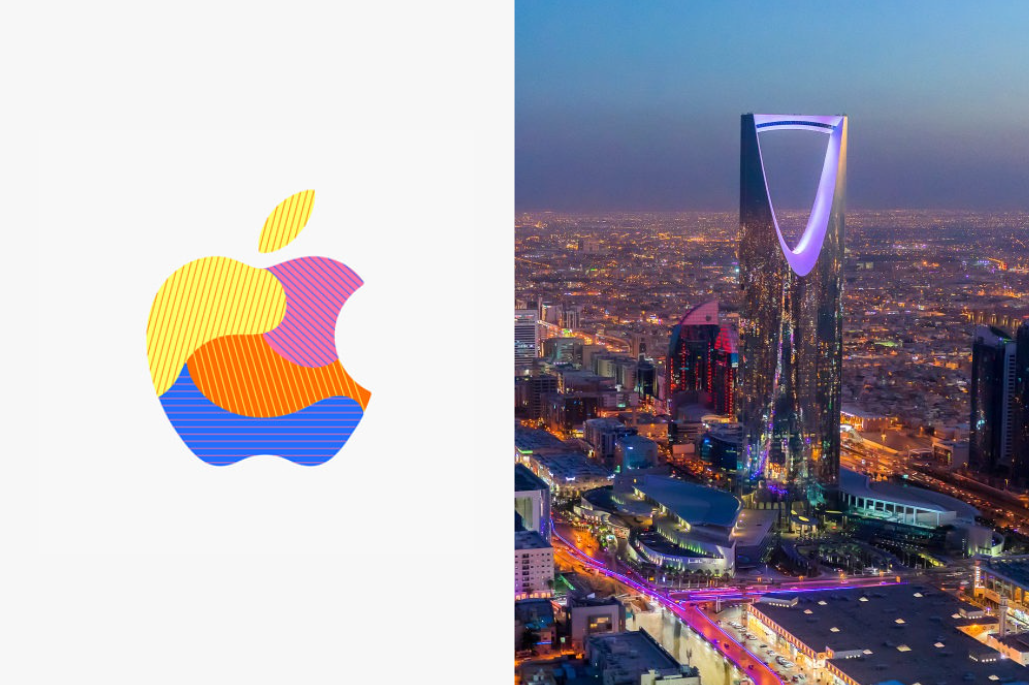

Apple’s Gulf expansion is heating up. Back in December, Apple unveiled its fifth UAE store (in Al Ain, Abu Dhabi), cementing its retail presence in the Emirates. That same month, CEO Tim Cook stood in Riyadh and promised that Saudi Arabia would, at long last, get its own Apple Store at some point in 2025.
That promise is now a reality. Not a bricks-and-mortar flagship (not yet), but something perhaps even more overdue: an online Apple Store, fully in Arabic, and entirely direct.

The Apple Store is now live in Saudi Arabia. For the first time, customers in Riyadh, Jeddah, Dammam (or anywhere in between) can buy an iPhone, MacBook or Apple Watch straight from the source. No more middlemen, no more mystery markups, no more deciphering English-language tech specs over a dodgy translation. Just Apple, speaking Arabic, selling Apple.
For years, Apple fans in Saudi Arabia have been operating through a patchwork of Authorized Resellers. If you wanted to customise a Mac, good luck. If you wanted engraving, forget it. Even basic support often meant navigating call centres on another continent. With today’s launch, those barriers collapse. The Kingdom is now in direct conversation with the mother ship.

The online storefront arrives fully localised. Arabic isn’t a drop-down option, it’s the default. Pricing is transparent, and you get the full suite of Apple services (including Arabic-language customer support) is finally standard issue. Want your name carved into the back of an iPad in elegant Arabic script? Go ahead. You’re now part of the ecosystem.
Apple as a company has been investing steadily in the region for over a decade. The UAE got its online Apple Store back in 2011 and physical stores in 2015. Today, it’s one of Apple’s most mature markets outside North America. Saudi Arabia, by contrast, might be Apple’s late bloomer, but its potential is enormous.
That potential hasn’t gone unnoticed. In 2021, Apple opened the region’s first Apple Developer Academy in Riyadh, an all-women’s institution at Princess Nourah University, designed to train the next generation of Saudi app developers. Nearly 2,000 students have already completed courses there, feeding directly into the booming regional iOS economy. Apple Pay is now embedded in daily life, recently extending to the capital’s new metro system with Express Mode, making Riyadh the first city in the Middle East to get the feature.
Now, with direct-to-consumer retail finally unlocked, Apple is laying the groundwork for something much larger. Starting in 2026, Saudi Arabia will get its first flagship Apple Stores, including an “iconic” location in the UNESCO-listed heritage site of Diriyah.
In the meantime, Saudi customers can, at last, buy directly from Apple. No resellers, no workarounds, just the full range of products and services, available in Arabic, with support to match.
It’s been a long time coming.