
Posted inUncategorized
The Masters comes to town
January’s exhibition at DIFC treats us to works from some of the world’s big hitters

SHARE
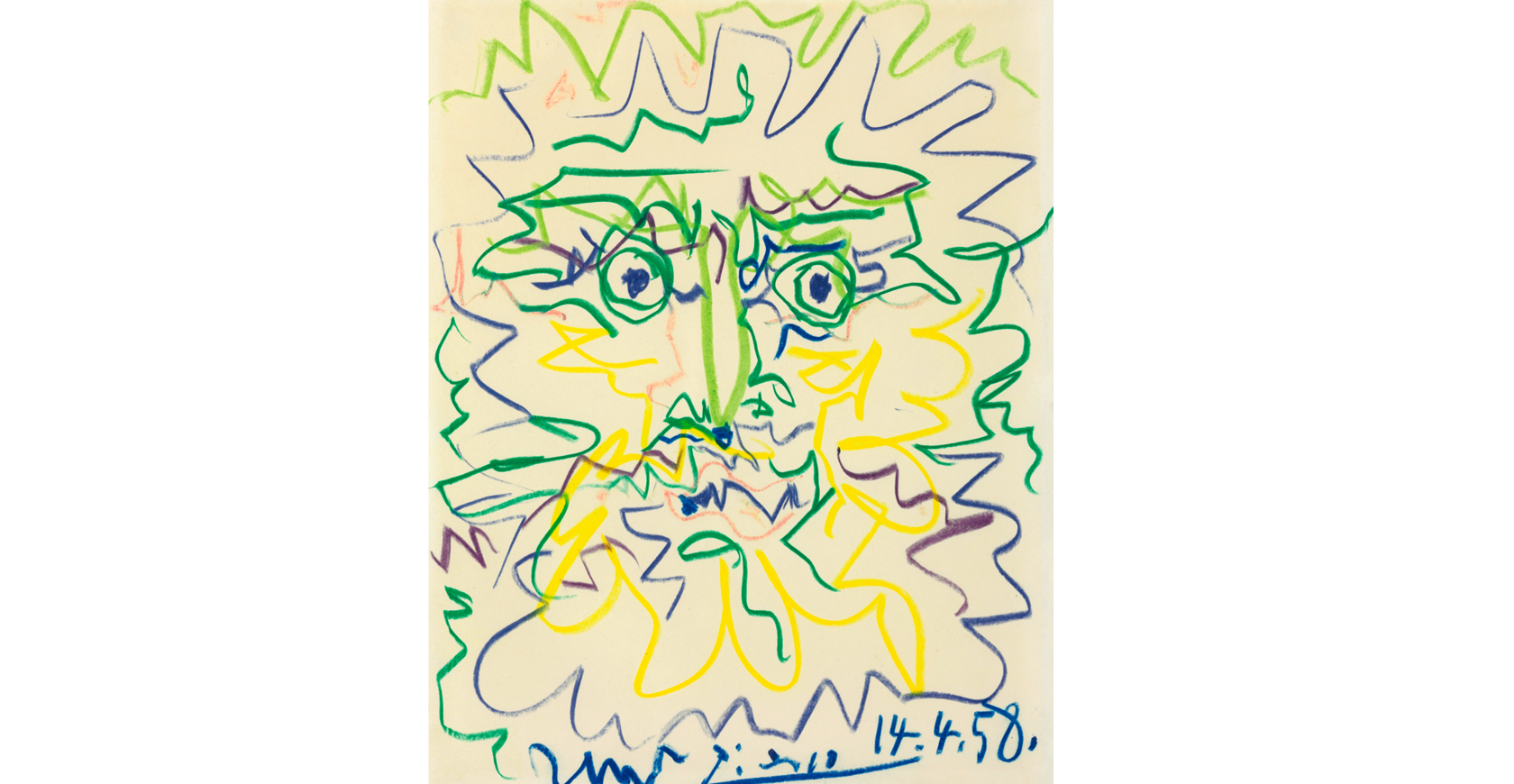
Picasso – Tête de Faune (1958)
We selected this piece — alongside three of his others — because of the medium and the subject. Very early on, Picasso showed a lot of interest in mythology and metamorphosis, which translated into his body of work. This piece in particular depicts a faun, which in Roman mythology was half-man half-goat. T

Marc Chagall – Nature Morte (1975)
Marc Chagall’s paintings are often characterised by fractured surfaces, fantastical characters and dreamlike environments. In this painting, however, he adopts a more restrained approach. Chagall dedicated the painting to Valentina Brodsky, whom he married in 1952, and who became the central female character in all his paintings. The embracing lovers in the lower right of the work could be an expression of Chagall’s love for his greatest muse. Based on his studio in the commune of Saint-Paul-de-Vence, the background scene is painted in calming, neutral tones, the lovers appearing to melt into the room’s soft light. In contrast, the lavish bouquet explodes into daubs of yellow and red, in a celebration of the natural world.

Joan Miró – Femmes Dans La Nuit (1977)
Miró studied at the Beaux-Arts in Barcelona and later at the Accademia Galli. In 1919, he met the most important artists of his generation in Paris. Initially influenced by Fauvism and Cubism, Miró was later integrated into Surrealism by André Breton. Despite these influences, he proved himself to have the most original imagination and humour, always lending new life to the world. His works are among the most celebrated in the history of modern art, and form part of every important collection in the world.
In this piece, women have been drawn in Miró’s trademark style. One also encounters the iconography for which he is famous: crudely drawn stars, bold lines and child-like suns. Besides being representative of his style, this piece is playful and the format interesting.
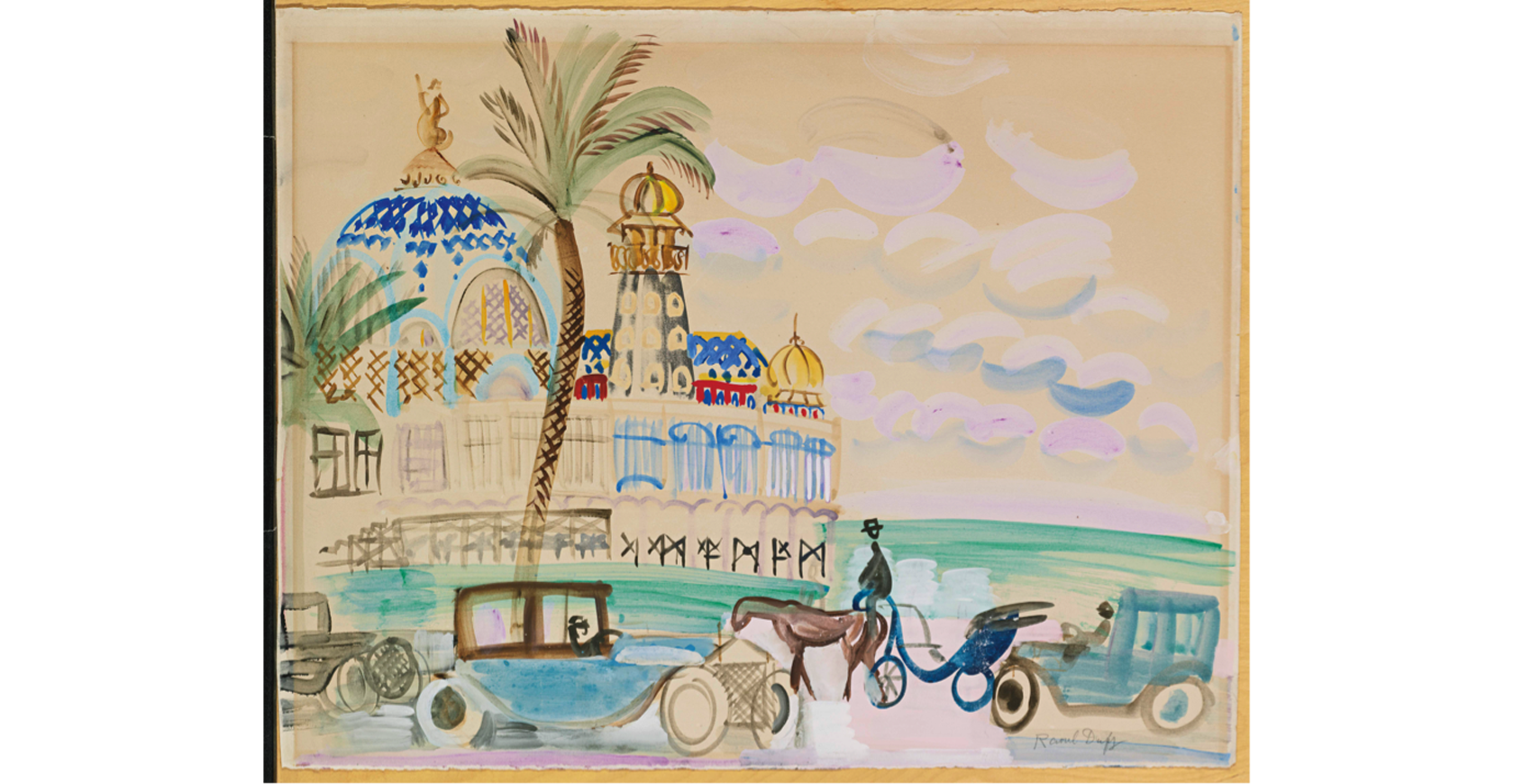
Raoul Dufy – Le Casino de Nice (1925)
Raoul Dufy attended the École des Beaux-Arts in Paris, where he was influenced by the Impressionists and the Fauvists, to whom Dufy owes his brilliant use of colour. He was also a successful illustrator, as well as a designer of textiles, ceramics and tapestries.
By the 1920s, Dufy was dedicating his energies to painting alone, developing his distinctive style, characterised by its vivacity and lightness of touch. Dufy was enchanted by the light on the Côte d’Azur.
“Le Casino de Nice” is an excellent example of his work from this period. The casino in this work has been lightly sketched in fine blue lines, while the palm trees have been rendered in blots of pale green. The brushwork is energetic and free, conveying the sense of freshness for which Dufy’s work is celebrated.

Robert Longo Study of Tiger Head 16 (2012) Graphite and charcoal on vellum
Born in 1953 in New York, Robert Longo is one of the most important artists of his generation. He developed an interest in images from mass-culture at an early age. He would draw upon these to make his world-renowned works. Famous for his expansion of the possibilities of drawing and for his brilliant draughtsmanship, Longo has revolutionised the way in which we see this medium. Trained as a sculptor, his drawings often retain a three-dimensional quality, their sharp, elegantly rendered lines opening out into the space of the viewer. Longo has been the subject of several important retrospective exhibitions: including those at the Hamburg Kunstverein and Deichtorhallen and the Museum of Contemporary Art in Chicago. “Study of Tiger Head” is a brilliant example of Longo’s drawing. The subject is beautifully rendered and its photographic quality is testament to the artist’s skill and imaginative vision.
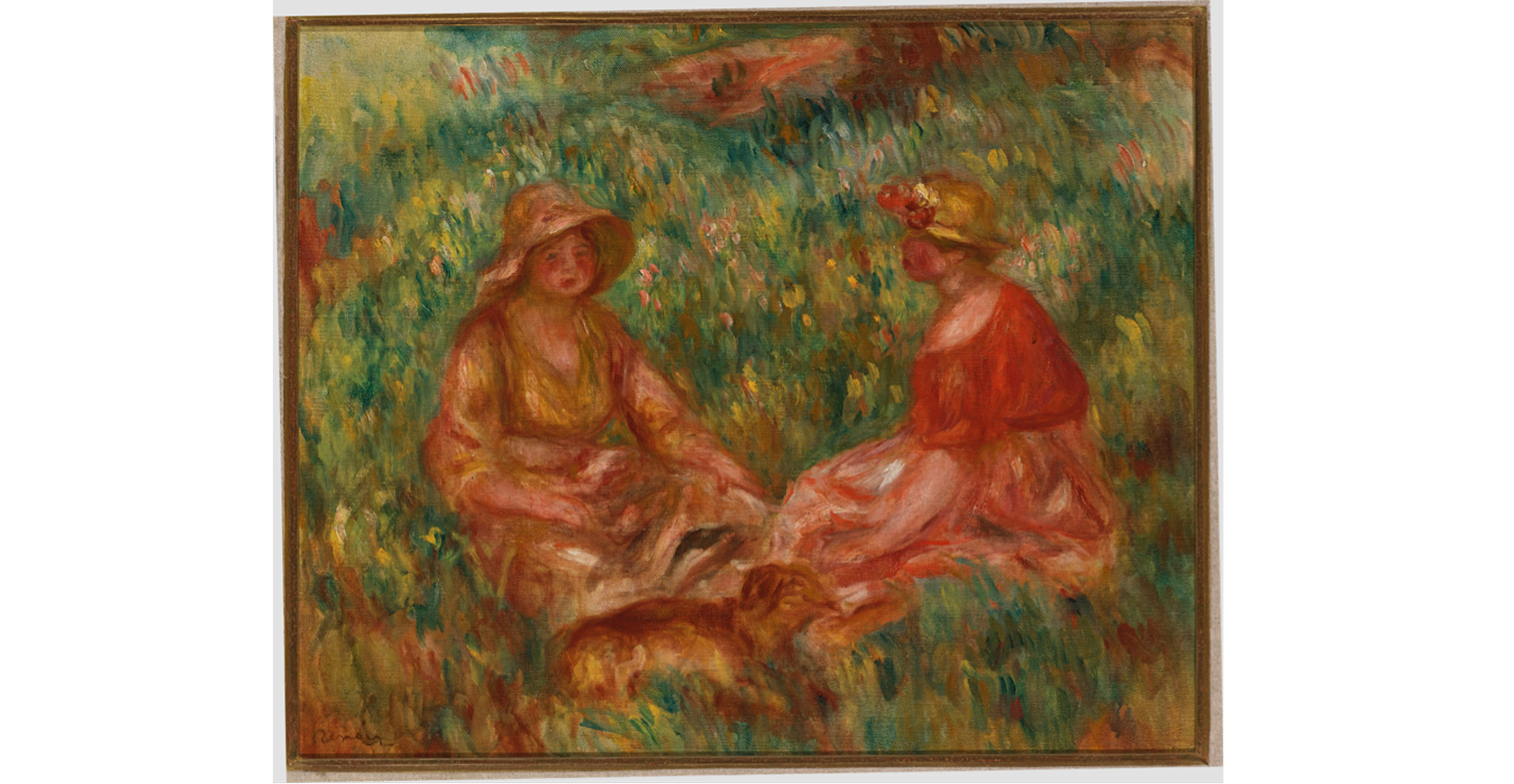
Pierre-Auguste Renoir – Deux Filles Dans Un Pré (circa 1910)
This is one of two Renoir pieces we selected, and one of the most important of the exhibition, from a historical and value perspective. Renoir began painting while working in a porcelain factory, and in 1862 moved to Paris to study fine art under the aegis of academic Swiss painter Charles Gleyre. It was there that he met artists such as Claude Monet and Alfred Sisley, who would exhibit with him in the first Impressionist exhibition in 1874. Renoir developed arthritis in later life and moved to the warmer climes of Nice at Les Collettes, a farm close to the Mediterranean. Known for his distinctive Impressionist style, he relentlessly painted until his death in 1919. This piece is very representative of his later works, characterised by the dissolution of outlines and colour for which the artist is famous

Fernando Botero – Circus Musicians (2008)
A few years ago, the Colombian-born Fernando Botero chanced upon a circus in a small Mexican town on the Pacific coast. The poor troupe attracted him because it was similar to those that visited his hometown near the Andes when he was a boy. He found the circus deeply inspiring. As the artist put it, “At the circus one finds colours, movement, poetry, animals, expressions of the human spirit that one finds nowhere else”. The circus also allowed Botero to develop his fascination with people who exist on the margins of society. The works from this series are among the most celebrated in Botero’s oeuvre, which forms part of private and public collections across the world. In “Circus Musicians” two men play brass and wind instruments. Rendered in patches of dark green, the paintwork is brilliant. Botero is a virtuoso, one of the most powerful and exciting painters working today. The distortions of perspective and scale are typical of his artistic practice.
More Galleries
Posted inUncategorized
The Masters comes to town

Posted inUncategorized
Chivas Legends Dinner 2014

Posted inUncategorized