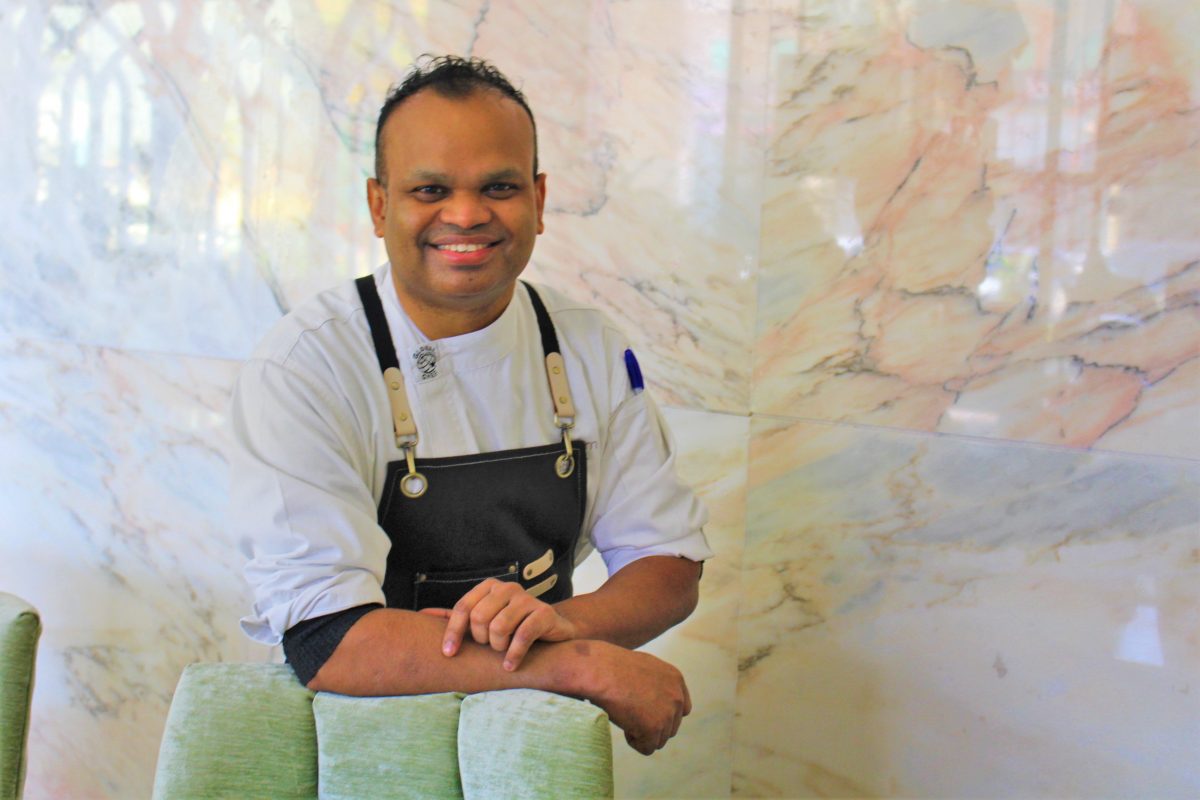
Adam Schihab has built quite a reputation for himself in the Eastern Province of Saudi Arabia, not to mention the world, bringing his signature Maldivian style to Al Khobar through the buzzed-about Vanille Restaurant.
Though there may not be any viral salt dashing going on, Schihab is also something of a social media star himself, building a sizable following and releasing a book, The Islander Chef, last year, featuring some of his most delectable dessert recipes.
Esquire Middle East sat down with the pastry master to talk about his travels worldwide, his life’s journey, and, most importantly, food, food food.
Read our full interview below:

Your book is called “The Islander Chef.” What is the story behind the title?
I have always been called the islander chef during my journey, as I was born in the Maldives. Back in 2005, I was in the US, and many people did not know where the Maldives is. I was saying to them, ‘go and google it’, then they would say, “Oh, you are from an island,” and this is how I have been called the Islander Chef.
Regarding my first book, I was not happy with it. That is why I am working on the revision edition called The Islander Chef – Global Edition. I will have 10 International chefs’ contributions in this book.
When did you know you wanted to bake for a living?
When I was 16 years old, the Maldivian government motivated us to have work experience during the school holiday. At that time, my uncle asked me, “why not seize the opportunity of the long three-month holiday and start earning some money?” Then he introduced me to an Italian island resort The general manager asked me what I want to do, and I answered, ‘I don’t know.’
I was sixteen, and I ended up in the kitchen washing dishes. In that kitchen, I met an Italian chef who asked me to cut vegetables, do this and do that. I started learning the Italian language, which is considered the second language in the Maldives. I was taken to Rome for one month with 19 students to learn more about the Italian tourism experience. I came back to that resort and applied. The resort hired me again, and then I met an Italian chef who said to me, ‘Bambino do you want to make patisserie?’ I said yes. After that, I saw how to turn sugar into caramel, and I was excited to see this. There, my story of baking began.
What is the most important ‘life lesson’ that working as a chef has taught you?
At some point in my life, I learned how to be aggressive and rude in the kitchen. I behaved the same way when I ended up in Indonesia. I do not think the management liked my behavior. I changed my attitude and started treating people in a lovely and respectful way. I started speaking to people calmly. I learned how to be positive and respectful.

What is your first memory of food?
My first memory is related to potatoes and grandma. We had a potato farm in South Maldives. This area was well-known for growing potatoes. We had more than 20 different species of potato. When my grandmother and I were harvesting potatoes, I was using a knife, and accidentally I cut my hand. I still remember this very old memory in which the potato color was blended with my blood.
The Maldives is a very popular destination for Saudi nationals. Do you hope to bring some of your cultures into the Saudi food scene?
Currently, I am the first Maldivian to work in Saudi Arabia except for embassy staff. What I brought with me is Maldivian hospitality. Back home, we have luxurious standards in treating our guests. I have suggested Maldivian resort names to some Saudi customers who called me back saying ‘we had a beautiful time because of your suggestion’. Actually, I consider the Maldives as a brand that brought me success as a chef.
If you could only bake one thing for the rest of your life, what would it be?
It can be bread. I started making every kind of bread using my own flour, so this is what I will do since every culture has its own bread. I have used special ingredients to invent a special kind of flour, and today I am using my own flour in baking bread.
Many well-known chefs, including Chef Burak or Chef Nusrat, have built their profile on showmanship more than just the food they make. Is that something that you are interested in doing?
I would rather be more original. I would instead be sharing recipes with people who could benefit from it. I would not go to present a big show for making meat. I prefer to give my social media followers and my guests educational content over an entertaining show.

Do you customize your recipes to satisfy local tastes?
Saudis are big fans of new food. However, adapting local preferences really works. I am always doing whatever I can to bring pleasure to local visitors. I am so keen on using stuff based on local preferences. Recently I made Baklava and cheesecake to satisfy my Saudi guests.
Finding the right ingredients might be challenging in some places. So how do you serve International cuisine of the same quality in different areas?
This is the biggest challenge I am facing from the moment I joined until today, and it will never stop. Sometimes I order 50kg ingredients from a supplier. After two weeks I get a message from the supplier saying, “Sorry we don’t have anymore.” I got used to this kind of supply shortage. If you look to the Maldives, it is a remote location, so we learned how to find and bring our needs of supplies. In Saudi Arabia, this situation is more difficult since we have some restrictions in importing some kind of ingredients
How do you run your kitchen? Are you quite strict, or do you have your own style?
Personally, I have a checklist to determine the tasks of my employees. If they failed to do their tasks, I would give them the first warning, second warning, and final warning. So we have a procedure in the place. In general, I am very calm, collaborative, and professional. I respectfully deal with my staff. If any of them makes a mistake, I speak to him, asking why he did that and how I can help him avoid making mistakes again. In high pressure times, I raise my voice, but I don’t shout or scream. With all my staff and colleagues, I like to treat them with respect and dignity.

Esquire now has a newsletter – sign up to get it sent straight to your inbox.
Want up-to-the-minute entertainment news and features? Just hit 'Like' on our Esquire Facebook page and 'Follow' on our @esquiremiddleeast Instagram and Twitter account.