
It is difficult, in my job, to escape the notion that we are making a mess of the world. My work as an international news correspondent tends to show me the worst aspects of humankind, and inevitably my thoughts turn, at some point, to my own children.
I have a 13-year-old daughter and an 11-year-old son. Both are at an age where they are more engaged with the world, and aware of the ways in which the adults are basically failing to solve problems that directly impact them. What kind of world will we leave behind for them? Are we really doing enough to save the environment and keep it a liveable place for them?
Let‘s face it: we are doing a poor job of protecting the natural world and tackling the crisis facing our climate. My daughter recently started going to the Friday for Futures demonstrations in Berlin, Germany to demand more strident climate policy.
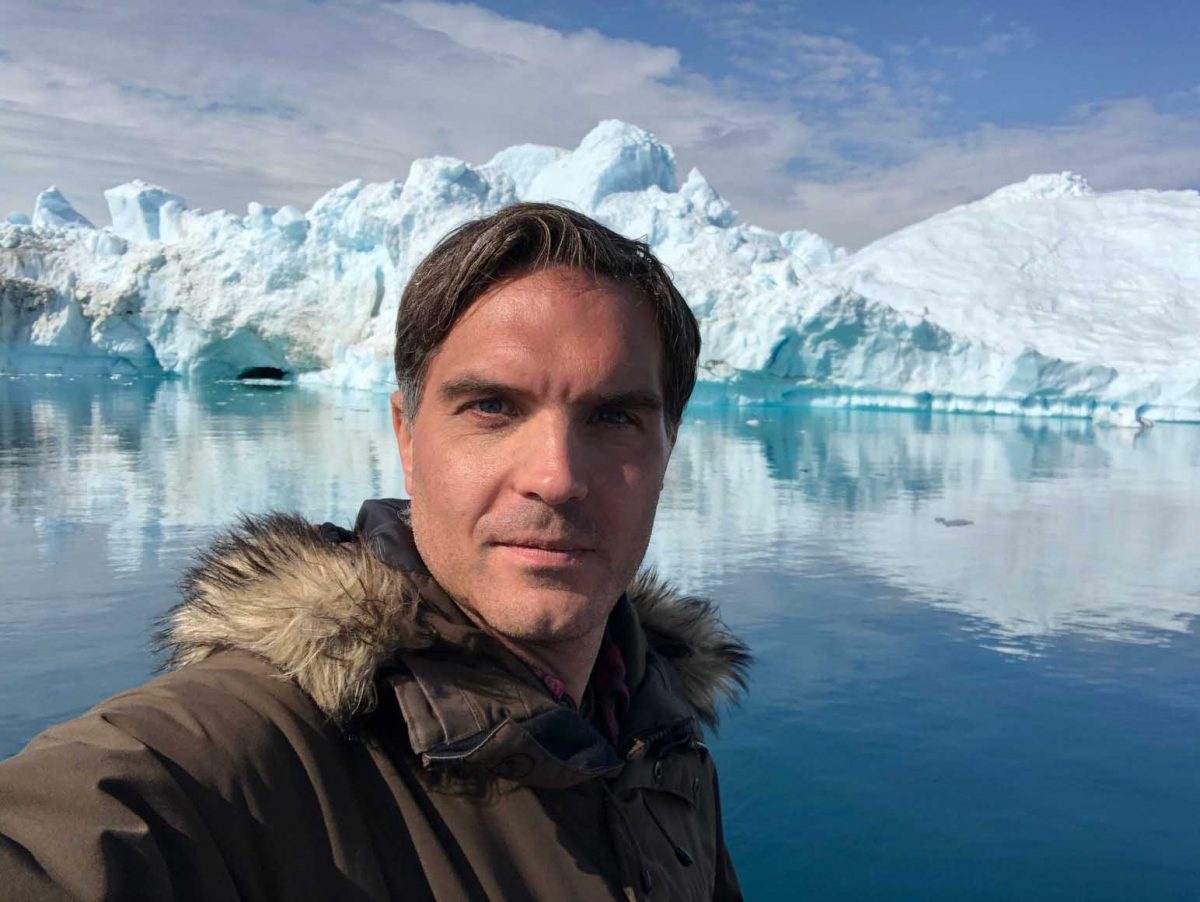
Last week I found myself on a little propeller plane, traveling to the tiny Eastern Greenland village of Kulusuk. Just 200 people live there. Touching down on the gravel runway at its little airstrip the remoteness – and fragility – of this community, was clear. I hate to use this phrase, but this is the front line of the global climate crisis.
The climate is changing fast in Kulusuk. Massive icebergs are breaking off from the colossal glaciers as Greenland’s ice cap melts. Whales and fish are changing their migratory patterns, because the krill they depend on to eat are disappearing too.
My daughter is not just protesting against politicians, she is also protesting against me; against the fact that the environment has always been a secondary issue for my generation. For her generation, it is far from secondary. They are watching our world deteriorate, seeing more whales wash up with their stomachs full of plastic, and giant wildfires ravage places in the Arctic that should be frozen all year round.
Perhaps my generation has always seen climate change as an abstract concept. But there is nothing abstract about it when you witness it first-hand. Watching a massive iceberg cracking and breaking as it flows down a Fjord and into the ocean, you can viscerally understand how the process, called calving, is slowly raising sea levels.
At one point, standing on a boat we had rented to film the icebergs and suddenly realized that I was only wearing a t-shirt and still wasn‘t cold.
We spend so much time thinking about how we want to raise our kids, what we want them to become in the future, making sure they get a good education so they can become successful and maybe wealthy in the future. But maybe our moral compass needs adjusting.
Our children understand the importance of protecting the natural world far better than we do. We probably need to listen to them far more keenly.
I am away from home a lot, so I often use WhatsApp to communicate with my daughter. Before flying out to Greenland, I told her it would be her generation that would need to save planet: “I am sorry,” I said, “but we failed.” I hope we can turn it around before it’s too late.
Frederik Pleitgen is a Senior International Correspondent for CNN.


