
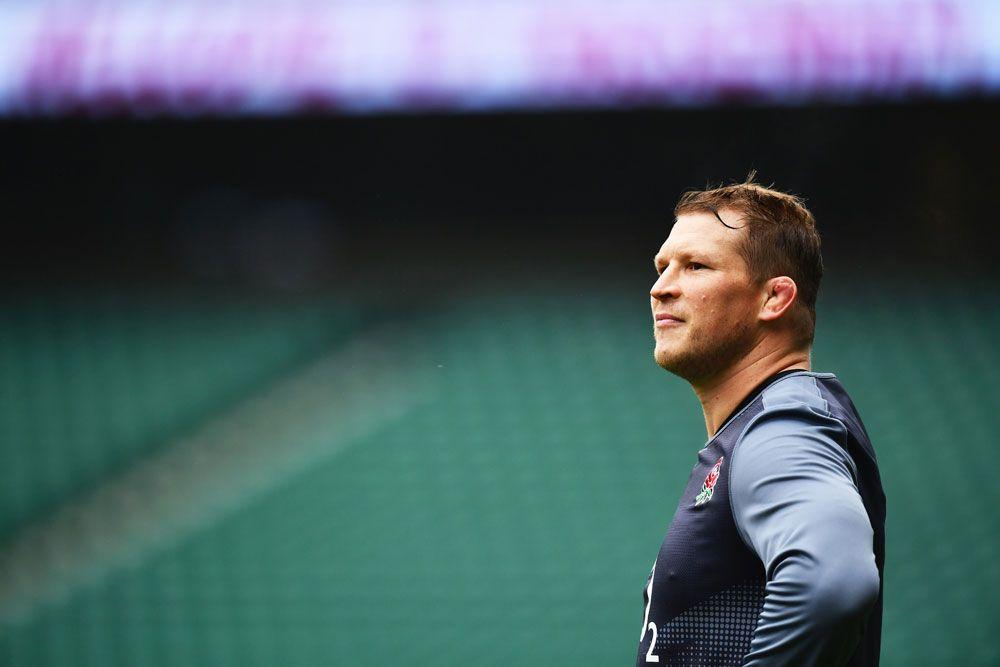

The last 15 months have been interesting for Dylan Hartley. The New Zealand-born, rugby player was made captain of his adopted nation of England, he then led his the side to a world-record equaling 18-consecutive wins, received praise for his resolute leadership, found himself in hot-water after picking up a six-week ban for violent conduct, and just today it was announced that he will be missing out on the upcoming British Lions’ Tour of New Zealand.
Ahead of the Lions’ selection announement, Esquire Middle East met up with Hartley on a mini-break in Dubai at the new Jumeirah Al Naseem hotel to discuss balancing rugby with family life, the joys of yoga (“stretching”) and staying out of trouble on the field
***
Esquire: I confess I don’t know much about rugby, but I’ll give it my best shot.
Dylan Hartley: It’s ok; I’m still learning as well. I played a game not so long ago when there was some strange interpretation of the law and it took us 30 minutes to work out what should happen. So I’m still working on it.
We’re all students in this life… Why are you in Dubai?
My life is dictated by my rugby schedule and it’s very rare to get a week off. But through being knocked out of the European Cup we got this break, so here I am. Half of the England rugby team are in Dubai, and a lot of the Scotland, Ireland and Wales lads. We’re all the same. If you’re knocked out then you make the most of it.
Is it a boys’ trip or family time?
I’ve got a young family and I think everyone is the same. We’ve all been away from our girlfriends or wives while on tour.
You’re not sneaking off for a drink with the lads?
Well, I’ve got a brunch booked on Friday, but it’s with my wife and we’ve got the babysitter booked. Other than that it’s not a week to binge. It’s a chance to reconnect with family and physically recover. We’ve been at it for nine weeks playing international rugby, so mentally it’s been a challenge of late.
So being on tour isn’t just about a few games and training sessions?
No, you have a sleep schedule. You’re up at 7.15am and immediately do a sleep wellness report on your iPad app. You do a urine sample, weigh in, then you’re thinking about what you need to eat to get you through the session. And living in a hotel for nine weeks there’s always a buzz, and there are people around. Then you go home, sit on your couch and it’s quiet. You’re hungry and you go into the kitchen and wonder where the buffet is and why you haven’t got a clean training kit. You’ve got a two-year-old wanting attention… You basically become institutionalised when you’re away and it takes a few days to ease back in to normal life.
Bradley Wiggins talked about how easy it is to become selfish when you’re an elite athlete because you’re too used to putting yourself first.
Oh yeah, I said to the missus, I think the best thing about being away for nine weeks is having my own bed. I can’t sleep properly when I share. So yes, I know what he means, but you have to try and adapt. For example, I try and be in water every day as it’s good for my recovery. It’s the last thing you want to do after training as you want to see your family. So now I try to pick up my daughter and wife and we all go for a swim.
But as an elite sportsperson, you must be aware of the need to maximise a short career?
It’s about trying to find a happy medium, and having a strong partner who can cope with you being away a lot. We call them rugby widows. Even when you’re home you miss things like weddings, birthdays and dinner parties, just because you don’t want to be on your feet for that long, or too late to bed or you don’t want to drink. Your love for the game dictates everything. And anyway, you can enjoy those things later in life.
I’ve got some rugby questions here from my boss, who’s a fan.
Ah, don’t worry about those; let’s just talk.
OK, fair enough. I’m more of a yoga guy, and what I wonder is why even some elite rugby players look overweight. Why is that?
I think that’s a stereotype to be honest. There are small guys who play the game. They’re powerful, but not necessarily big and muscular. What has changed is the recovery aspect, which the intensity of the modern game demands. You might call it yoga, I call it stretching. And I have to do it properly every day after training and not just pay lip service to it.
Are you noticeably more flexible as a result?
Way more. It’s almost embarrassing that I struggled to tie my shoelaces before. It’s easy to make excuses that you’re not flexible because you’re a big guy but that’s just not true. I used to have a lot of treatment to get my hips loose, but I haven’t been on the physio bed once since I started a proper assisted stretching programme that pushes you through range. It’s not just a few passive stretches. If it’s not hurting, it’s not working.
But some players still look a bit fat to me…
[Laughs] Myself included?
No! But there are a few who do. Who’s that guy who wants your place in the England side? Jamie George…
[Laughs] Yeah, but he’s fast and unbelievably powerful. And he probably needs his weight to scrummage with. Look, it’s a physical game; especially in the front row you get guys that still look big, and that’s OK if they can also move quickly. The key is how you use that power. There’s a lot of players who look like Tarzan but play like Jane. So a lot of our weight training is about making sure that power is transferable to the field.
You’re captain of a very successful England side. Congratulations.
We’ve just equalled the world record of 18 wins in a row and won the Six Nations back to back. Our new coach, Eddie Jones, is unbelievable.
What has he brought to the team?
Everything. He’s got high expectations like you’ve never seen. He’s friendly, he’ll ask how your family is doing, but then he’s not afraid to tell you that your training isn’t good enough. And those standards filter done to everyone. We’ve had a good run and we’re only a year-and-a-half into a four-year plan.
No wonder you’re stretching to prolong your career. I’d want to be a part of that plan.
Well that’s what he said to me. He told me I need to look after my body now I’m in my thirties. And I do feel a lot better for it.
You’re a Kiwi. If you go on the next British and Irish Lions tour this summer how big a deal will it be to beat the Kiwis in their own backyard?
It’s a big deal. Very few people do it. And flip it around. If you’re a Kiwi, a Lions tour only comes around once every 12 years. It’s once every four years, to South Africa, Australia and New Zealand, so it’s huge,
When did you move to the UK?
I was 15 or 16; I did a school exchange and never went home.
Why did you stay?
I always intended to do my ‘big O-ee’ — my overseas gap year — to the UK as my mother is English. I just intended to live in Shepherds Bush and get a job at the Walkabout [the Aussie-themed pub chain], like we all do, so I could travel round Europe. But then I got offered an academy apprenticeship and I took the chance. I’d never planned on staying but I was there, I had my rugby boots with me, and it was just a chance to get my accommodation paid for. And from there it was a step-by-step process. Fifteen years later, I’ve got an English partner, a baby and home is Northamptonshire.
Do you still consider yourself a Kiwi?
I’ve got strong roots. My mother and father are there, but I grew up with English family visiting all the time. I’d tease my grandparents for speaking like the Queen, and I always had an English passport that my mum said I would use one day. England is my home now.
When you got picked for England, did it worry you that you’d never play for New Zealand?
When you’re young you can’t predict that you’ll become an international player. My belief is that I’m only where I am thanks to the work of the Worcester and Northampton academies. If I’d have stayed in New Zealand I might have followed my dad into becoming a builder. The only reason I am where I am is because of what the English rugby system gave me, so let’s not even pay lip service to any other scenarios.
What’s it like when you face the guys doing the Hakka?
Ah, I love it; it makes the hairs on the back of my neck stand up. I grew up in the Maori heartland. We’d do the Hakka at school so I understand what it means.
What was the point when you decided to go for it as a rugby player?
I was nine or 10 years old. My dad worked hard as a builder. It’s not that he wasn’t ever around, but he was definitely a hard-working dad. But one day he came home with a basketball and a football for my brothers and a rugby ball for me, and I took that ball to school, the shops, everywhere. It was an obsession. Every birthday I’d get a new ball that I’d use until it wore out and popped, staying out till dark to practice kicks in the garden.
My boss tells me you have a reputation on the field for being a loose cannon. How has that changed with being England captain?
My setbacks and failures — speed bumps, I call them — are what have got me to where I am now. I’m a driven person and when you make a mistake you have a period of mourning while you’re banned. But then you use that time to reflect and plot how you’ll come back stronger. And that’s what got me to where I am now. Being captain has made me more aware of my position. And also I’m more mature. I’m 31 and don’t have the energy to chase people around on a rugby field. So it’s really a combination of things.
Is being captain a crown you wear lightly?
I don’t change how I am, though I know that body language, how you speak in the training room, and the messages that you give to your teammates have to be clear. And maybe it’s made me more rounded as a person because I have to be aware of how everyone on the team is doing. I can’t just focus on preparing myself for the game. I have to have an eye on how the team is carrying itself. Is it too light-hearted in the changing room? Do I need to flick the switch? Are we focussed?
Does it alter your relationship with your teammates?
No, because there is no pecking order. You don’t select the team, you still have to earn your spot.
And after all that you have to go home to your family. Do you remember The Sopranos tagline, “If one family doesn’t kill him then the other one will”?
No, but I get that. I really do get that!