


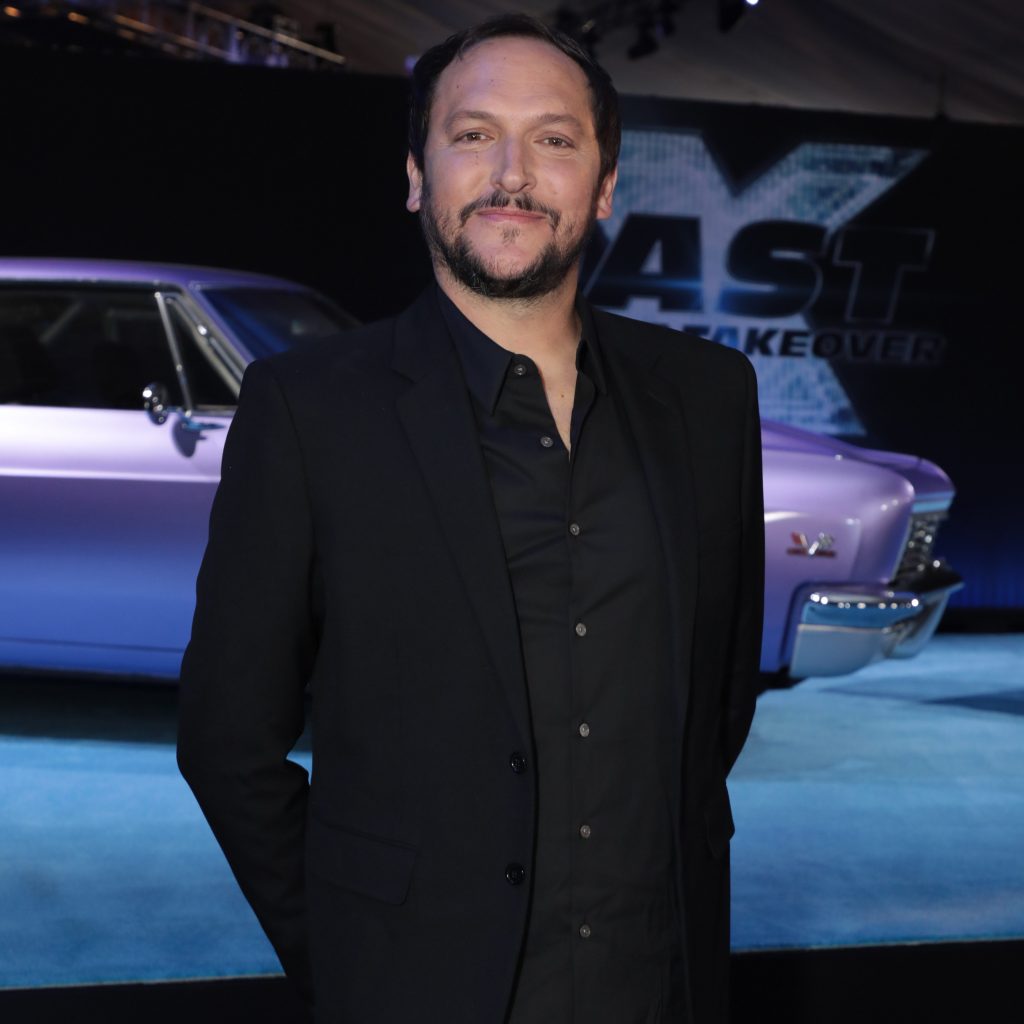
Louis Leterrier was white as a sheet. He had just agreed to direct Fast X, and it was suddenly sinking in what he’d signed up for.
“I had a moment of panic,” the director tells Esquire Middle East.
The whole experience was a blur. He was in Paris, and had just gotten a call in the middle of the night that he’d assumed was a butt dial. He cancelled the call and said he’d call them tomorrow.
The heads of Universal messaged him back immediately: “‘no, call us now, this is not a mistake. Can you read a script by 5:00 am?’
Justin Lin, the director of much of the now 10-part Fast & Furious franchise had suddenly stepped away, and it was up to Leterrier, the man behind the Transporter films and Now You See Me, to step up with zero notice and take on one of the most popular franchises in the world.
Within four days, he was on set behind the camera, tasked with a near-complete rewrite on the fly.
As the much-anticipated first trailer launches, Esquire Middle East sat down with the director of Fast X to hear what really happened. Read the full story from Leterrier below.
Fast X: Esquire Middle East speaks with Louis Leterrier
ESQ: How was it exactly that you came aboard Fast X? Justin Lin stepped away quite early into production. How long was it between you getting the call and you stepping behind the camera?
Louis Leterrier: It was quite fast. I mean, literally, they had shot a day, and were on hold. I got a call from the heads of Universal saying, ‘can you call us back?’ I thought it was a butt dial. I was like, I’ll call you tomorrow. He was like, ‘no, call us now, this is not a mistake. Can you read a script by 5:00 am?’
I read the script, and the script was incredible. It was Justin’s script, and it was wonderful. Without knowing too much about it, I instantly said yes. It’s been a franchise I’ve admired for years, a franchise I’ve flirted with—almost directing other episodes before, and I thought I was primed and ready—I thought.
It was not going to be yes and I jump on a plane, it was going to be a series of meetings with producers, with actors, with Vin [Diesel] obviously, who I’d met briefly but never professionally. But anyhow, I was on my way, and between the time I said yes and I arrived, the massive weight of what I just said yes to fell on my shoulders and I got really, really scared.
It got to the point where I was like, no, I cannot do it. I cannot step onto a franchise that I admire and respect that is so obviously complicated—when you see the scope of it, the technicality of it, and more. The Fast & Furious franchise is not just one storyline, it’s 10 storylines that you have to weave and balance and do all that stuff.
I had a moment of panic. And my wife saw my face. I was literally white as a sheet. She asked, ‘what, are you hesitating? No! You’ve been dreaming of this! Go do it!’
I then had these meetings, and it went really well, and three days later, I was on a plane, and landed, and from that first phone call till my first day calling action was maybe a four-day period.
The day I landed was not a shooting day. I landed at 11:00am and it was a half a day of prep for the entire movie.
I read the script four times on the plane, and I said I had some ideas, and they said ‘great, because the whole third act is changing. Can you rewrite it tonight?’ I was literally on no sleep. I’d been on no sleep for days.
Obviously, this was not going to be set in stone. But I was like, ‘okay, yeah, I’ve got some ideas,’ and started writing. And obviously, since the third act was changing, I needed to change the first act. And when you rewrite the third act, and the first act, the second act has to go. So basically I had to on the fly rebuild the airplane.
ESQ: How did that feel?
It was very liberating. When you’re the boy scout, the knight in shining armor who comes in to save the day, the pressure is lifted. You’re like, ‘well, I’m here to help,’ and everybody helps you. The pressure is off in a sense because everyone’s working towards the same goal—to make a great movie.
It really worked. I was much the director, and everyone made me feel this way, but I was embracing everyone, meeting with every actor, getting their notes, putting their notes into the script. It was a lot of work, but it was possibly the most exciting and collaborative experience of my professional life.
ESQ: Obviously there are so many story threads and characters at this point that need focus, but this is a franchise that lives and dies on its fantastic action set pieces.
When you were rebuilding the script, did you start with the stunts you wanted to pull off and then weave the story around them, or did you find them organically?
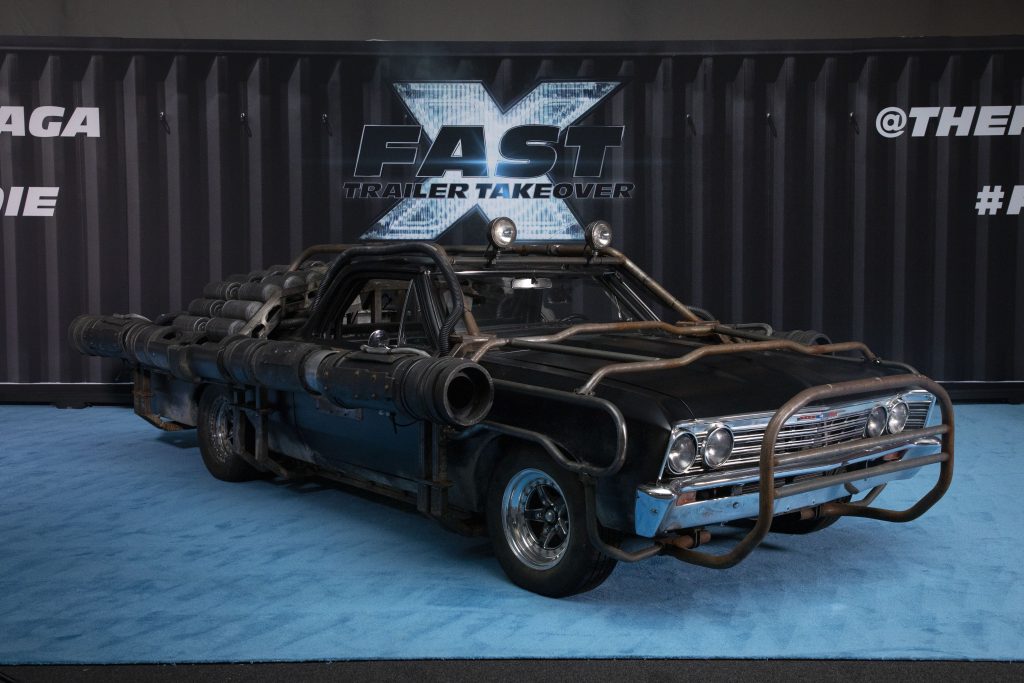
Louis Leterrier: You need to step it up. What I wanted to do on this one, because it’s very much my style, was to ground it more in reality. I wanted to–no pun intended—land it back on Earth. They went into pace in number nine, and I was like, ‘okay, they went to space, there’s no way I can top that.’ But what I can do is do stuff that we’ve never done before practically, such as rolling a one-ton bomb—an actual one ton metal ball in the streets of Rome, and hope not to destroy the Colosseum.
There were the things that I wanted to do. Obviously we had visual effects help, but we just needed to keep everything grounded in the practical. The visual effects were mainly for safety and scope, but we needed the basis to stay in our reality. Without that, it would become too much. I wanted it to feel like Fast 1, Fast 3, and Fast 5—movies that feel grounded. That is my style, and everyone accepted that, so everyone was really on board. Everyone was excited to re-explore physical stunts.
ESQ: When I speak about what I love about this franchise to people, one of the key things is that because it focuses on cars, that grounds its action in practical reality, stopping it from becoming over-reliant on CGI.
Louis Leterrier: CGI does help though. It’s made things safer in the way that we no longer use any live rounds, but sometimes it becomes a little too easy, and the human eye is so aware of what’s real and what’s not. Even James Cameron in Avatar built sets so that the physics were right, and the actors were moving, and the boats moving, are real. That’s what we needed to do, too.
Vin was not in the car suspended by helicopters, but he truly was in a gimbal 20 feet up in the air that was going up and down, and I was not pulling punches on that. That’s the truth, because when you see them jumping and feeling the zero G, there was really a moment of zero G when we dropped this incredible gimbal.
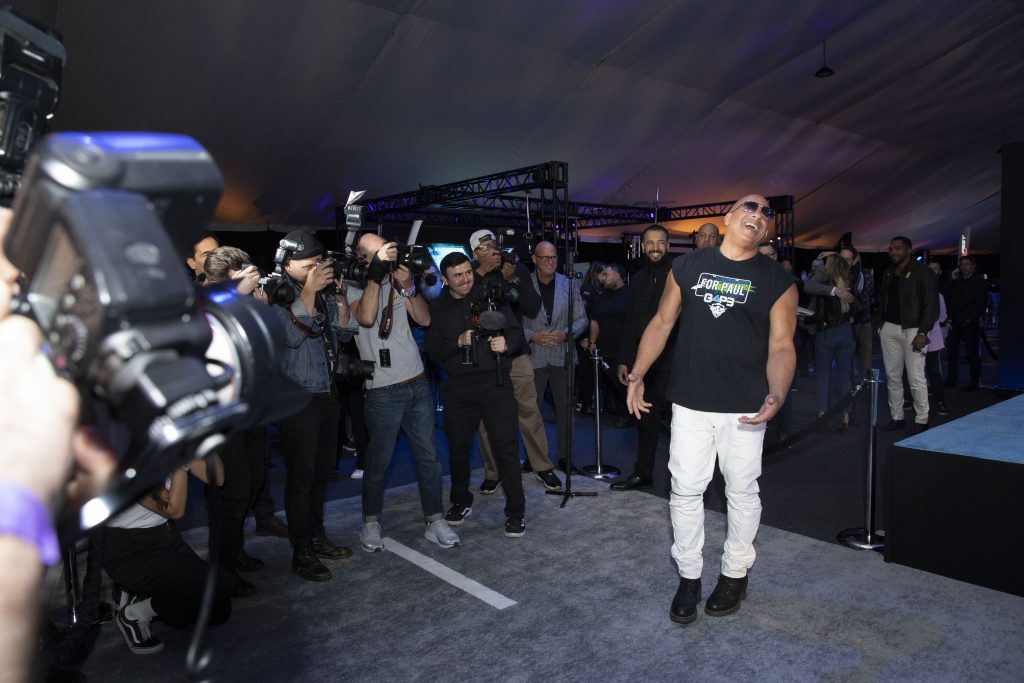
Imagine being on top of a 20 foot robot that can move so fast and you’re inside a metal box. It’s really a car that we bolted something on top. That’s when you get the truth—you don’t get acting, you get reacting. There’s true acting needed, of course, because you have to imagine the reality of everything, but there’s a lot of real reacting that happens, too.
One of the biggest additions to Fast X is Jason Momoa. What energy did he bring to this set?
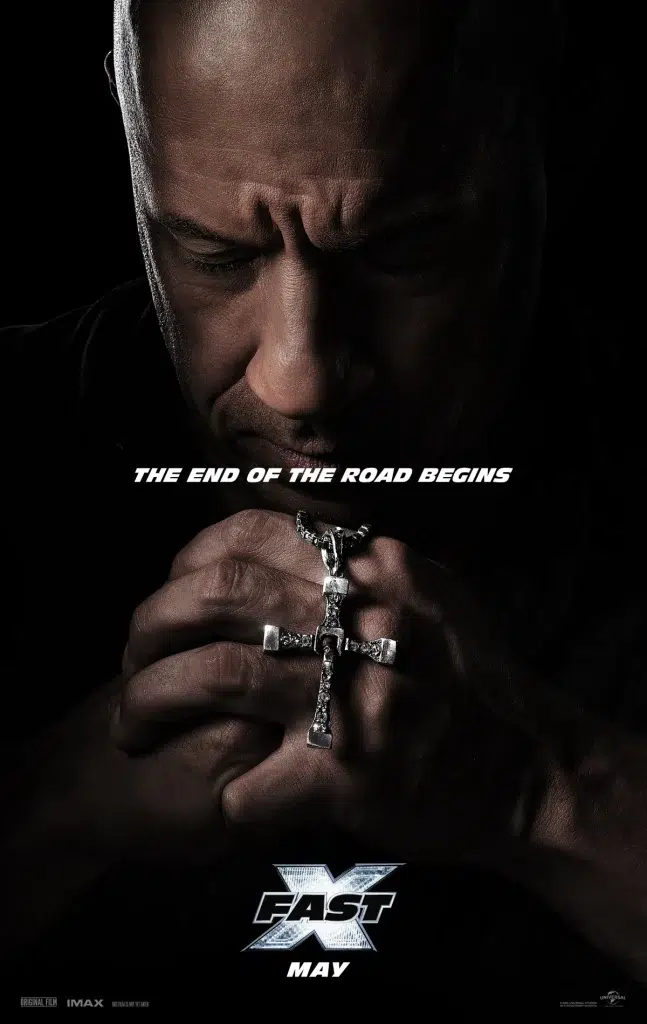
Yeah, he’s a different type of a villain not only for the franchise. He’s the type of antagonist that I’ve rarely seen before in any movie. He’s the man who has studied his enemy almost like an obsessed fan. He’s also the polar opposite of Dom. He’s all color and flamboyance. It’s the ying and yang, the christ and the anti-christ—the anti-Dom.
On set, it felt this way. The Vin energy was calm and collected, almost zen-like, and Jason was just like rock & roll, an electric bass that’s slapping. There was always music coming out of the Jason camp.
What was really important for me was to bring it back to the car. This franchise is all about cars, but we hadn’t seen a driver antagonist for a long time. He’s a driver—he grew up driving, being obsessed with Dom Toretto and tried to become him. He’s a gearhead just like Dom Toretto, but a very different type of gearhead. They are also polar opposites in their driving styles. The person that keeps their hand on the wheel and the person that lets go. That’s very interesting to me, and it’s the theme of the entire movie, and the entities that oppose them,
Fast X is in theaters May 18 across the Middle East