
It’s one thing to become a great fighter. It’s another to look good doing it. For professional stunt men and women, the second part is the real trick.
Lewis Tan, however, is one of the rare people who mastered both. His father, the stunt coordinator films such as Inception and Batman Returns, got him started in martial arts at the age of five, and he went on to master Muay Thai, Kung Fu, Jujitsu and Japanese katana sword play, even participating in amateur fights in Thailand.
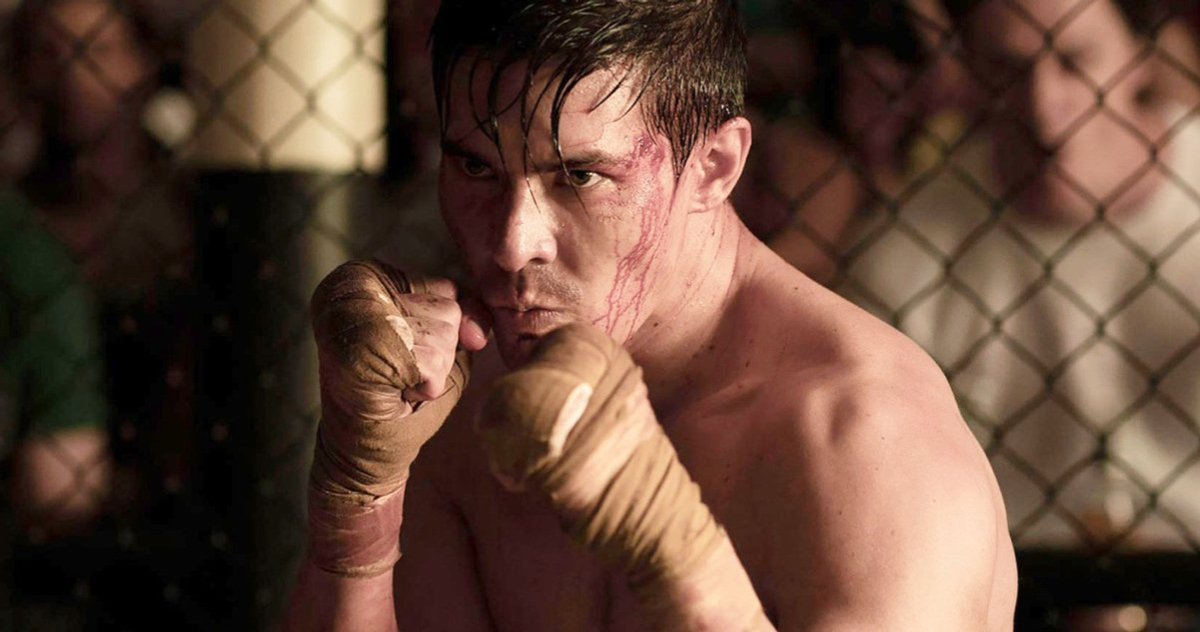
The one-time stunt man is now one of those rare actors who does all his own stunts, getting the starring role as Cole Young in the new film Mortal Kombat, based on the bloody beloved video game series.

Speaking to William Mullally on Dubai Eye, Tan, 34, explained the difference between fighting well, and fighting for the camera.
“Good fighting on screen is more similar to dancing. You’re learning choreography, you’re not trying to actually, you know, dismember somebody, or break their joints, or figure out a way to break them down and break their structure, you’re actually figuring out a rhythm and timing. So good choreography sounds more like this,” Tan said, drumming in rhythm with his hands.
“There’s a rhythm to it. There’s a drum beat to the choreography. if you watch carefully, you watch good fighters, they actually move more like dancers.”
Anyone who’s watched combat sports knows that often the most devastating blows look nothing like those in movies—and with good reason. Learning to do one is completely different from the other.

“You get a lot of these guys from the real martial art world, and they come into the choreography world for films, but they just know how to fight for real. They have to actually learn how to throw punches,” says Tan.
“When you throw a punch for camera, it’s much wider, much bigger, because you want to get across that it looks bigger and wider and more powerful. When you throw a real a real hook, it looks like this,” says Tan, throwing a quick straight jab. “You won’t even see it coming. So there’s a huge difference.”
Transitioning from combat to Kombat, however, is not a case of just having to unlearn actual combat techniques. One makes the other easier, says Tan.
“It helps in the sense that your body understands those movements, and your body has a muscle memory that understands what it’s like to actually fight. And so those things end up helping a lot. And you have to kind of blur the lines a little bit, but it’s more about rhythm and timing and less about trying to punch somebody in the face.”
His co-star Joe Taslim, 39, who plays Bi-Han also known Sub-Zero, is a tenured martial artist as well, a member of the Indonesian national Judo team from 1997 to 2009 and the star of such classic Indonesian martial artists films as The Raid.
For Taslim, looking good in a fight scene is not just about technique, it’s about understanding that good fighting is a manifestation of the character through their physicality, he told Mullally on Dubai Eye.
“The way I approach fight scenes in my previous work is always to understand the reason of the fight because The Raid, it’s all about surviving. It’s about consistency and persistence. He just doesn’t want to die until he accomplished his mission so in this one I need to find the reason why,” says Taslim.
For Mortal Kombat, a story about a fictional interdimensional tournament between the greatest fighters of different worlds, Taslim tried to ground the fighting as much as possible in the character, so the key to not looking dumb in the fights scenes was figuring out who that character was.

“What’s he thinking, just as a human? What is his problem? Why is fighting like that and why does he have no mercy? If I can deliver that, the fight means more people because they just invested in the in the character and in the story,” says Taslim.
“In a lot of B movies, C movies and action movies, we watch to see a lot of cool moments and cool fights, but people don’t engage because they are focusing in the fight. But here I need to give more than just a fight. When something happened to him, the audience has to feel it. When he wants to fight in a violent way the audience needs to see in his eyes that something wrong with this guy. And that needs to deliver in the soul of the fight.”
Mortal Kombat is in cinemas now across the Middle East

Esquire now has a newsletter – sign up to get it sent straight to your inbox.
Want up-to-the-minute entertainment news and features? Just hit 'Like' on our Esquire Facebook page and 'Follow' on our @esquiremiddleeast Instagram and Twitter account.


