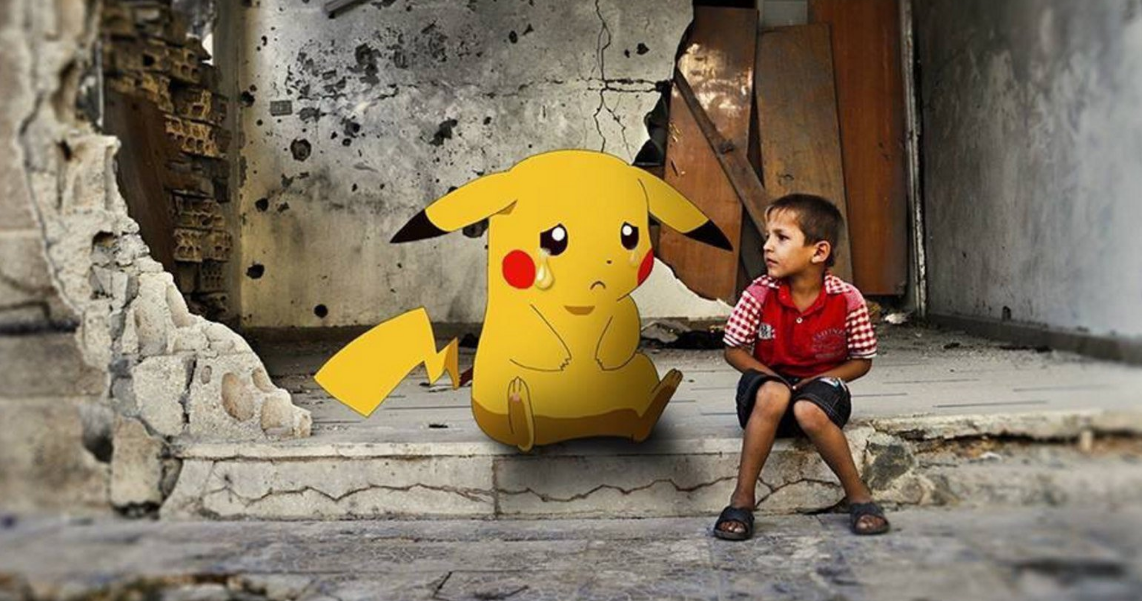

Mahmoud Jehad Omar Al-Burges has received treatment for the infected sand-fly bite on his face, but it still hurts. There is little protection from bugs in the emptied-out garage in which he and his family sleep, huddled on a mat on the concrete floor. School is a distant and costly dream.
By day, the 14-year-old refugee from the Syrian war scours the streets of Reyhanli in southern Turkey for waste plastic and metal that he sells for a few cents per kilo to buy groceries.
As he talks to Esquire, his three friends drop their refuse sacks to hurl rocks at a snarling dog by the dusty roadside outside the border town.
Talking to Al-Burges, it quickly becomes clear why hardship drives many young Syrians back to fight in the country’s protracted civil war. “Sure, we want to be educated, but the schools here are oversubscribed and we cannot afford to go,” he says. So Al-Burges has a different plan. “When I am old enough, I will go back to fight.”
Al-Burges explains how in his hometown back in Syria there is a group linked with the Free Syrian Army (FSA). “They are civilians, like us. They got some checkpoints under their control and managed to chase the regime away from our region. My friends have the same idea.”
“Sure, we want to be educated, but the schools here are oversubscribed and we cannot afford to go,”
He and his family fled from Hama in 2012 when it was a brutal morass of fighting between rebels and forces loyal to President Bashar Al-Assad. They are among the 3.9 million Syrians to have fled the country; some 7.6 million more refugees remain within Syria’s borders. Many share tents, shacks and homes in Lebanon, Jordan and elsewhere. Turkey hosts the most refugees, with 1.8 million in towns and camps.
Al-Burges’ dilemma is shared by many male teenage Syrian refugees: whether to forge a new life in Turkey or return home and join ISIS, the al-Qaeda-linked Al-Nusra Front, the FSA or one of the other militia groups.
Ali Ahmed, 37, a father-of-nine, headed for Turkey after his home in Hama was blown up by government forces in an airstrike. In Reyhanli, aid groups do not offer enough support, and selling cigarettes by the roadside barely covers the $93 monthly rent. “Only those with money can send their children to schools,” he explains, standing in front of his shabby, overcrowded home and pointing at the residences of wealthier refugees across the street.
Ahmed is part-disabled, so his 14-year-old son, Mohamed Ahmed, has to work instead of attending school. In a few years, when the family has built up some savings, Mohamed plans to return to Syria to continue the fight against Al-Assad. “Until I am 18 I will live here; after that I will go and join jihad,” he says, leaning against the door of the family’s one-room dwelling as he laments the decline of Syria into a quagmire.
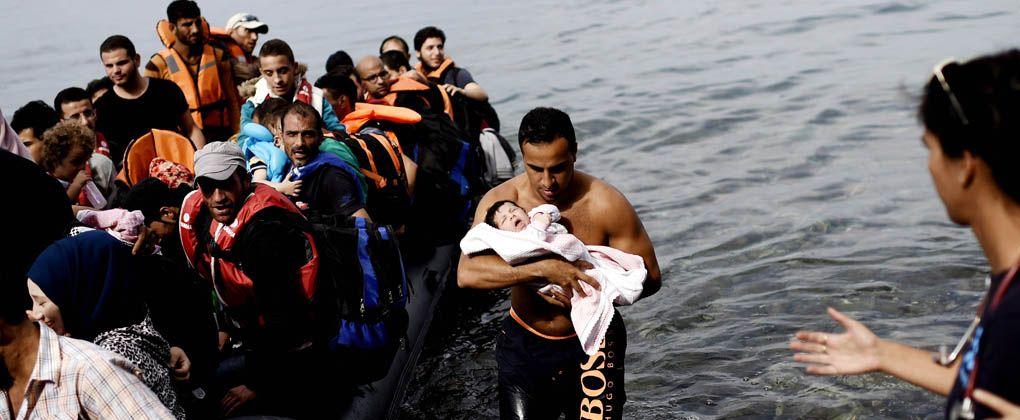
Of course, it is not the same for every Syrian refugee. Some work as translators with aid groups or have found other jobs. They wear trendy clothes and revel in the nightlife of Gaziantep, Sanliurfa and southern Turkey’s other economic hubs. But many more struggle to make ends meet and bide their time, hopeful for a big shift that would see peace return to Syria. Hundreds of thousands of refugees from Syria and elsewhere have chanced often-deadly sea crossings to Europe.
***

More fortunate refugees are at least able to choose education over fighting. Ahmed Seflo, an 18-year-old student, is among the Syrian refugees who are carving out a life for themselves in Turkey. His family, from Idlib, have been in Reyhanli for almost four years. They are better established, have more money and share a villa with other families. He studies at a school for Syrian refugees and has applied to media courses at Turkish universities. Thanks to his relatively comfortable family life, Seflo says that higher education is a viable alternative to heading back to fight in Syria. “There are different concepts of jihad, and for some people, studying is a kind of jihad because it is struggling,” he says. “People are doing these two sides to jihad. Some people choose to fight, some people choose to study. I’m the type who chooses to study.”
With only slim chances for peace in Syria on the horizon, Turkish and Qatari officials have made plans for a university for Syrian refugees in Turkey’s southeast province. This means more higher education places are set to open for Syrian refugees. Education chiefs have yet to confirm the location of the new institute, but the region’s Mayor Fatma Sahin recently announced that they had identified a number of potential sites for construction of an international joint-degree university.
“People are doing these two sides to jihad. Some people choose to fight, some people choose to study. I’m the type who chooses to study.”
Khaled Abu Mahmoud (not his real name) is a refugee who worked in Aleppo’s education department before fighting broke out. He is acutely aware of the need to get young refugees into classrooms and offer them career paths. He has opened 11 schools for refugees in Kilis, another Turkish town alongside Syria’s border, since December 2012 and currently has some 5,000 pupils enrolled. They study in shifts to maximise the number of children in the classroom. “It’s an emergency education,” he says. “We have 11 schools, which is not enough. Another six- or seven thousand youngsters in Kilis cannot come to school. Some live too far away and cannot pay for transport; others must work to get money for their families.”
The stress of a war back home can also lead to classroom tensions. Mahmoud explains how teachers and students struggle with cash, while arguments flare up over allegiances to militias back home. “Some children are influenced by the ideology of ISIS. They draw mottos and logos on their hands or notebooks, so they are very affected. But there are only a small number of them; most students support the Free Syrian Army,” he says.
Despite these problems, for Abu Mahmoud the classroom is the best alternative to the Kalashnikov rifles that youngsters would doubtless encounter if they returned to fight in a civil war that has already claimed more than 230,000 lives. “The purpose is to plant the seeds of hope in this coming generation. We need to clear students’ minds of discrimination, sectarian ideologies and violence. This generation will build Syria’s future,” he says. “One day, the war will end. We will forget about what happened and strike deals with the people we fought against.”
***

The Syrian refugees in southern Turkey are part of a broader educational problem in the region. According to the UN some 21 million children across the Middle East are out of school or at risk of dropping out — despite some improvements this past decade. Governments across 20 countries stretching from Morocco to Iraq have spent money on education and boosted enrolment rates these past 10 years, but progress is slowing in the face of war, poverty and discrimination. The wars in Syria and Iraq, two countries that used to have high enrolment rates, have had a particularly devastating impact, the UN says. Escalating violence in Yemen and Libya is expected to have a similarly damaging effect on education.
Back in Turkey, Philippe Duamelle, an envoy for UNICEF, the UN agency for children, says there are 600,000 school-age Syrian refugees in Turkey. Some 90 percent of those living in government-run camps go to school, but that drops to 25 percent outside the camps. “We need to build more schools, help existing schools integrate more kids, train more teachers and have more on the payroll,” Duamelle tells Esquire. “When kids are at school, they are off the streets, are not exposed to wrongdoings [such as] child labour or eventual recruitment from militia groups.”
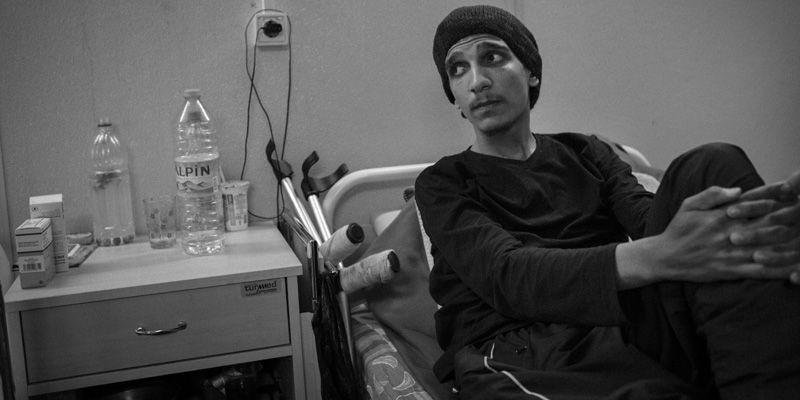
While efforts to open more classrooms are welcome, they come too late for Abdullah Gadban, a member of an Islamist militia group from Syria’s civil war who is being treated in a hospital in Kilis for three bullet wounds to his leg. The 20-year-old from Al-Tabqa joined an al-Qaeda-linked group in 2012 and was shot by government forces in a battle last year. He plans to return once his leg has healed. For him, the choice between college, work or fighting has already been made. “If I go back to Syria and the war is over, I want to go back to my school. If the war is still on, I will join the fighting,” he tells Esquire. “Now there’s no work in Syria. Either you fight and you get money from the battalion you are fighting for, or there is no work.”