
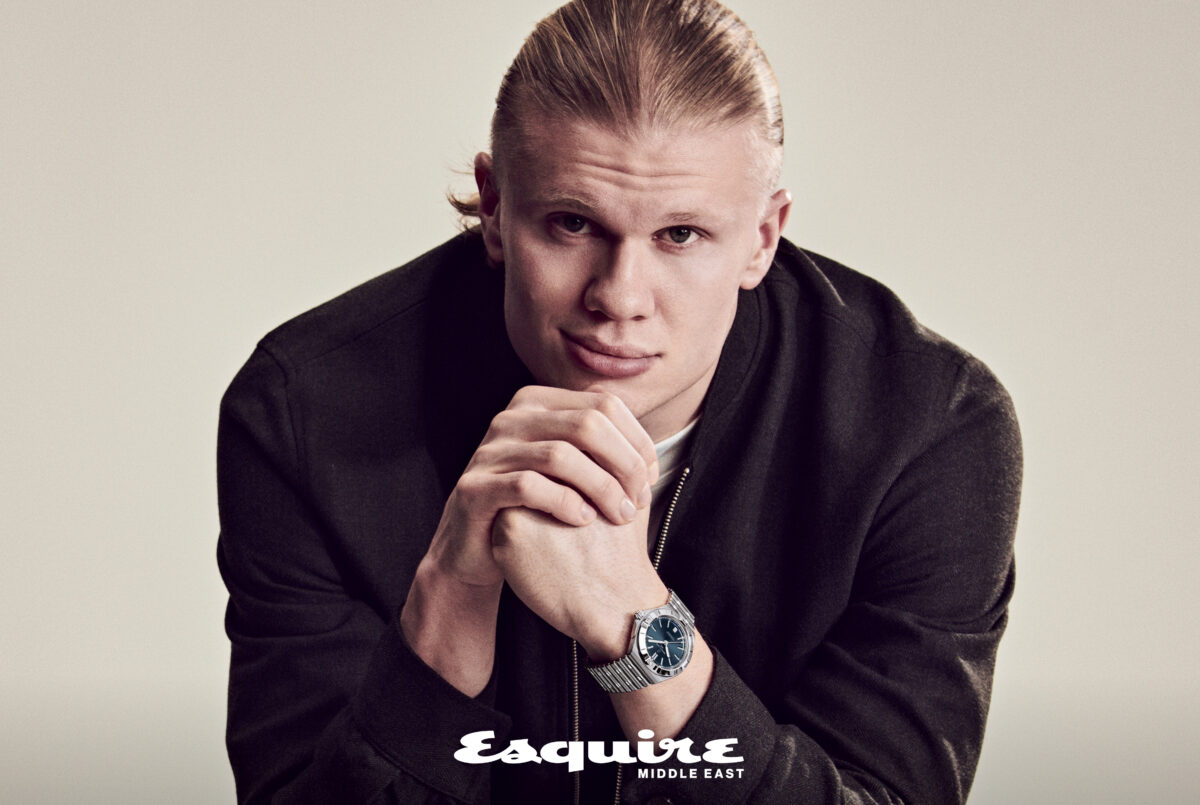
To understand the 25-year-old Norwegian striker, you have to rewind to 2019, when a 19-year-old Erling Haaland burst into the global consciousness as Salzburg’s Champions League revelation of the year. He looked less like a standard youth academy product and more like something engineered in a biomechanics laboratory. Standing at an imposing 1.95 meters and weighing 93 kilograms, he possessed terrifying speed, immense strength, and a flawless, absolute command of his own body. As his compatriot, journalist Oyvind Godo, so perfectly summarized at the time: “He is as strong as a bear and as fast as a horse. He is also a killer, a real goal machine.”
The icy, cold calm of his facial expressions made his on-pitch achievements feel almost extraterrestrial. Off the pitch, however, he insisted he was a typical teenager who harboured a deep love for chocolate. Fast forward to today, and that teenager has cemented himself as one of the premier athletes on the planet, readying himself for his first World Cup. This marks the Norwegian national team’s first appearance at the tournament since 1998, and expectations are bordering on the astronomical following a spectacular qualifying campaign. Naturally, Haaland was the decisive architect of this run, netting 16 goals in just 8 games—exactly double the tally of Europe’s next-best scorer, who managed a comparatively modest 8 goals.
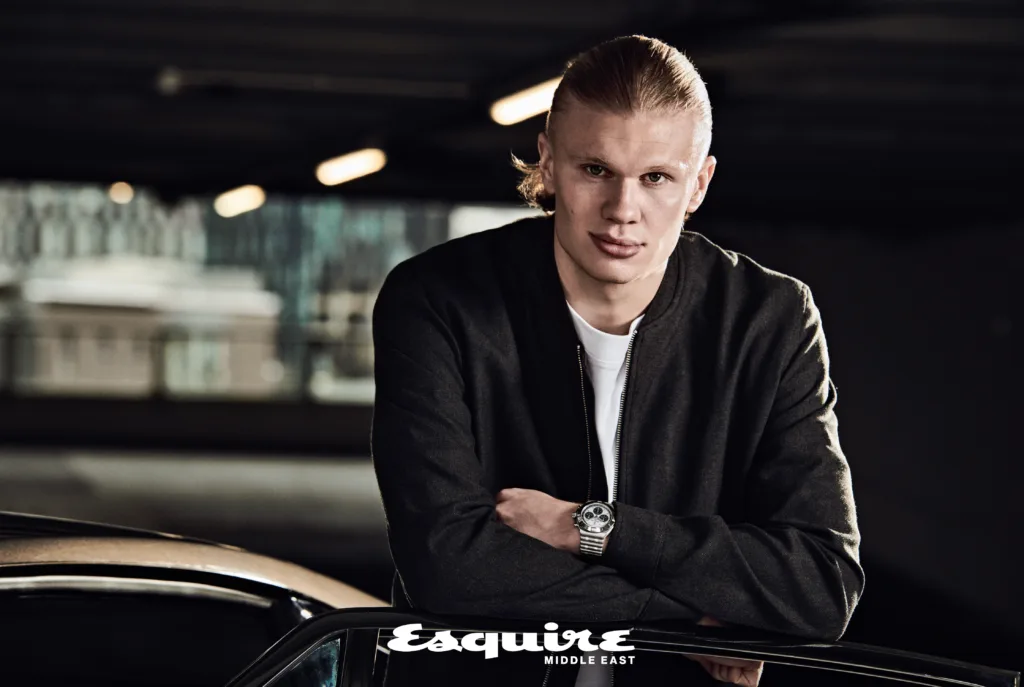
The foundation for this machine was laid early. Born in Leeds, England, on July 21, 2000, Erling Braut Haaland is the son of former footballer Alf-Inge Haaland, whose career across Leeds, Nottingham Forest, and Manchester City was infamously cut short following a brutal tackle by Roy Keane. The younger Haaland grew up as a long-time supporter of the very Premier League team he now regularly dismantles.
His ascent was rapid and relentless. He began locally at his hometown club, Bryn, where he scored 18 goals in 14 games in 2015 before earning a swift promotion to the men’s team in Norway’s second tier. By the age of 15, he had logged 16 appearances before Ole Gunnar Solskjaer’s Molde secured his signature in February 2017. Eighteen months and 14 goals later, in the summer of 2018, Salzburg announced his acquisition, officially bringing him to Austria in January 2019 on a five-year contract.
The wider world received its warning in May 2019 at the U20 World Cup, where Haaland, wearing the national jersey, systematically dismantled an unfortunate Honduras side, scoring 9 goals and shattering both records and his opponents in equal measure. Once fully integrated into the Red Bull system, his trajectory defied logic. Before October was over, the blond striker had hammered in 6 goals in 3 Champions League matches, boasting a staggering total of 20 goals and 4 hat-tricks in a mere 13 appearances.
His evolution required a larger stage, leading him to Borussia Dortmund—Europe’s famed runway for young talent—in early 2020. He didn’t just arrive in the “green” metropolis of Westphalia as a promising prospect; he arrived as the heir apparent to an attacking line desperately seeking a leader following the departure of Robert Lewandowski.
His start was pure cinema. Coming off the bench for his debut against Augsburg, he changed the course of the match in minutes, netting a rapid-fire hat-trick to turn a potential defeat into a victory. This wasn’t an exception; it was a harbinger. He quickly became the first player in the club’s history to score on his Bundesliga, DFB-Pokal, and Champions League debuts, breaking records with the ruthless efficiency of a bespoke engine.
In Germany, Erling Haaland transformed his daily life into an uncompromising pursuit of physical perfection. Football occupied every available space. His life revolved entirely around training, recovery, and game analysis. On flights to away matches, he obsessively analysed video footage of other elite strikers, dissecting the finer details of their movement, finishing, and decision-making in the final third.
Working alongside Dortmund’s medical staff and his own hand-picked support team, he systematically upgraded his physical performance. He focused on strength, explosiveness, and flexibility, with a hyper-focus on injury prevention for his knees and ankles to withstand the brutal, constant demands of modern football. His mentality was beautifully simple and entirely performance-oriented. He sought zero external confirmation, executing a clear developmental plan with minimal deviations. While his off-pitch demeanour remained youthful, allowing him to forge close ties with teammates, his relationship with his public image became increasingly restrained as the media spotlight grew. On the pitch, his sheer physical presence, explosiveness, and ability to score from anywhere confirmed he was already operating among the world’s elite.
if a good day starts in the morning, Haaland’s arrival at Manchester City in July 2022 for a €60 million fee was a clear forecast of the dominance to come. From his first steps onto the Etihad Stadium turf to the Champions League final in Istanbul, his debut season was one of the most breathtaking entrances in Premier League history. At 22 years old, he required zero adjustment period; he arrived not simply to strengthen the squad, but to fundamentally alter the balance of English football.
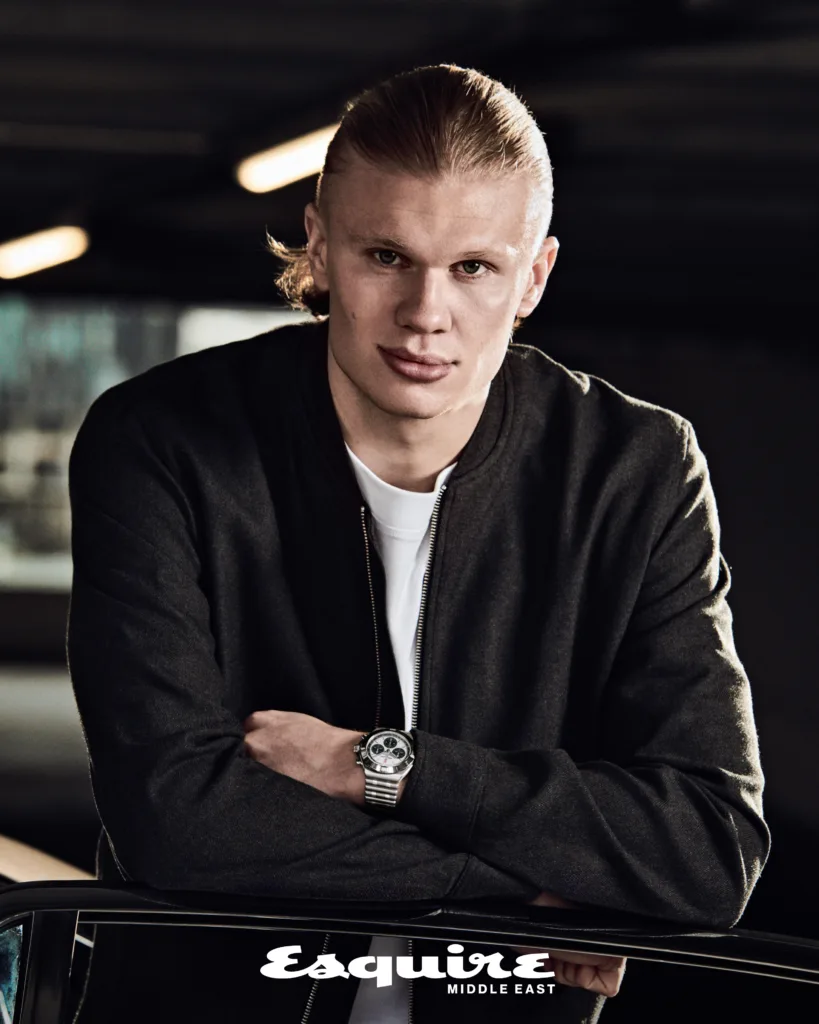
The introduction was deafening. He announced himself with two goals on his Premier League debut against West Ham, sparking a season of continuous, unprecedented escalation. By the end of the campaign, the numbers were staggering:
- He finished with 52 goals in all competitions, the highest ever recorded by a Premier League player in a single season
- He netted 36 times in the league, breaking the standing record and securing a third consecutive title for his team.
- He claimed the Champions League top scorer title, driving Pep Guardiola’s men to their first—and to date, only—European crown.
- He delivered a 5-goal masterclass against Leipzig in the round of 16, confirming his total dominance.
- He logged 6 hat-tricks across all competitions, placing him in an entirely separate category of productivity.
But Erling Haaland wasn’t merely a static target man. He organically integrated into Guardiola’s highly accurate attacking machine, forging a lethal, telepathic partnership with Kevin De Bruyne, whose assists he finished with merciless efficiency. His relentless off-ball movement, constant attacks into open space, and intense defensive pressing introduced an entirely new dimension of threat for City. He changed the way the team created and finished chances, combining the intensity of English football with the discipline of a system demanding sky-high concentration.
The season culminated in Istanbul with a treble-clinching Champions League victory, cementing his historic impact on the club. Individual honours—Player of the Year, Premier League Player of the Year, and a PFA Player of the Year nomination—followed naturally. In fact, if not for Lionel Messi’s romantic World Cup triumph with Argentina, Haaland would undoubtedly have a Ballon d’Or sitting on his mantelpiece.
years have passed, and while the competition has significantly increased, City remains dominant and Haaland continues to ruthlessly pierce opposing nets. The next monumental bet for the Norwegian? The World Cup.
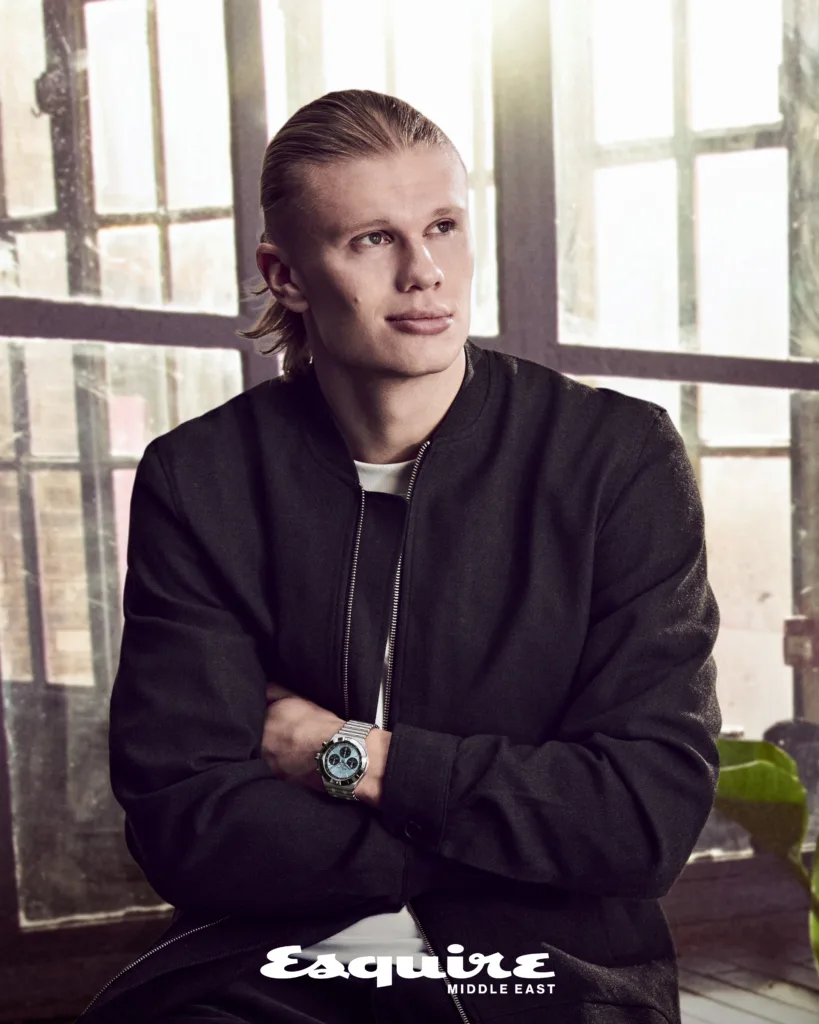
His participation in the tournament will be one of the most fascinating individual narratives to watch. As analysts note, Haaland doesn’t fit the neat cliché of a “superstar in a second-rate national team.” He is a player boasting top-club productivity, operating within a national setup that is still fighting to forge a stable identity at the elite level.
While the basic expectation is simple—goals—international tournament football rarely accommodates pure finishers easily. Defences are remarkably compact, matches are suffocatingly tight, and clear chances are rare. In the sprawling, short-term tournament soon to kick off across the USA, Canada, and Mexico, elite strikers are judged not just by their finishing, but by their ability to force themselves into the game when transition spaces disappear completely. This is where Haaland will face his truest test: influencing matches that refuse to open up.
Fortunately, Norway currently boasts a much more supportive environment than in years past. With creative technicians like Martin Odegaard dictating the tempo, the aim is to provide the cohesion needed to ensure Haaland isn’t isolated or treated as the solitary attacking channel.
Norway will not arrive in North America as favourites. However, they are a uniquely dangerous prospect simply because they possess a man capable of altering the reality of a match in a single phase of play. And that is perhaps the most captivating question of all: Will Erling Haaland remain just an excellent scorer, or will he become the transcendent player who turns a “good story” into a deep, historic run in the tournament?