
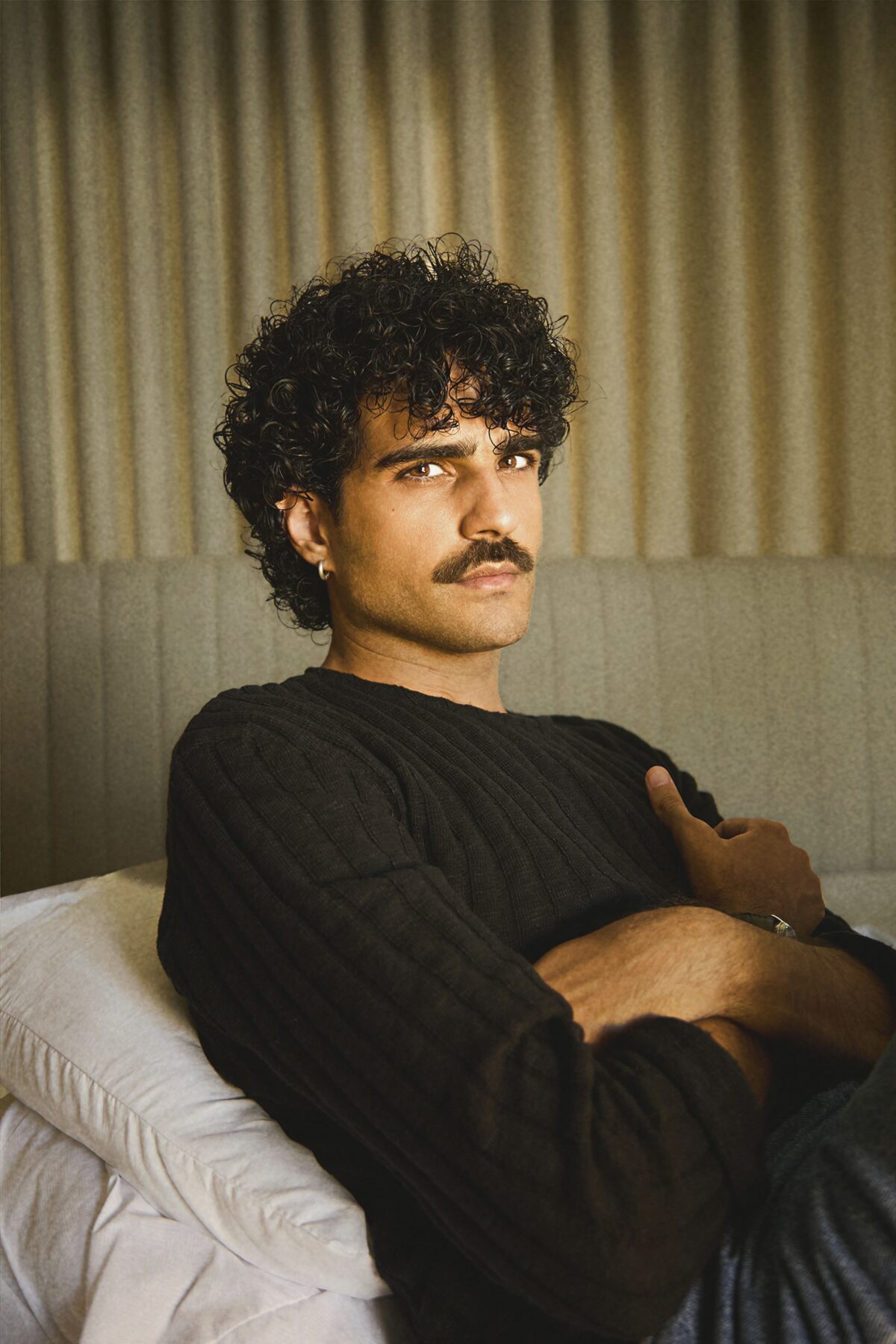

For Lebanese actor Youssef Boulos, the journey into acting began long before his first professional role. Growing up in Chekka, northern Lebanon, he was already directing plays, casting family members and making costumes from leftover fabric. Since then, his career has taken him from Lebanese theatre to television and film, with roles in the Arab series Rashash, alongside Saudi actor and former Esquire Saudi cover star Fayez Bin Jurays, and Ya Ghayeb, as well as the multi-award-winning film Farah, co-starring actress Stephanie Atala.
Now based in Paris, Boulos is exploring French cinema and theatre while continuing to build a career across cultures and languages. We speak to the actor about the roles that challenge him, the lessons learned behind the camera and what he hopes to bring to the international screen.
ESQUIRE: Your first experience with acting came long before your professional career. What do you remember about it?
Youssef Boulos: As a child, I used to put together little plays in my aunt’s village in northern Lebanon. I’d recruit my older sister and cousins, rehearse with them and direct the performances. We also had a neighbour, Auntie Daad, who was a seamstress, and I’d collect leftover pieces of fabric from her workshop to create costumes for each character. Looking back, I was already acting, directing, casting and designing without knowing those jobs existed. That curiosity never really left me.
ESQ: You started in Lebanese theatre at 17. What did those early years teach you?
YB: At that age, I had a very different understanding of acting. I thought it was about fame, recognition and the spotlight. It took me years to understand that the profession was about much more. I learned to accept rejection, understand that I wouldn’t be every director’s choice and recognise that public opinion shouldn’t define my work.
Eventually, I decided to step away from acting and explore production. I needed to understand who I was outside the profession before returning to it. How could I explore the psychology and contradictions of another character without first understanding my own? That period gave me perspective, self-awareness and emotional maturity. Today, I want to be an actor who has something to say.
ESQ: From Rashash to Ya Ghayeb, your roles have been varied. What attracts you to a character?
YB: Over the past few years, I’ve turned down more roles than I’ve accepted. For a long time in Lebanon, I was perceived as the young, good-looking actor, often playing the romantic lead. Those characters didn’t always give me enough to explore.
Rashash was a turning point. British director Colin Teague cast me as a Yemeni drug dealer, challenging the image people had of me. I had to transform my appearance, work on a Yemeni dialect and build a character with several layers. It pushed me far outside my comfort zone, and I loved it.
More recently, Ya Ghayeb, the biographical series about Fadel Chaker, involved another physical transformation, a Palestinian dialect and the opportunity to explore comedy. I want to disappear into characters that reveal things I might never show as myself. If directors think of me when they have a complicated, unpredictable character to cast, I’ll consider that a success.
ESQ: You’re now working on French productions. What prompted the move to Paris?
YB: I see it as an expansion of my journey rather than a departure from the Arab screen. I’ve never wanted my nationality, language or background to limit the characters I can play.
Moving to Paris was also a personal decision. After spending years between Lebanon and Dubai, I wanted a different environment and experiences that would challenge me artistically and personally. What’s exciting is entering an industry where I have to introduce myself all over again. Whatever I’ve achieved elsewhere doesn’t automatically open doors here. There’s something refreshing about starting from that point, where curiosity, discipline and the work itself matter.
Having worked behind the camera, I understand that every industry has its own methods and challenges. I’m still discovering the French system, and I find that process incredibly valuable. I haven’t left the Arab screen behind, and I have no intention of doing so.
ESQ: What’s been the biggest adjustment to working in French theatre?
YB: First, there’s the language. I’m performing in French with an Italian accent. Imagine being Lebanese, acting in French while trying to sound Italian! It’s almost a linguistic identity crisis.
Beyond that, working in a new theatrical environment means adapting to different references, a different relationship with direction and a new way of listening. I’m learning to understand the intention behind words rather than just their meaning, and to find freedom within unfamiliar constraints. I love that feeling of having so much more to learn, even after years of experience.
ESQ: Do you prefer working on miniseries or long-form productions?
YB: For me, it’s never about the format. What matters is the story, the complexity of the character and the director’s vision. I also pay attention to the production environment and whether it gives actors the space, trust and creative freedom to do their best work. Whether it’s six episodes or sixty, what matters is having something meaningful to create.
ESQ: Is the international industry becoming more open to Arab actors and stories?
YB: Absolutely, although I think we still have a long way to go. For years, Arab actors in international productions have often been associated with narratives around war, terrorism, religion and political conflict. These stories are part of our history, but they don’t represent everything we have to offer.
We have extraordinary figures whose stories deserve international recognition. Imagine a biographical film about Omar Sharif, an Arab doctor whose discoveries changed modern medicine, or a scientist, artist or historical figure whose achievements transcended borders. There’s an entire cultural and intellectual heritage that remains largely unexplored on screen.
Real progress will come when Arab talent is given the opportunity to bring a wider range of stories and characters to international audiences.
ESQ: Having worked in production, how has being behind the camera shaped you as an actor?
YB: It’s given me a much broader understanding of filmmaking. I no longer look at a project solely from an actor’s perspective. I understand the challenges, responsibilities and creative decisions happening behind the camera. It’s taught me to be more collaborative, adaptable and conscious of the collective effort behind every scene. Filmmaking is about bringing an entire vision to life together.
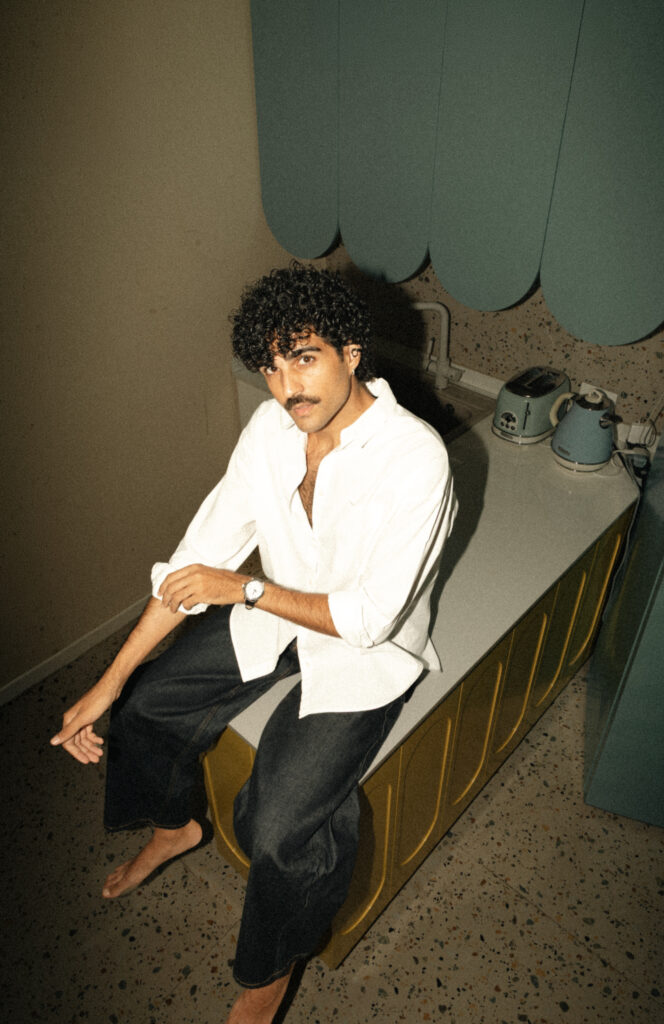
ESQ: What would you like the next chapter of your career to look like?
YB: I want to remain an actor who is curious, takes risks and never feels that he has mastered his craft. I’ve already experienced what it’s like to chase recognition, and I’ve learned that it doesn’t necessarily bring fulfilment. Today, I’m more interested in the process, the people I collaborate with and the stories I choose to be part of.
I want to work with directors who challenge me, explore characters that push me outside my comfort zone and continue moving between languages, cultures and artistic disciplines. Beyond acting, I also want to keep creating my own stories through writing, theatre and production.
I don’t have a particular destination in mind. The most interesting chapters of my life have rarely been the ones I planned. I just hope that ten years from now, I’ll look back at the actor I am today and realise how much more there was to discover.
Photography: Ziad Al Mazraany