Photography by Myriam Boulos
Three years ago today, the city of Beirut was winding down at the end of day one of a 48-hour break between consecutive periods of Covid-19 lockdown. Its citizens were looking forward to this gift of a corona-vacation. For the first time since before the weekend, Mar Mikhael and Gemmayze’s bars had bookings and restaurants were preparing to reopen. However, although few expected the night to be business-as-usual, no one was prepared for the events that ensued at 6.07pm.
In the months following, much of the initial superlative-laden shock spawned fresh and raw emotions.
The city’s creative world suffered in parallel with every sector of Beirut’s society. Poor and rich, Lebanese and expats, Christian and Muslim, the blast was no respecter of class nor of religion.
Beirut, together with the whole of Lebanon, has experienced more than its fair share of trauma in recent decades. From the 15-year civil war through to regular attacks by Israel, it has always been clear who the enemy was. For many citizens, the August 4 blast confirmed their belief in the existence of a new common enemy of the people—this time—those in power.
In this article originally published shortly after the explosion, the question remained…just what now?

Much of the country has been in ‘survival mode’ since October 17 2019 when the most sustained of Lebanese ‘revolutions’ began. Perhaps more a rebellion than an outright revolution, nonetheless a series of increasingly violent protests had shaken Prime Minister Hassan Diab’s administration prior to August 4, 2020. Within days of the port blast, the government had resigned.
In truth, Beirut’s creative sector has been largely ‘clinging on’ for far longer. A shrinking economy combined with declining standards of living and a paucity of exhibition spaces makes the commercial life of the country’s designers a precarious one.
For many, the port blast could have signalled the end of the line. However, in Beirut one must never underestimate the resolve of its people and how, at times of crisis, support in many forms unites its citizens.
***
David/Nicolas

Headquartered on a narrow Mar Mikhael-street since 2015, design-duo David Raffoul and Nicolas Moussallem have made a name for themselves within the global design market since forming their partnership in 2011
“Nicolas was injured by the blast, and called me to come to secure the property and retrieve the server. The scene was apocalyptic when I arrived”, Raffoul recalls. “This whole neighbourhood was devastated. This was a crime against humanity at the root of which are major political failings, and whoever is responsible must be held accountable for their neglect. It’s easy to live in a bubble in Beirut, but this event has united us all”.

With a satellite office already established in Milan, David/Nicolas was well-placed to mitigate the worst effects of Beirut’s devastation and the damage to its working space in the city, but the duo doesn’t countenance the thought of packing their bags and leaving for good—not yet anyway.
“The best therapy at a time like this is to build things better”, Raffoul says, while stressing that they won’t do this alone. “We want to bring the whole of Pharoun Street along with us, and do this right”.
***
Nada Debs

From her third-floor studio on Gemmayze and her showroom on the street below, Nada Debs had the design-pulse of Beirut at her finger tips. In the months following, both lay as empty shells and, while one will be revived, the other may not.
“My first reaction was to try to restore a sense of normality”, Debs reports. Accepting her responsibility as a role model to many, she is also quick to lay blame—not only for the blast, but for the state of her country. “We’re ruled by a class of leaders who are too far removed from the people. They led us to this place, and they’re unable to lift us out. It is the responsibility of people like me to help remove this sense of void that now exists”.

She’s scathing of others too. “The day after the blast, I saw people split in to two groups—there were those who wanted to post it all on social media, and those who wanted to get on and do something about protecting themselves and their future by going on the streets and protesting”. The strength of these protests led to the swift fall of the government.
“While we worked on repairs to the studio, my thoughts were to keep the showroom as it is. It has become something of a symbol of the destruction, and would serve well as a memorial to the tragic event.”
***
PSLab

With multiple European offices as well as an outpost in Dubai, lighting design and manufacturing company PSLab has remained steadfastly Beirut-based since it was founded in 2004.
Separated from Beirut port only by six-lanes of a constantly congested highway, its Bauhaus-inspired head office took the full force of the blast. The human cost was painful, although fortunately no lives were lost. In 24 hours PSLab had established an office at its factory premises on the edge of the city, and within days was once again in business.
For Rania Abboud, the company’s Communication Director, this is key to the defiant essence of PSLab and also Beirut. “It’s more than resilience, it’s an intense desire to never be defeated”, she says. “We’ve been present throughout many of the city’s periods of trauma, but we’re still here—and each time we aim to come back stronger. The weaknesses of the country’s governance was highlighted by the blast, but they are more than compensated for by the intense creativity and bravery we find within our team”.
***
Studio Safar

Graphic design and art direction agency Studio Safar is a long-time vocal opponent of the Lebanese state’s status quo. For it, the blast merely served to further highlight the parlous condition of the country’s civic society.
At the time Studio Safar co-founder Maya Moumne set up a temporary company office in her home. Far from being optimistic for her country’s future, she’s happier to face the sometimes-ugly reality of living and working in Lebanon while working in support of a better future.
“It wasn’t enough for the government to resign. They should have all been arrested,” she insisted, adamant that this is still part of the only satisfactory way forward for the Lebanon.
While hope and optimism may be too strong a lexicon to use, Moumne remains present and active in Beirut. She highlights the ongoing rebellion as key to this, saying “For the first time in my life, we’ve got the attention of the elite”. While the masses have brought down successive governments since October 2019, she’s aware that more time and further determination are required to push real change through—and declared herself ready for the fight.
***
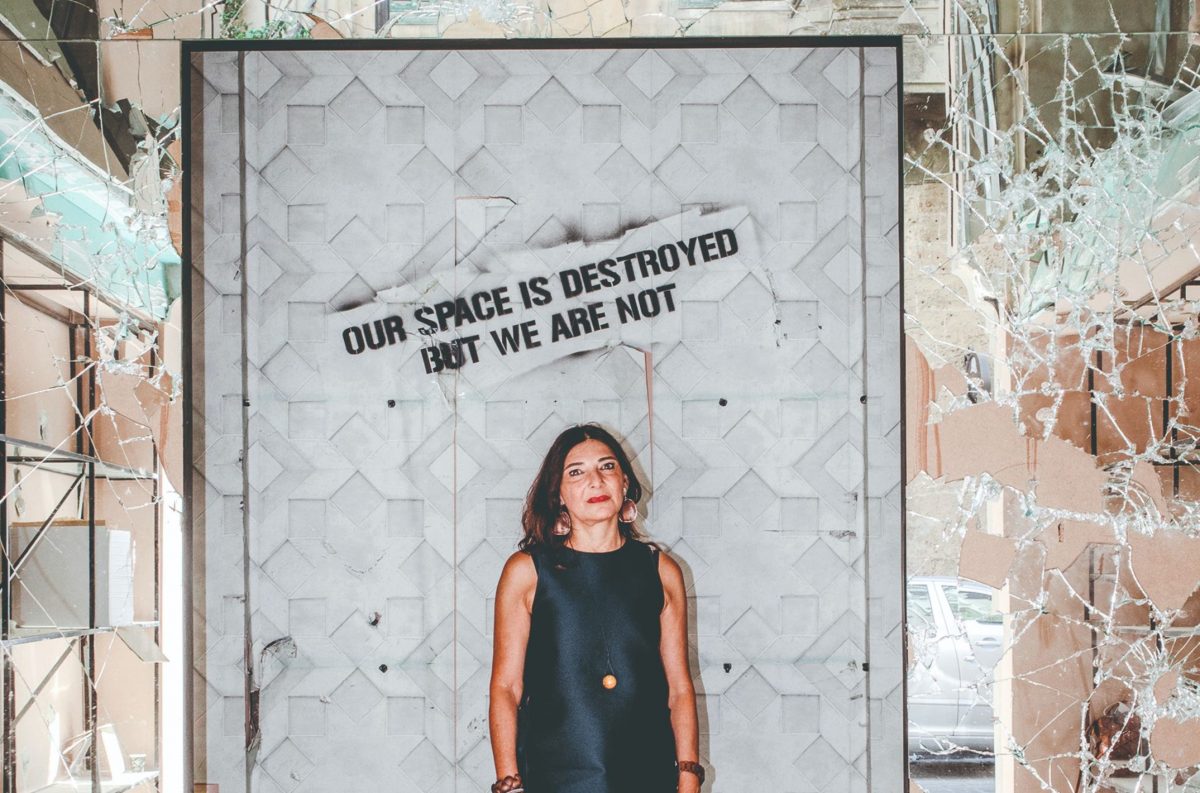
The sentiment of much of the city’s creatives was succinctly delivered by Nada Debs’ own defiant posts on social media espousing the message “Our space is destroyed—but we are not.”
And so, in the months and years that followed, Beirut’s creatives regrouped and channeled their anger as they begin to rebuild for a better Lebanon.

What would really happen next was unclear; one thing was for sure though—Beirut’s citizens were angry, yet felt united in their rage. With this cruel and unnecessary tragedy inflicted upon them, they were eager for justice. The creative sector would rise again, of course, and the shoots of fresh growth were already beginning to show in the months that followed. But it will feel different, it will feel emboldened, and it will certainly feel empowered.
The simple fact that the nation’s designers are held in high regard globally and that Beirut has long been viewed as a cradle of dynamic creativity, means that it would take a brave man to bet against a resurgence for Lebanese designers around the world.

For certain, they would see a renaissance on the international scene long before they did locally—Beirutis knew that their recovery from the port blast was only one hurdle along the road towards achieving a fair and equitable nation. Playing for high stakes, the ultimate prize is seen in stealing their country back from a corrupt and undemocratically entitled elite. The reality of Lebanon today is that the same betting man might seek longer odds on this as an ultimate outcome.