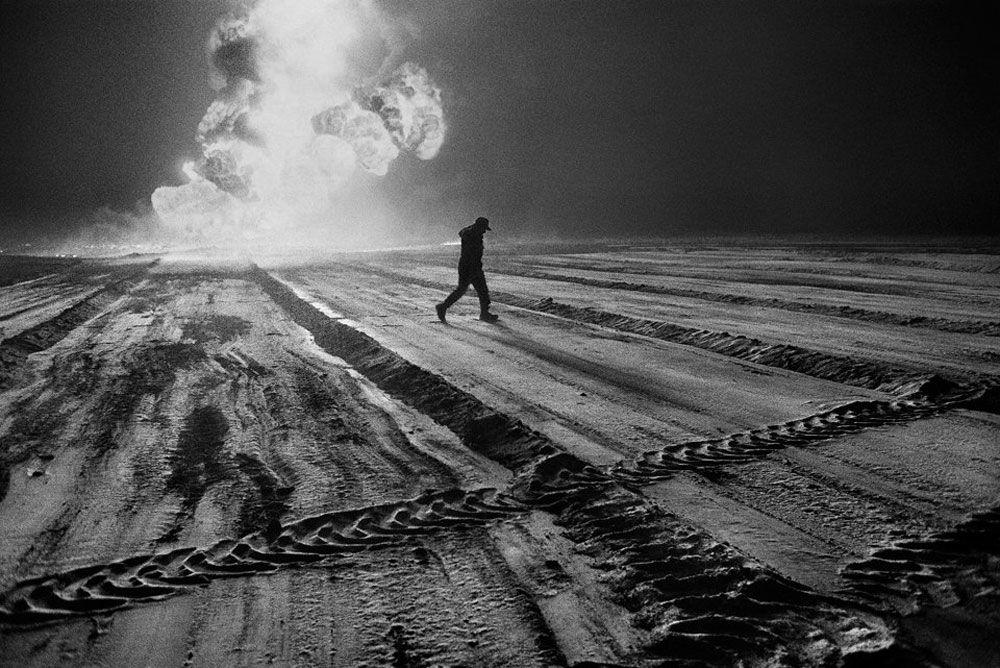

In 1991, when the American-led coalition forces closed in on Iraqi troops, forcing them to withdraw from Kuwait, Saddam Hussein’s men set fire to the Greater Burgan oil fields as they retreated, leaving nearly 600 wells aflame. The task of putting out these momentous fires — one of the greatest environmental disasters of modern history — was left to a group of professional oil-fire-fighters, who battled seven days a week to extinguish the flames and cap the wells.
Alongside them was a 47-year-old French-Brazilian photographer, Sebastião Saldago, whose images of these men at work were almost as staggering as the blazing 40ft geysers they had been sent to tackle.
The photographs were published in The New York Times over a quarter of a century ago, but now they have been collected for the first times in a monograph, Kuwait: A Desert on Fire, which is being published by Taschen. Salgado, now 72, has spent a lifetime photographing the natural world and the humans and animals that interact with it, though his Kuwait series is among the most shocking representations of men attempting to wrestle nature into submission; as Salgado himself describes them, “covered head to foot in oil, they moved like phantoms through the gloom”.
In the present day, ISIS terrorists have reportedly set fire to oil fields in Iraq and Syria as they flee. The phantoms will need to walk again.
Kuwait: A Desert on Fire by Sebastião Salgado (Taschen) is out now