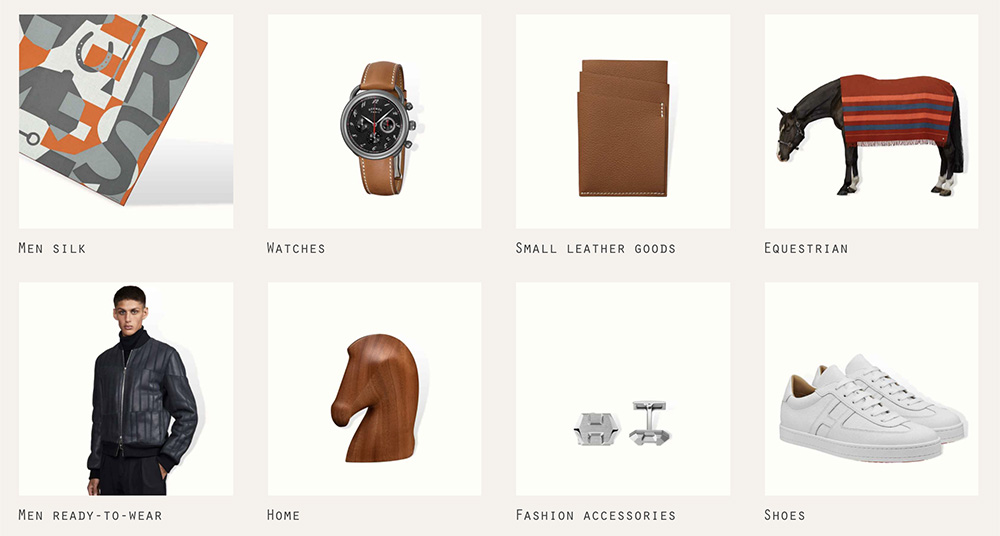
“I don’t think Hermès is quite as ‘traditional’ as people sometimes think it is,” says Christophe Goineau as he subconsciously readjusts the lightweight, navy neckwear hanging from around his neck. “What we’re trying to do is showcase the silk scarf as more than a traditional, or classic, piece of clothing – especially for men.” That awareness is the driving force that fuels Goineau’s day-to-day as the Creative Director of Men’s Silks at the storied French luxury fashion house, Hermès. “Scarves can be fun, versatile and expressive – a polymorph playground,” he explains matter-of-factly.
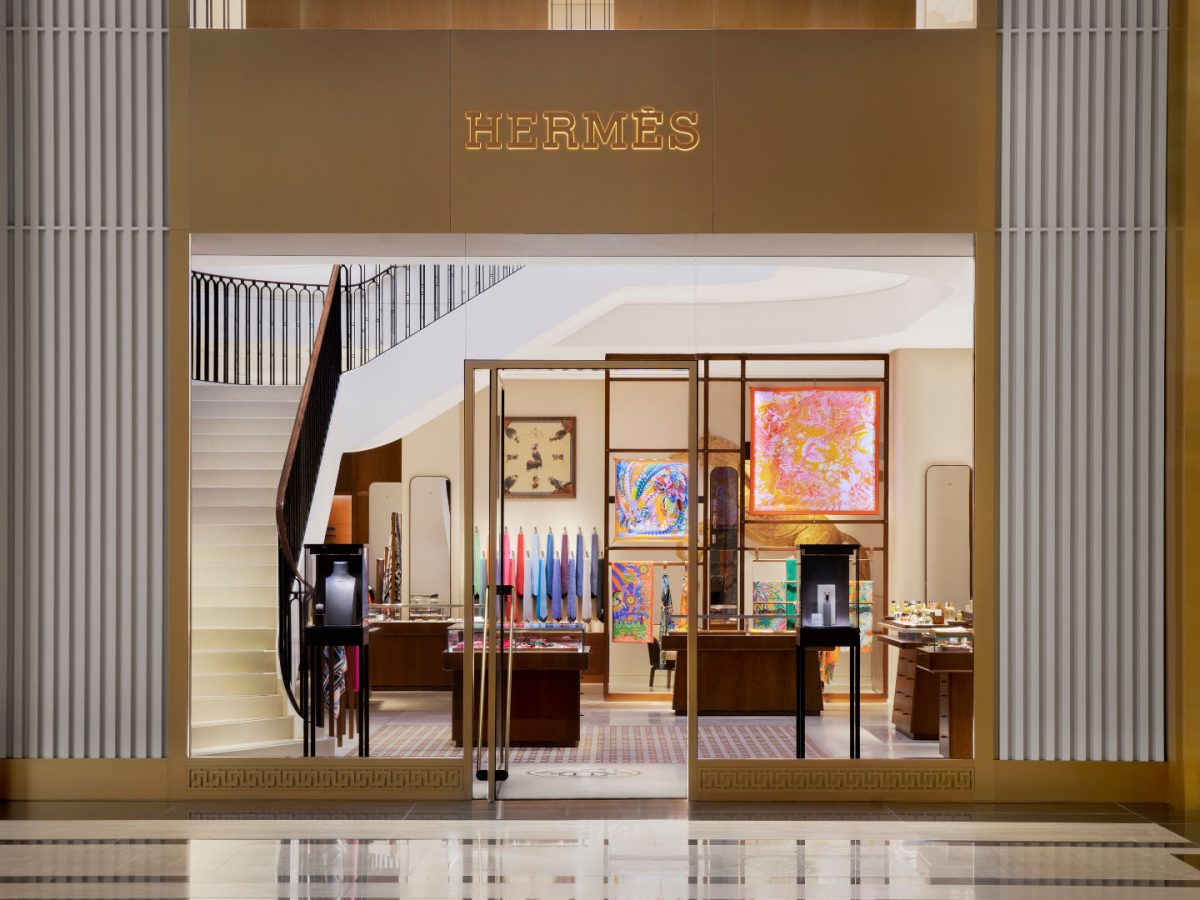
He is talking to Esquire at the launch of the Carré Club – Hermès’ custom-made, interactive, pop-up dedicated to the art and spirit of its iconic scarf. The event located within Dubai’s Alserkal Avenue is open to the public until January 20, 2021, but, such has been the demand, all guests are required to book an appointment slot.
Since it first debuted in Paris in 2018, the Carré Club has been busy travelling the world, stopping in New York, Los Angeles and Singapore – with the intension of showcasing a more exciting and entertaining side to one of the luxury house’s most revered products, via a series of interactive and tactile activations. Initially, the exhibition was dedicated to women’s scarves but, thanks to the work of Hermès’ menswear Artistic Director Véronique Nichanian and Goineau, a male element has since been incorporated in order to try an elevate the awareness of its men’s scarf collection.
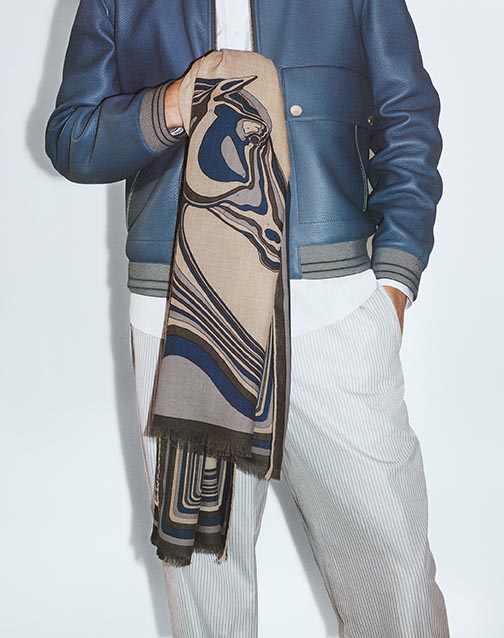
First introduced in 1937, the carré (or “silk square”) has retained its relevance through the best part of a century with continual tweaks to its classic format. It’s particularly timely, as the world takes an anti-fast consumerism stance, appreciating the importance of quality and artisanship rather than just a designer logo.
As an entry point to the Hermès universe, the silk carré is more than an accessory, it is “object of fantasy”. Hermès commissions artists, illustrators, graphic designers and craftsmen from all walks of life to create designs that communicate whimsical stories, abstract ideas or playful graphics. With its incredible vault of designs, mind-boggling printing process and faultless finishing, it’s a unique marriage of art, craft and culture.
“Hermès is very famous for women’s silk scarves, and certainly less so for men,” says Goineau, and he would know. Having joined the company in 1987, at the age of 21, he serving for many years as Men’s Silk Collection Manager, before becoming the department’s Creative Director in 2011.
“Lady’s scarves have a very specific way of doing things, and we are trying to create something different. Our goal in the silk division is to reveal the fantasy of the male customer by creating pieces for them that ultimately could not be found in the lady’s collection.”
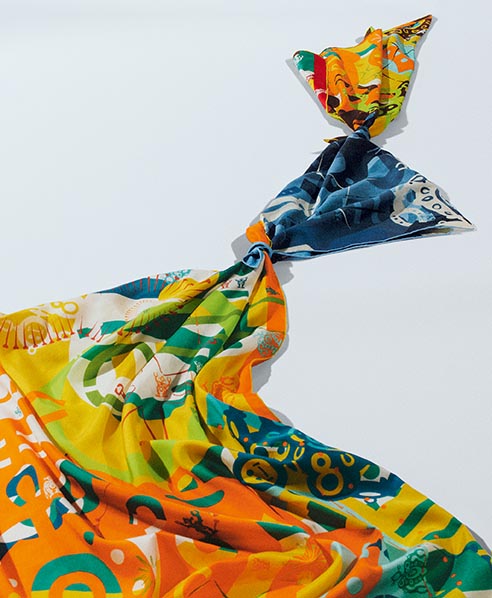
Today, the men’s silk collections at Hermès have its own path and explore its own themes. With the freedom to play with elements of design, colour, material and shape, the accessory offers a medley of colours, lightness, hidden messages, winks and humour. Size-wise, the traditional 90cm shape has increased to 100cm and even 140cm in the men’s collections to allow for new ways of wearing them.
“The design must express the desire for the moment and say something, as well as having a good balance and a rhythm in its composition and in its writing,” says Goineau. As he points out the main differences between Hermès male and female customer he mentions that quite often the split is broadly one of design versus ‘colouration’, citing that men tend to be led by specific colours, while, in general, women will seek out the designs that they prefer and ask for the colour options.
“I think as men we are safer and more conservative. We want to feel comfortable in our purchasing decisions, and ultimately are not as used to playing as much with colours and designs,” explains Goineau, using himself as an example. “I wear a lot of blue, so when I shop I always look at the blues as a starting point. Only then do I look at the design or shape etc. This is less true for many of our female customers.”
As you can imagine, it is a fascinating and delicate process with luxurious neckwear rarely seen as a ‘must-have’ item by the majority of the male market, therefore making the awareness of both the product and the brand’s quality is paramount to the communication.

“What we try to do is put a lot of detail into the product – most of which is something that you may not notice at first, but you will feel and see it when you start wearing it,” says Goineau. “Scarves are pieces that you have quite an intimate connection with; and they become more beautiful the more they are worn.”
Today, an Hermès scarf design is planned approximately two years in advance, with the illustration, engraving and screen-printing process a lengthy undertaking involving many pairs of dedicated eyes and hands. Every year, dozens of designs are created. Each one begins as a paper design arriving at Hermès’ workshop in Lyon, France, where engravers reproduce the work with Indian ink, gouaches, brushes and even electric pens for the finer details.
Hermès presides over a pool of international contributors to ensure the final results are never the same, each telling its own story. Some are vibrant, some regal, all unique. The process in which Goineau selects the designers to work comes from a combination of people recommending artists to him; him reaching out to artists whose work has impressed him; or by receiving external pitches from artist or designers. “We get quite a lot of the last type!” he says with a chuckle, “but, as a point of principle, we make sure to answer every single pitch. You never know what you might uncover – it could be something incredible.” He explains that with every design the goal is to find a balance between creativity, the brand’s values and something he calls the “spirit of the times” – essentially ensuring the designs portray the expression of the artist in the context of the times, while also remaining in Hermès’ elegant universe.
That relationship with time is very important for a house like Hermès. The connection with its storied past and its contemporary evolution plays a crucial role in its continued success, which it carefully ensures is more evolution than revolution.
“Revolution is not Hermès,” says Goineau. “My goal is to embrace modernity, but revolution means you forget what came before and you start with something new – and that is not our value. With a house like Hermès, it is all connected. When you work in the Present, you are also working with the Past, and you must be mindful that the work you are doing today will affect and inspire things being produced in the future. It’s all connected”

Esquire now has a newsletter – sign up to get it sent straight to your inbox.
Want up-to-the-minute entertainment news and features? Just hit ‘Like’ on our Esquire Facebook page and ‘Follow’ on our @esquiremiddleeast Instagram and Twitter account.