“Should I answer this politically or realistically?” laughs Amr Salama, with a cheeky grin.
The creator and showrunner of the upcoming TV show Paranormal mulls over the question of whether he feels any pressure of being the person to finally bring the iconic Egyptian sci-fi book series ‘Ma Waraa al-Tabeea’ to the screen.
“The show has elements of horror, but the real horror will be me going into the street with all the fans of the books once the show premieres! My inbox is literally filled full of threatening messages warning me not to ruining the story.”
There is an element of lighthearted showmanship to his answer, but also Salama is very aware of the responsibility he has bestowed on himself to adapt the best-selling works of the iconic writer Ahmed Khaled Tawfik.
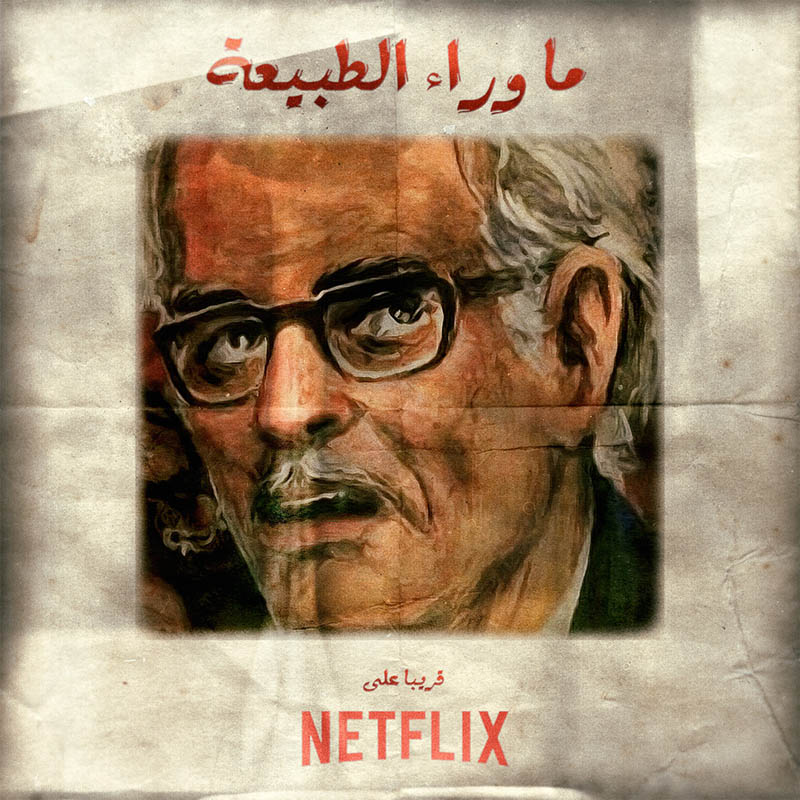
For context Paranormal is the biggest-selling fictional series of books in the Arab world, with more than 15 million copies sold. Its protagonist Dr. Refaat Ismail is so ingrained in the social culture of Arabic literature that people will quote and reference him regularly and, as of November 5, will make his screen debut on Netflix thanks in huge part to Salama.
“I’ve been wanting – and working – to put Dr. Refaat Ismail in front of the camera for more than 20 years!” he says. “Honestly, it was really a treat for me to see that character looking back at me from behind the camera and, sure, I would love for Paranormal to become an international hit like other Netflix shows like Casa de Papel, Stranger Things and Dark – but my dream was just getting to create it. The rest is a welcome bonus.”
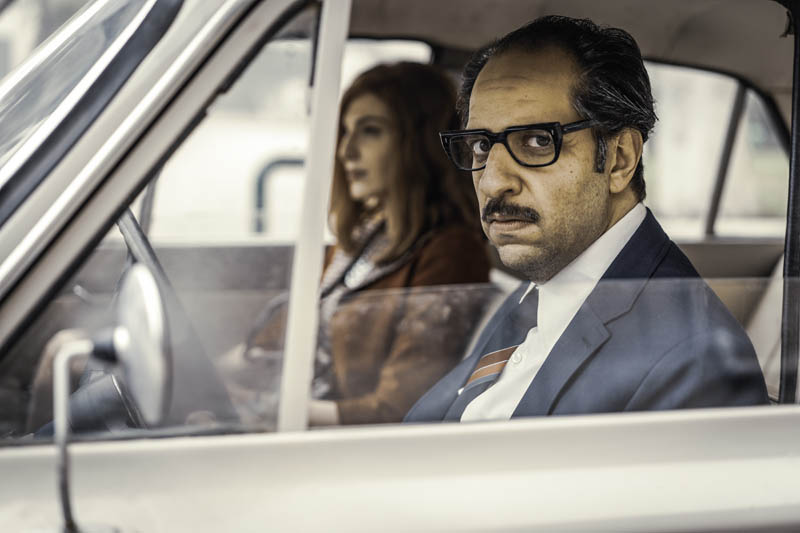
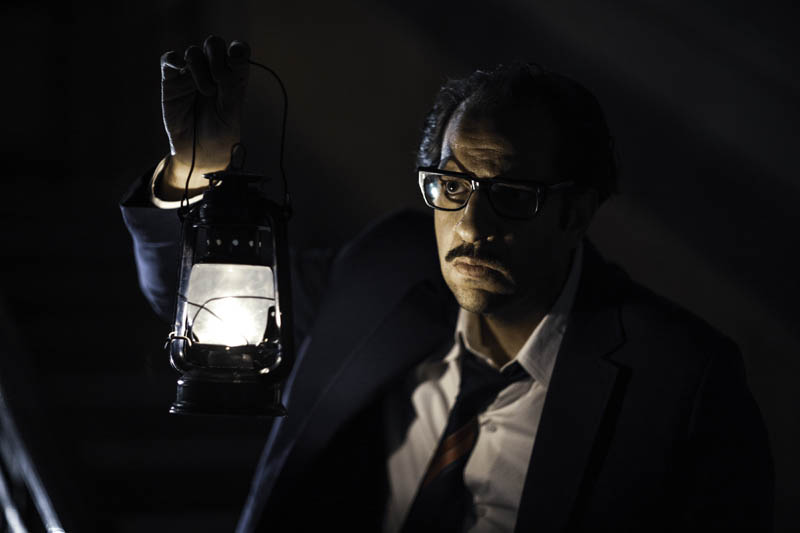
Set in the 1960s, the series tells the story of Dr. Refaat Ismail a professional haematologist who tries to uncover the truth behind a series of supernatural events. As a counter to his scientific work he is faces with a world where logic and scientific reason are replaced with local mythology and global folk tales, battling numerous health problems with a ready supply of medicines rattling in his pockets as he goes.
His “journey of doubt” unfolds over six standalone episodes, each centred on one of the famous urban legends in the Paranormal books, but all are interconnected through one common, recurring element.
It is not just the weight of fan expectation that has been levied on Paranormal. It is only the third Arabic (and the first Egyptian) Netflix Original production to be released, and has was purposely created with an all-Egyptian crew, to highlight the quality and level of production capable in the Middle East region.
Largely due to the lobbying of its producer, Salama – who had previously worked on Sheikh Jackson, Excuse My French and Asmaa – the project also attracted the talents of heavyweight co-producer Mohamed Hefzy (Clash, Yomeddine, You Will Die at Twenty), award-winning director Majid Al Ansari (Zinzana) and, most surprisingly, comedic actor Ahmed Amin as the iconic Dr. Refaat Ismail.
“Ahmed is a very deep person,” says Salama. “He is a smart, considered and skeptical person, but most people only know him for his comedy sketches online, because he is hilarious.”
The Egyptian actor shot to prominence thanks to his self-produced sketch-show, Al Plateau, which gained a huge viral audience across the Arab world thanks to its 30-second bits being shared on Facebook. “I remember being on a call with Ahmed six years ago,” explains Salama.
“I was doing Saturday Night Live and I wanted him to come join me as a writer. The rumours of me trying to make Paranormal had been circulating for years, and he told me what a massive fan her was of the books and that if was ever going to be made he would be interested. It was quite a shock to everyone when we cast someone who was known for his comedy play this iconic role in a thriller, but he fit the idiosyncrasies of the role perfectly.”
Put simply, Dr. Refaat Ismail is an anti-hero. An ordinary and frail man, he resonated with readers because he was unlike the usual trope of a hero in Arabic literature. “He doesn’t have any typical hero characteristics,” explains Amin. “He has a dark sense of humour, is very sarcastic and, ultimately, is very lonely person. He would never consider himself a hero, and – most importantly – doesn’t consider himself a believer in the paranormal.”
While Salama may face the initial weight of expectation, as the face of Refaat, a similar level of scrutiny has been placed at the door of Amin. Like the casting of a new James Bond or Batman, how does someone handle the pressures of embodying a role that is so dear to a country’s popular culture?
“You have to try and forget the pressure and instead focus on your work, and doing your job,” explains Amin. “Yes, the original stories is something that comes with an emotional attachment to millions of people, but what we are doing is creating Amr’s interpretation of the story. You simply cannot recreated the imagination of a million people who have read the books – all you can do is make a version that you believe is told in the true spirit and sense of the story.”
Helping add to the dynamic is the role of Maggie McKillop, a Scottish university colleague of Refaat’s, played by the rather excellent British-Lebanese actress Razane Jammal. Together the two enter the paranormal world and try to save their loved ones from the immense danger that surrounds them but, be warned, this is no Arab-language reworking of the X-Files.

“I grew up watching the X-Files. My mum used to tell me off because I would watch it and then have nightmares!” says Jammal, “but while I do understand the comparison between the dynamic of the main characters – Maggie and Dr. Refaat are not Mulder and Scully.”
The main difference, Jammal points out, is that while the duo are dealing with otherworldly issues, it is based on a much more local level rather than the main characters trying to unpack the global understanding of paranormal events and their impacts. “As a whole, the story is based on Egyptian folk tales, told by an Egyptian writer and now created largely by an Egyptian team. It is hugely significant that we can showcase local talent and storytelling ability to a global audience.”
Part of the marketing push for Paranormal has been the phrase “Made in Egypt. Watched by the world” – which denotes the importance of this being another Arab-made Netflix Original production should not be understated. The streaming platform has seen a huge investment into storytelling from lesser accessed markets in the past five years, and has been rewarded with a global appetite for those stories regardless of language and cultural barrier.
In the Arab world, the initial feedback from the first-to-market shows, Jinn and Al Rawabi School for Girls – has lead to reinforce the decision to tell stories from the Middle East region.

“Egypt has been the centre of film in the region forever, so it is important that it has to have its day on an international scale,” says Jammal. “As an actor we are used to seeing a lot of Arab roles on screen played by non-Arabs, so something like this is great to give much-needed global exposure to Arab talent. Not only on an acting front, but it shows people that with an all-Egyptian crew, this region is capable of creating TV shows of the highest international standard that can be enjoyed internationally.
Thanks to the distribution of the film on the world’s most power streaming service certainly helps with its visibility, the question that gets asked more and more these days is the attachment of the word ‘Arab’ as a prefix to work. Does being an ‘Arab filmmaker’ act as a help or a hindrance to those at the cutting edge of the industry?

“I take a lot of pride it being called an ‘Arab filmmaker’, because at least when people watch the films they are aware of the context they are watching with,” says Salama. “The Arab world is a very special place to make films, but you have to deal with a lot of issues that you wouldn’t in other places, whether it is elements of censorship or people’s reactions to anything you say. But I don’t get annoyed because if helps put everything into context.”
It is a thought process that is echoed by Maged Al Ansari who shared the directorial responsibilities of the series with Salama. “When I did Zinzana, I was frustrated to be called an ‘Arab filmmaker’, but after a couple of years I began to openly accept that these are our stories and this is our duty as Arabs to tell those stories. Yes, we are filmmakers, but storytelling is about a voice and knowing your identity plays a huge part of who you are and what you create.”
If there is a statement to be made to the wider streaming world with regards to Egyptian filmmaking, then Paranormal is easily the biggest one yet. The biggest player in the streaming market, green lighting an all-Egyptian production of one of the country’s most beloved, and biggest selling, works of literature? If successful, this could be just the start for the Middle East and the stories that the region is just waiting to tell. With any hope, Paranormal will helps usher in a new normal when it comes to production in the Arab world.
Paranormal releases on Netflix on November 5.

Esquire now has a newsletter – sign up to get it sent straight to your inbox.
Want up-to-the-minute entertainment news and features? Just hit ‘Like’ on our Esquire Facebook page and ‘Follow’ on our @esquiremiddleeast Instagram and Twitter account.