
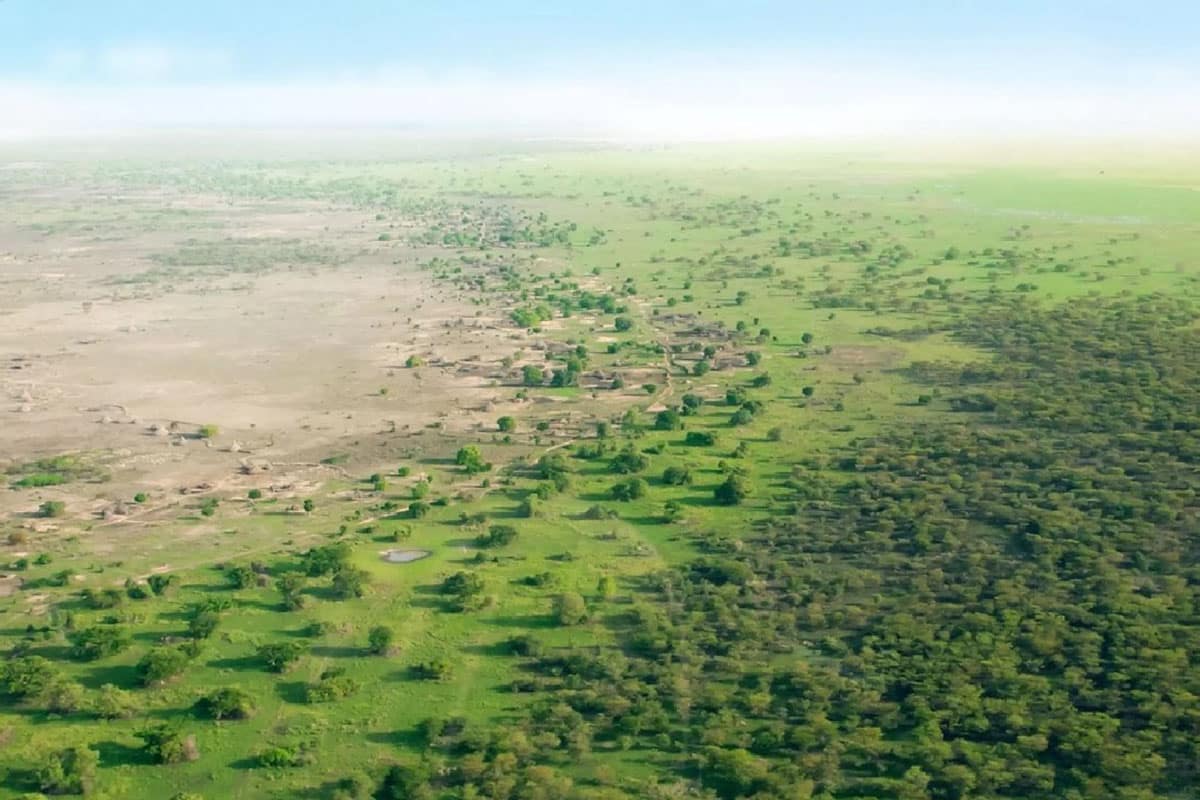

It’s hard to imagine that the Sahara – Earth’s largest desert – dry and arid as it is, was once a plush, green savannah. Well, according to climate experts on the Northeast African region, the desert has gone green not once, but 230 times over the last eight million years! With the support of new research and studies, scientists believe they can finally explain why, when, and how this phenomenon happens.
‘Greening’ is term that refers to the process of afforestation or revegetation of areas that lack significant tree coverage. This can often be a natural process, through plant succession and colonization, but can also be accelerated through manmade efforts. Rachel Lupien, one of the researchers involved in a study on the Sahara explains: “We know that there are recurring periods when the climate in the Sahara changes. We call the phenomenon ‘Green Sahara’ or ‘African Humid Periods’. During a green period, the desert shrinks significantly and is transformed into a landscape that resembles the savannahs we know from Eastern Africa today.”
But how can scientists accurately determine what the desert ecosystem resembled several hundred years ago, and predict when it will change once again?
By closely studying and analysing marine sediments, researchers conclude that the Northeast African region has undergone a greening phase every 21,000 years over the last 8 million years, adding up to 230 periods of a green Sahara in total.
A team of climate researchers have developed a climate model that simulates “atmospheric circulation over the Sahara and the impacts of vegetation on rainfall”, in an attempt to explain how such largescale restructuring to the Earth’s atmospheric systems is even possible. The results of their simulation model suggest that the major changes in the amount of rain that befalls the desert region can be attributed to changes in the Earth’s orbital precession. As our planet rotates, it wobbles on its axis, resembling a slightly off-center spinning top toy. This wobbling movement moves its Northern Hemisphere closer to the sun during the summer months, resulting in more humid air and a shift of the Western and Central African rainbelt towards the Northeast.