


Language is a peculiar beast. It evolves, morphs, and sometimes, in its quest to be universally understood, stumbles. Case in point: the Sahara Desert (aka, the hottest desert in the world). Or as you should be saying it, just “Sahara”.
For those not in the know (all of you, basically), “Sahara” in Arabic already means “desert.” So, every time you’ve marveled at the vastness of the “Sahara Desert,” you’ve essentially been waxing poetic about the “Desert Desert.” It’s like saying “motor car” or “ATM machine.” Redundant, repetitive, and, let’s face it, makes you look silly.
Now, I’m not pointing fingers (but if I am, it’s at you). After all, language is a collective endeavor handed down through generations. But it does beg the question: How did we get here? How did such a glaring linguistic oversight become so common that you’re all out there saying it like it’s the norm?
Well, here’s the twist: this isn’t an isolated case. Oh no, this linguistic dance of doubling up is a global phenomenon. Take the “La Brea Tar Pits” in the USA, for instance. “La Brea” translates to “the tar” in Spanish. So, we’re essentially saying “The Tar Tar Pits.”
Then there’s the “River Avon” in the UK. “Avon” is derived from the Welsh word “afon,” which means “river.” So, we’re talking about “The River River.” And let’s not forget the “Lake Laguna” in the Philippines. “Laguna” in Spanish? You guessed it: “lake.”
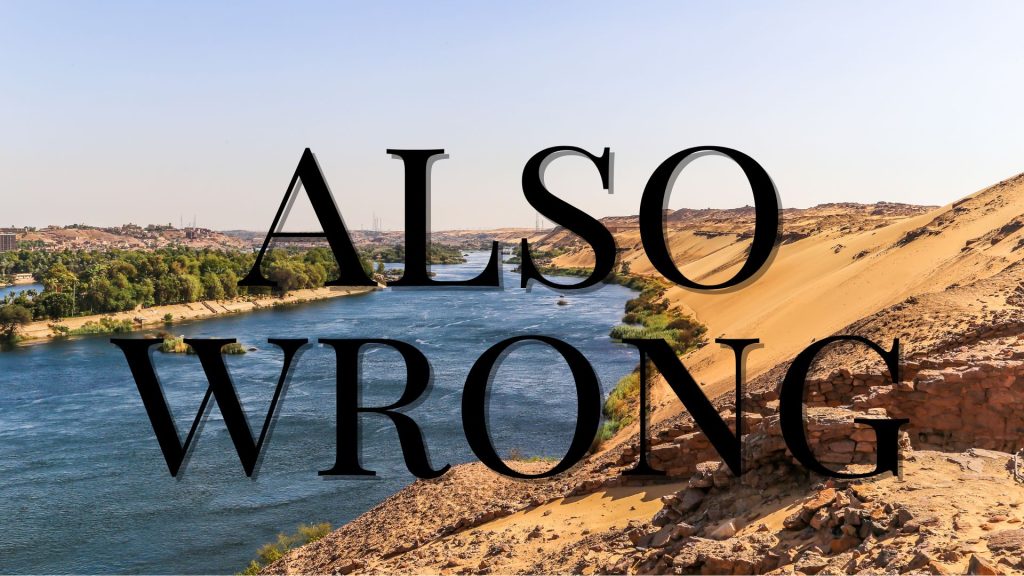
Cross over to Spain and Mongolia, and you’ll find the “Sierra Nevada Mountains.” Translated, that’s the “Snowy Mountain Range Mountains.” Venture to Mongolia and you’re greeted by the “Gobi Desert,” where “Gobi” already means “desert” in Mongolian. And, of course, the iconic “River Nile” in Egypt, with “Nile” being derived from the Greek word “Neilos,” signifying “river valley.”
So, here’s a thought: maybe it’s time you all picked up a new language or two. Not only would it save you guys from sounding silly saying all these redundant words, but it might just make the world a tad more connected. After all, why say something twice in English when once, in any language, is good enough?