
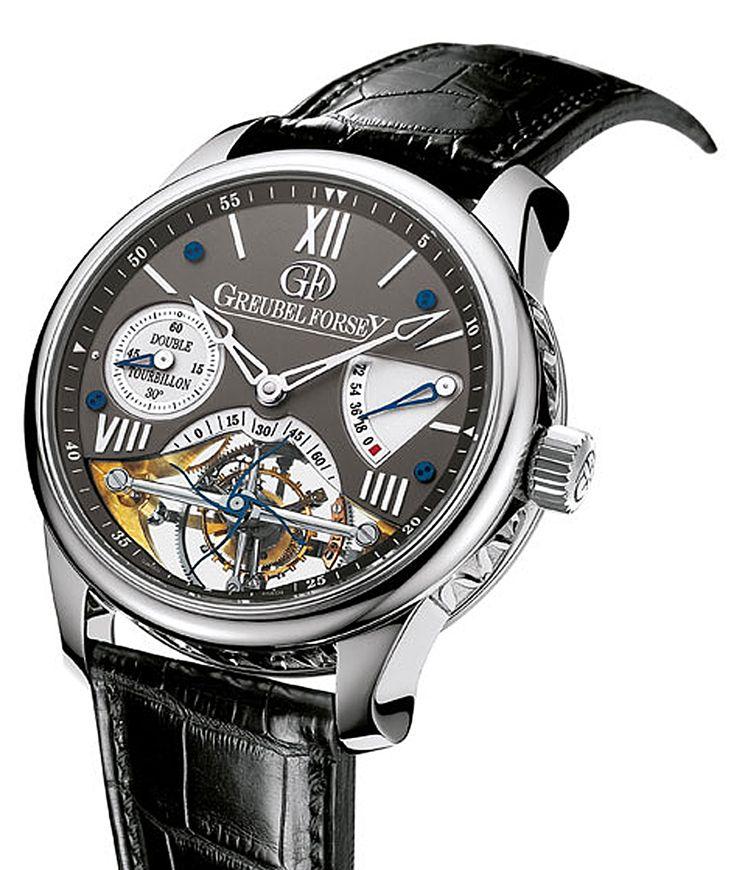

Halloween has come and gone, and around the world those that celebrated the occasion are packing away their pumpkin ghouls and returning their monstrous costumes to the store or the cupboard. But skeletons of another kind are still out on display. I’m talking about the ones found on the wrist – in the form of skeleton watches.
No they don’t strictly have anything to do with actual skeletons or Halloween, and if you don’t already know, the term ‘skeleton watch’ refers to a timepiece that has the inner workings (or the ‘skeleton’) on display behind the crystal. You can see the inner workings without having to remove the case.
It also has nothing to do with a ‘Frankenwatch’ – which is something else entirely: An old watch that has parts which have been cannibalised from other models, mashed together like Frankenstein’s body parts.
Most of us think of watches as having either a plain or a decorated face, with the hour and minute hands moving around steadily, but skeletonized watches are popular too – and offer a real treat to the eyes. As the miniature cogs and wheels carry out their functions, it creates a mesmerizing dance of micro-mechanical precision.
As a watch enthusiast, this is one of my favorite things to observe. It never gets old.
But where did it all start? And which are some of the best examples? Let’s take a look at the story of the skeleton watch.


Probably the first skeletonized watches were made by André-Charles Caron around 1760. Yes, that far back! Watches and clocks of that period were typically very ornate, and the exteriors were embellished with swirls and decorations on every surface. Caron wanted something new – so he decided to show off the interior of the watch instead. It was as if he was revealing a secret to the world.
Since then the art of open-working timepieces has come a really long way. Each time a new model is unveiled, it is a pleasant surprise for me.
During the 1920’s Vacheron Constantin made a number of exquisite watches that were skeletonized, and encased in rock crystal or white gold. There are some notable vintage models featuring this kind of design, but it seems to have fallen out of fashion for many years.
The last two decades have seen more and more of these kinds of timepieces re-appear. They are often produced in limited numbers. It’s understandable, given the incredible amount of work that goes into each one.
Patek Philippe, Vacheron, and many other leading brands compete for the most beautiful and most intricate movements on display. Even the robust Panerai turned their iconic Radiomir shape into a skeletonized version – and it is quite something, in my opinion.
Plates, bridges, bars, cogs and wheels are polished and sculpted, combining the functional with the aesthetic. More than half of the original metals are cut away, very carefully, and the heart of the watch is exposed.
First the plates and bridges are drilled and machined, and then expert craftsmen painstakingly finish each detail by hand. This means an incredible amount of work. No detail is left out. Each surface that will be visible, or even partly visible is worked to perfection.
Sometimes the entire dial is removed, and sometimes the manufacturer will opt to cut away only a portion of the face instead. In other models the interior is visible from the back only. The design process is crucial, because each element needs to be perfectly aligned so that exactly the right details will be visible, and present the watchmaker’s craft in the best light.