

There’s “new watch” energy, and then there’s “I just had my 1940s chronograph restored by the guys who built it” energy. The latter is a level of connoisseurship that usually happens behind closed doors, in sterile rooms hidden away in the Swiss Jura Mountains.
But Audemars Piguet—a brand that has mastered the art of making the traditional feel impossibly cool—is changing the vibe. Enter the Atelier des Établisseurs, a new restoration temple in Le Brassus that is part high-tech lab, part living museum, and entirely about the flex of longevity.
To understand the name, you have to understand the history. Long before AP was a vertical powerhouse, the Vallée de Joux was filled with établisseurs—independent craftspeople who specialized in specific parts (wheels, springs, escapements) and brought them to a central workshop to be assembled. It was the original gig economy, just with more precision and better scenery.
By naming this space after them, AP is paying homage to its roots and so much more. This isn’t where your new Royal Oak gets a link removed; this is where the brand’s most significant archival pieces—the ones currently sitting in museums or the safes of very serious collectors—go to be reborn.
But the Atelier isn’t just a high-end repair shop for the watches of yesteryear. It’s also a laboratory for the kind of avant-garde, ultra-limited creations that make even the most seasoned collectors lean in. To mark its opening, AP has dropped three “Atelier des Établisseurs” pieces that prove the brand is still the undisputed king of the “Wait, how did they do that?” category.
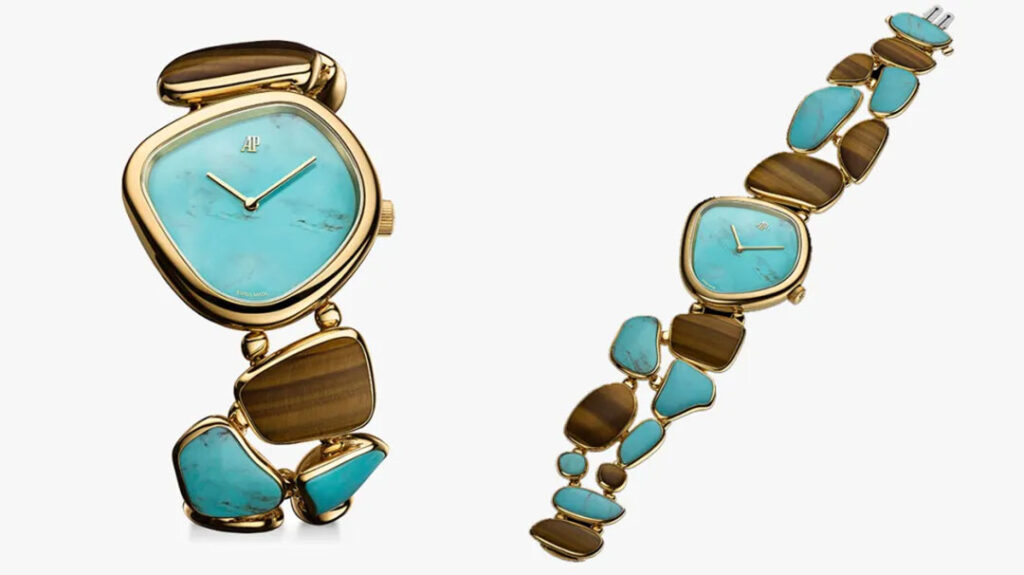
If you’ve ever walked the shores of Lac de Joux and thought, “I wish I could wear these smooth, water-polished stones on my wrist,” AP has heard your very specific prayer. The Établisseurs Galets (French for ‘pebbles’) is a sculptural flex that feels more like a piece of jewelry found in a high-end gallery than a traditional watch. Each piece is unique, featuring a dial and bracelet links carved from natural stones, shaped to mimic the organic fluidity of the Valley’s landscape. Powered by the hand-finished Calibre 3098, it’s a masterclass in making rock look like silk.
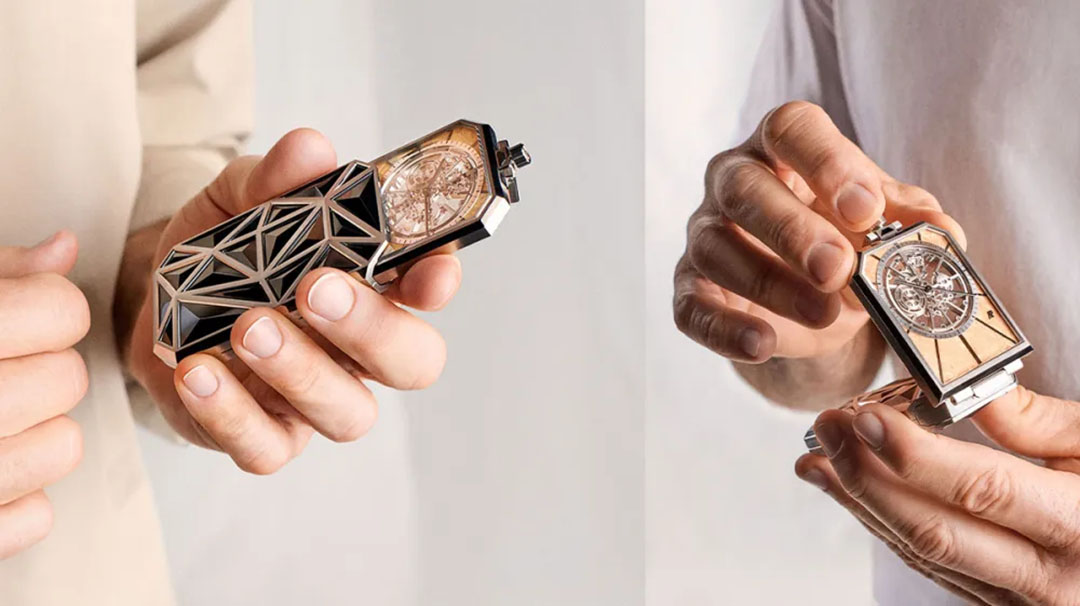
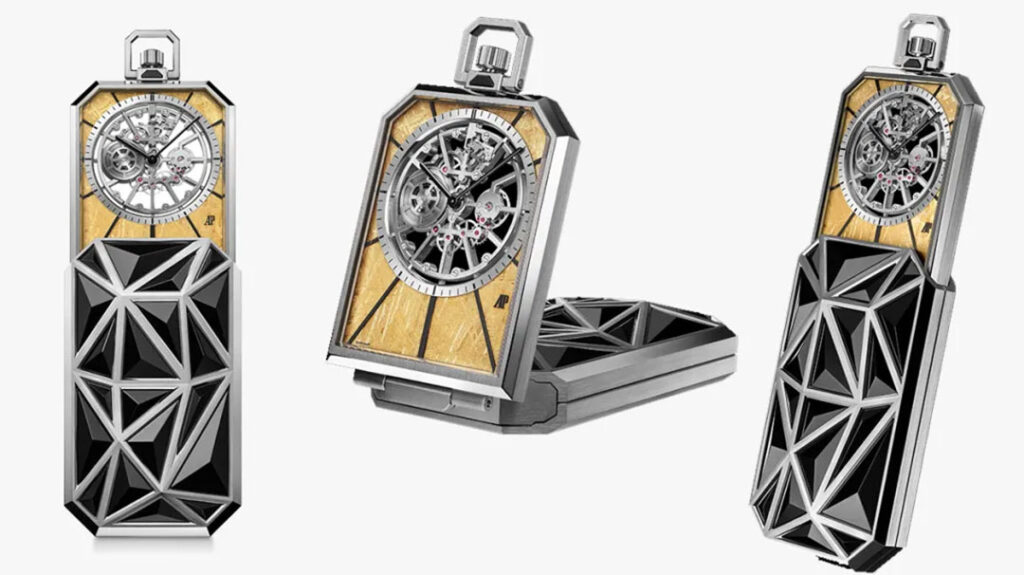
For the man who finds a standard wristwatch too conventional, the Établisseurs Nomade is a piece of kinetic art that refuses to be boxed in. It’s a multifunctional “portable time” object that transitions from a pocket watch to a table clock with the kind of mechanical grace usually reserved for Bond gadgets. A sliding stone dial reveals the hand-skeletonized Calibre 7501—a movement so intricately open-worked it looks like a spiderweb made of gold. It’s a tribute to the days when time was a tactile experience, designed for those who treat their desk as a curated exhibition.
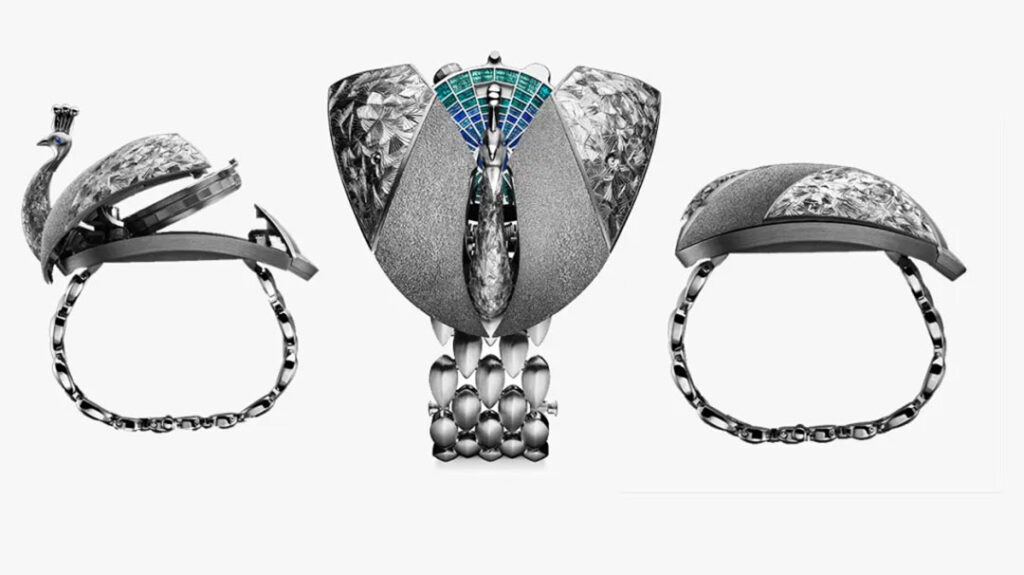
Then there’s the Établisseurs Peacock, a secret watch that takes the concept of “stealth wealth” and adds a layer of high-jewelry theater. At first glance, it appears to be a white-gold beetle—a protective, shimmering object on the wrist. But with a single push, the “wings” unfold to reveal a hand-sculpted peacock, finished in translucent enamel and hand-engraving that captures the bird’s iridescent glow. Below the automaton, a “dragging-hour” display (powered by the Calibre 3098.2) keeps the time, while the bracelet links are shaped like delicate individual feathers. It’s a piece that not only tells the time; but also the story of technical dominance.
While some brands continue to (successfully) covet the latest hype drop, these three creations are a reminder of what happens when you give the world’s best artisans freedom to create the future of the past.