
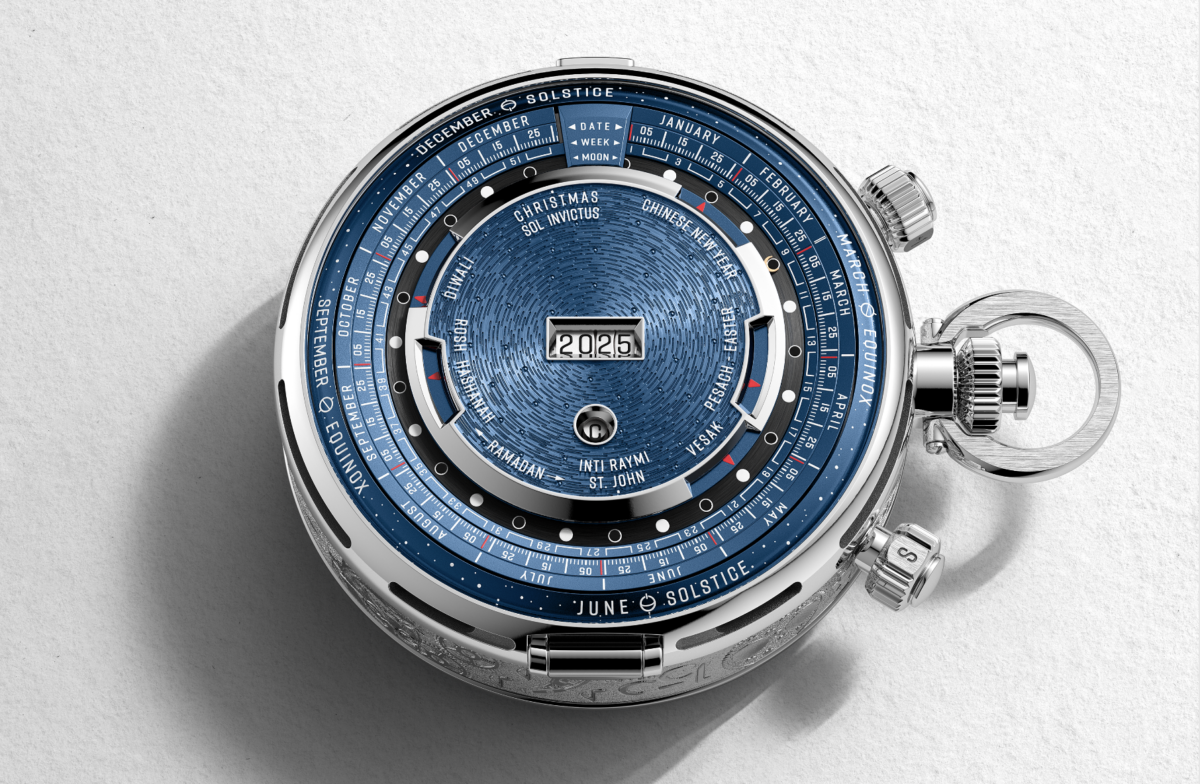

In the high-stakes world of modern horology, the race is usually for something lighter, thinner, or made of a material borrowed from an F1 chassis. But every so often, a brand decides to stop racing entirely and simply remind everyone why they built the track in the first place.
Audemars Piguet has done just that. To mark 150 years of family-owned independence, they haven’t just released another Royal Oak (though, let’s be honest, we’d probably buy that too). Instead, they have reached into the archives, dusted off the blueprints of their ancestors, and unveiled the 150 Heritage—a limited-edition pocket watch that is less a timekeeping device and more a mechanical dissertation on the passage of time itself.
It is a brave anachronism. In 2026, carrying a pocket watch is a decided style choice—it sits somewhere between “eccentric billionaire” and “time-traveling novelist.” But if you’re going to carry one, it had better be this one.
At the heart of this platinum beast beats the new Calibre 1150. If you follow AP, you know that codes ending in “50” usually signal something significant. This is an ultra-complicated, manual-winding movement that serves as a bridge between the 19th and 21st centuries.
It unites the brand’s terrifyingly complex acoustic technology (the chimes on this thing likely sound better than your home stereo) with a “Universal Calendar.”
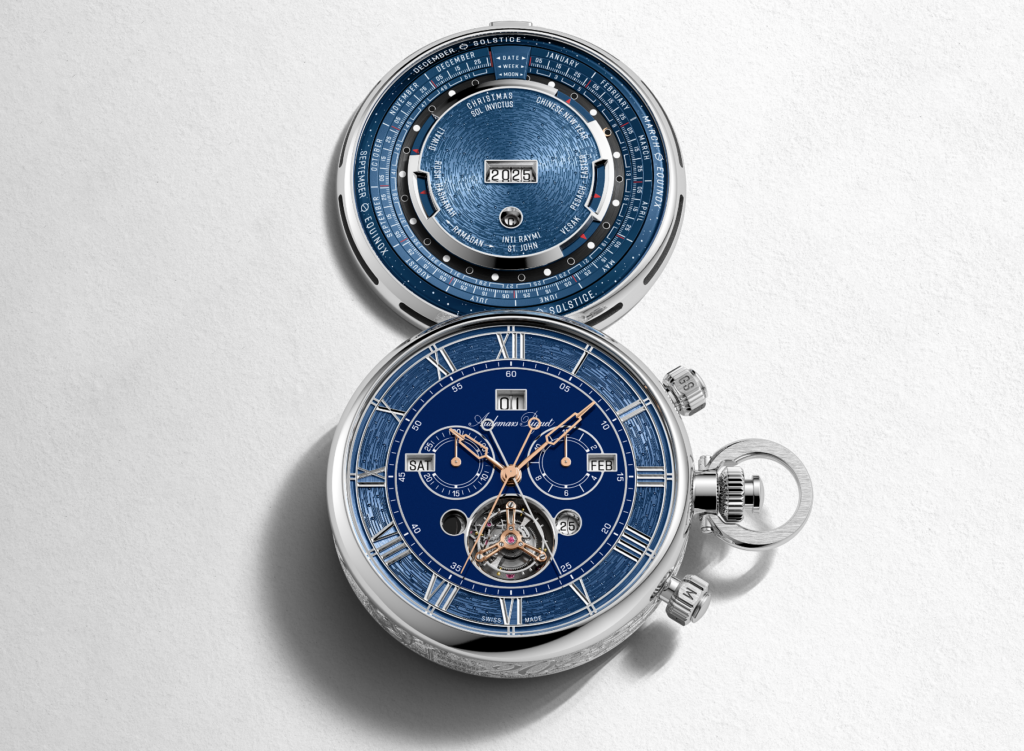
Most calendars tell you it’s Tuesday. A Perpetual Calendar tells you it’s a leap year. The Universal Calendar on the 150 Heritage, however, can tell you what date Ramadan will fall on in 2030, or what day of the week it was when you were born.
Inspired by generations of astronomical observation, this mechanism doesn’t just track the Gregorian grid we all live by; it pays tribute to the fluid, celestial cycles that governed ancient timekeeping. It is a nod to the fact that time wasn’t always something we checked on a screen—it was something we read in the sky.
The 150 Heritage is a showcase of métiers d’art—the rare hand-craftsmanship that makes Swiss watchmaking frustratingly expensive and utterly justifiable. It honors the visionaries who steered Audemars Piguet from a small workbench in Le Brassus to a global powerhouse, all without losing the family name on the door.
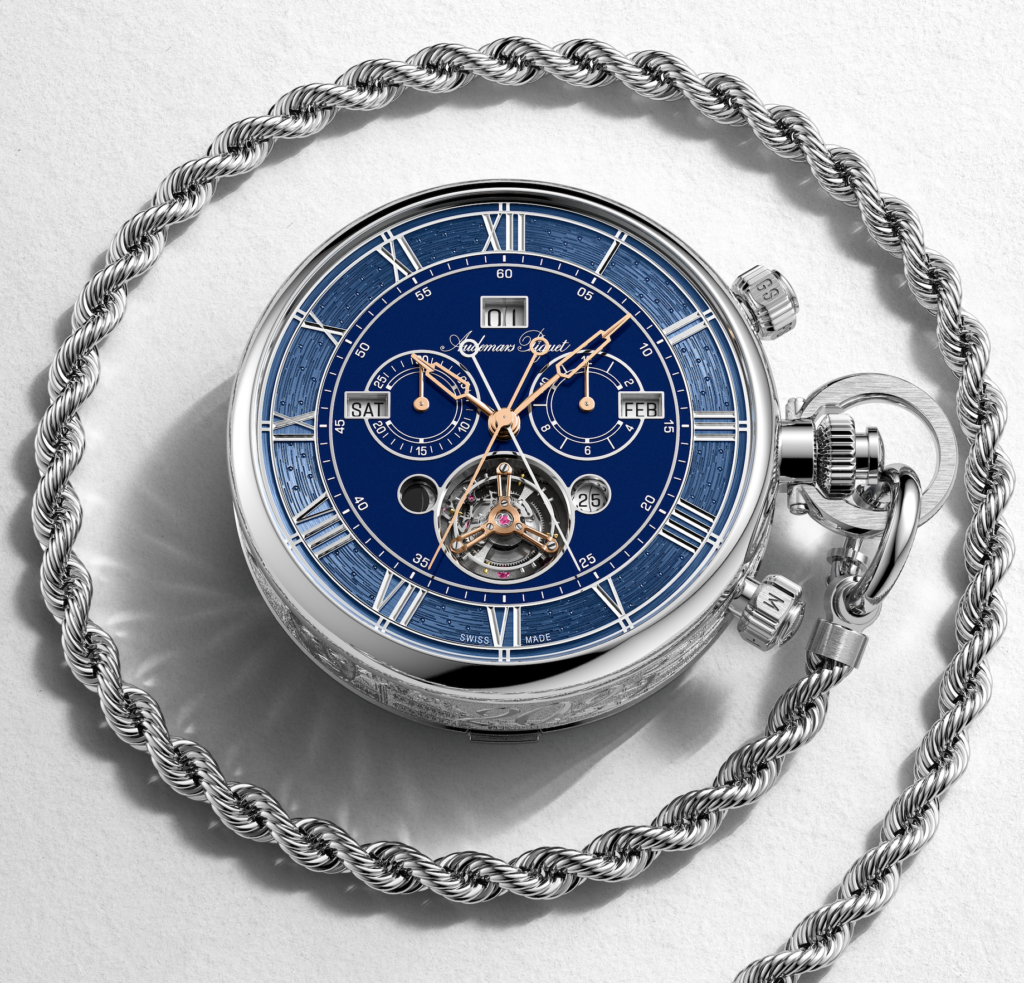
Is it practical? Absolutely not. You can’t check it while driving, and it will ruin the line of your skinny jeans. But that’s the point. It requires a pause. It demands a waistcoat. It asks you to stop, pull it out, and actually look at the time. And for the final nod of Audemars Piguet’s 150th birthday celebrations, it’s a pretty good gift.