
You wouldn’t necessarily expect a link between fine watchmaking and Bordeaux; the region of France made famous for its grapes. Beyond the fact that people who often wear exclusive wrist wear tend to enjoy an expensive tipple, there’s not much that links these two passions. But dig a little deeper, and there are more than a few similarities between them than you may realise.
For example, those in the grape and watchmaking industry require patience and perseverance. Both require an immense amount of time, between harvested/putting-together their products by hand. They also need incredible investment in the future; grapes planted today won’t be collected for another five years – which is a similar to how long it takes a watch movement to go through research and development.
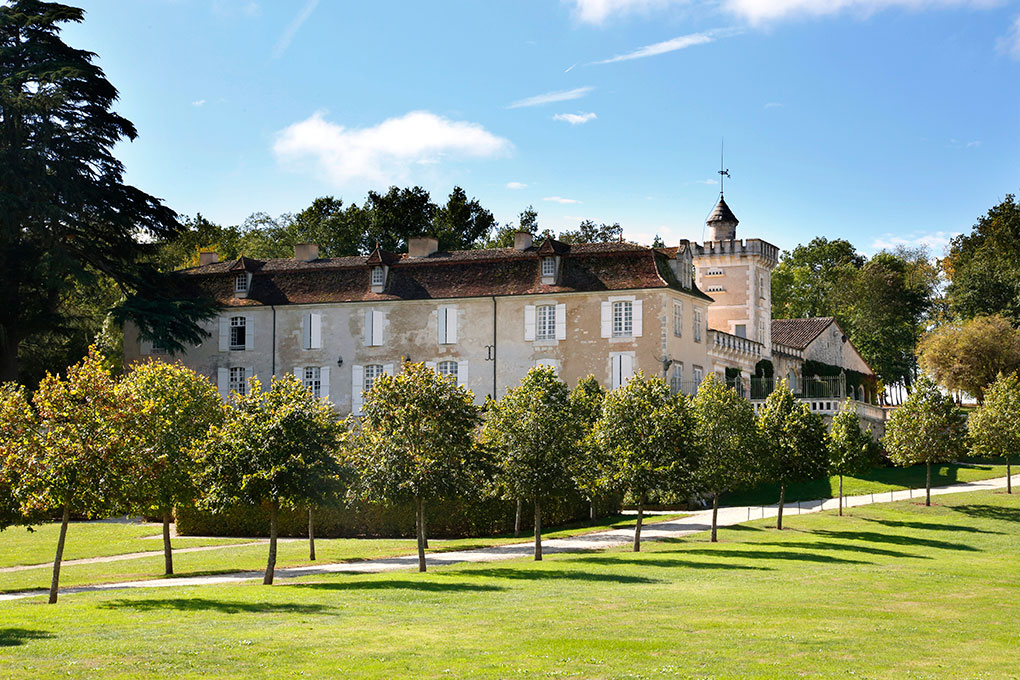
But one person recognized the connection between these two industries early on. Chopard’s co-president, Karl-Friedrich Scheufele, has been celebrating both worlds for the past few years now, both in the company’s watchmaking headquarters based in Geneva, as well as Chateau Monestier La Tour, in the heart of the Bordeaux region.

“You need to be disciplined, flexible and hardworking to be successful in both,” admits Karl-Friedrich. “A watch takes five years to develop from scratch, and grapes take about ten years to perfect. Patience and attention to detail span all areas of my life”.
Karl-Friedrich acquired the Chateau in 2012. What was initially to be a hobby, something to do when not running one of the world’s grandest watch and jewellery ateliers, quickly turned into a way for Karl-Friedrich’s to expand his potential audience (and produce some great bottles in the process).
“We knew, when we searched for a property, that it had to be in France and it had to have grapes,” Karl-Friedrich explains, “That is my passion. That, and watchmaking.” Until now, Karl-Friedrich had to keep both passions separate. But a few months ago, he unveiled a limited-edition timepiece that combines them both; the L.U.C. Heritage Grand Cru.
For those unawares, Chopard stamps all its most exceptional timepieces with the L.U.C. moniker, a nod to the Swiss brand’s founder, Louis-Ulysse Chopard. But the Grand Cru title hits at Karl-Friedrich’s second hobby.
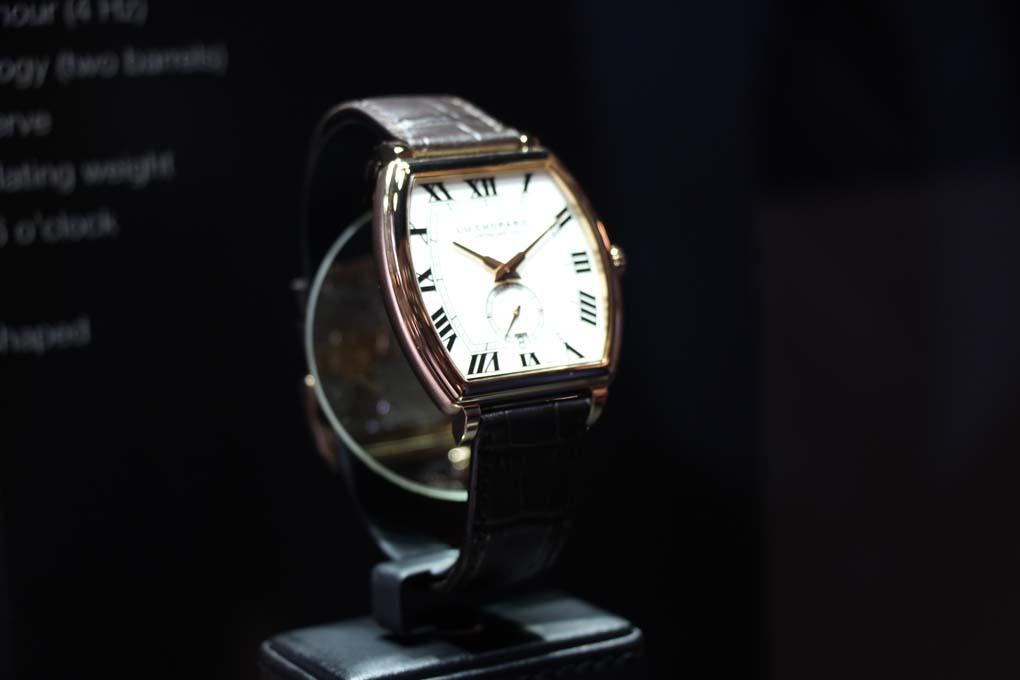
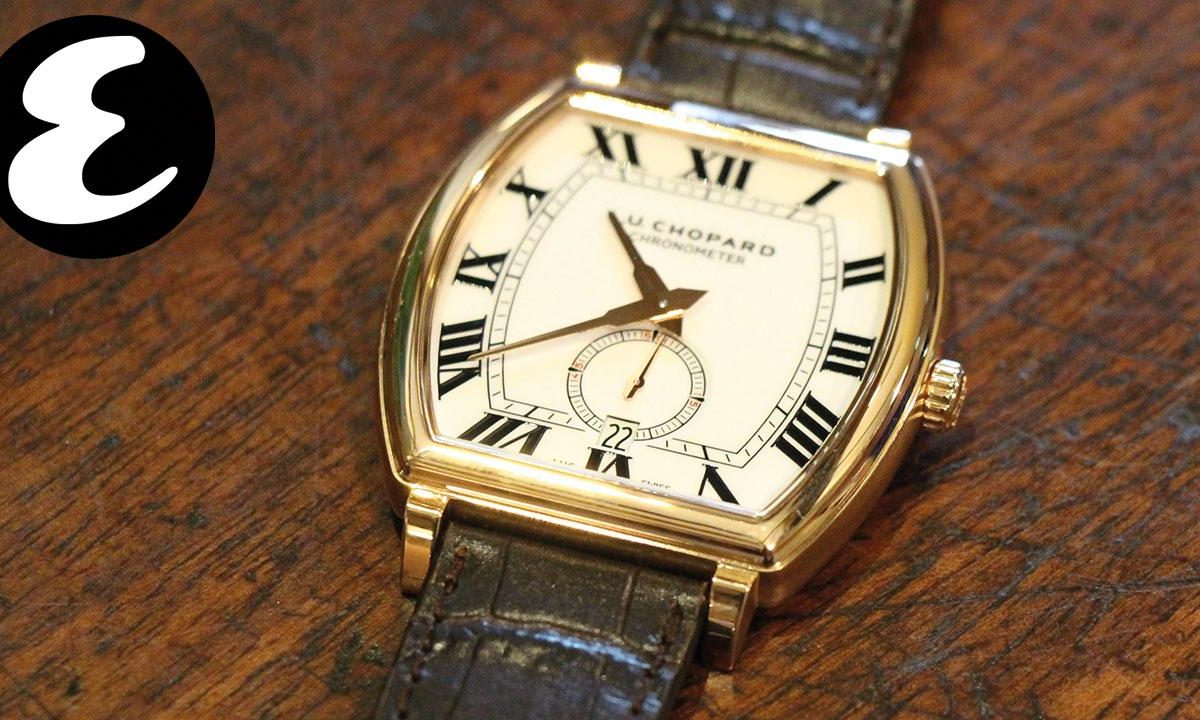
The brand-new addition to the Heritage L.U.C. Collection comes in a tonneau-shaped, 18-karat rose gold case. This isn’t the first time Chopard has produced this shape of watch (tonneau roughly translates to barrel in French), the first was built way back in 2001, but this is the first to be equipped with an automatic movement and a micro-rotor.
From a technical perspective, the tonneau shape is somewhat tricky to achieve. It is neither square no round, which makes it great for people with smaller wrists (but enjoy the idea of larger watches) but far harder for the watchmakers, who must carve and polish each rose gold case by hand. The shape is also a nod to the traditional oak barrels that are used to store and age some of Karl-Friedrich’s Chateau Monestier de la Tour.
The new L.U.C. Heritage Grand Cru has a white porcelain-like dial, with black Roman numerals, along with an elegant train-track print around the central section. There is a small second’s sub dial which is visible at the six o’clock position, along with an aperture for the date.
Under the hood lies Chopard’s in-house Calibre 97.1-L automatic movement, with an 18-karat gold micro-rotor. Interestingly, the calibre is also built in tonneau, which means it fits flush to the case (most other ‘unusual’ shaped watches feature smaller round or square movements; making this movement a rarity in the world of watchmaking). It has a 65-hour power reserve, which means you can take it off for the weekend and it will still be ticking correctly on Monday morning.
The L.U.C. Heritage Grand Cru is certified by both COSC and the Poinçon de Genève. According to Karl-Friedrich, “L.U.C is a very exclusive range within the Chopard line today. Right from the beginning, we wanted chronometer certification. The COSC had to be part of every L.U.C movement, and we decided to certify every single movement, even the minute repeater, but this was easier said than done.
All the finishes we apply are either Poinçon de Genève or Qualité Fleurier, and even the most simplest movements are among the best.” Karl-Friedrich applies the same attention to detail to his other passion, as well. All products that come out of Chateau Monestier de la Tour are both organic and bio-dynamic.
So why does grape-growing and watchmaking work so well together? According to Karl-Friedrich, “you have to be patient, flexible and hardworking in order to grow grapes.” And the differences, “the big difference is that for watchmaking is all up to you. For grapes, it is not just up to you, Mother Nature can completely throw you off your path, and this is something that I have learned.
It also takes much longer, from planting the vines to harvesting, it takes at least five years before you can have liquid in a bottle, and another ten years before its aged and drinkables. Nevertheless, there are still many parallels between the two”.
Get the Esquire Newsletter. Click here to sign up