
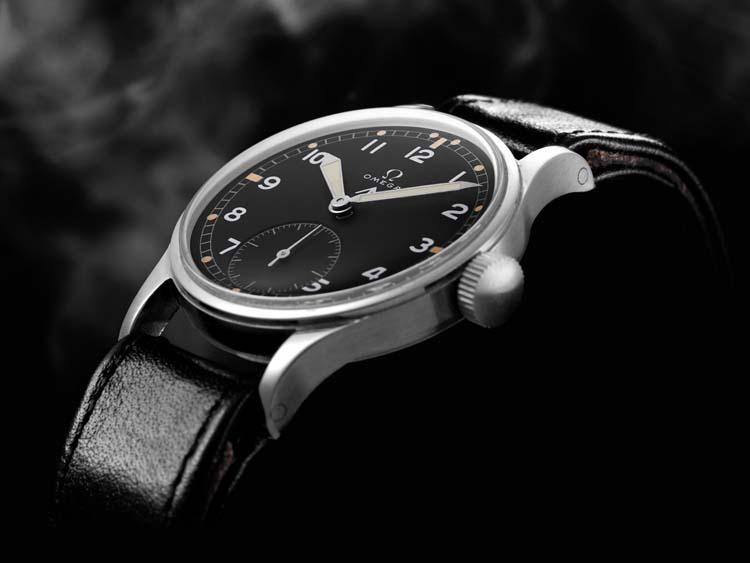

The 20th century will forever remain scarred by two World Wars that divided nations and left a devastating mark on history. At the heart of each conflict were the soldiers who risked, and often gave, their lives for their countries. On the allied side, many of these soldiers depended on their watches as instruments for survival. And whilst you may think of Omega as a luxury brand today, the brand was actually one of the biggest suppliers of watches during both wars and is still recognised today for the critical role it played.
Certain qualities made Omega an ideal supplier of military watches at the outbreak of World War I in 1914.
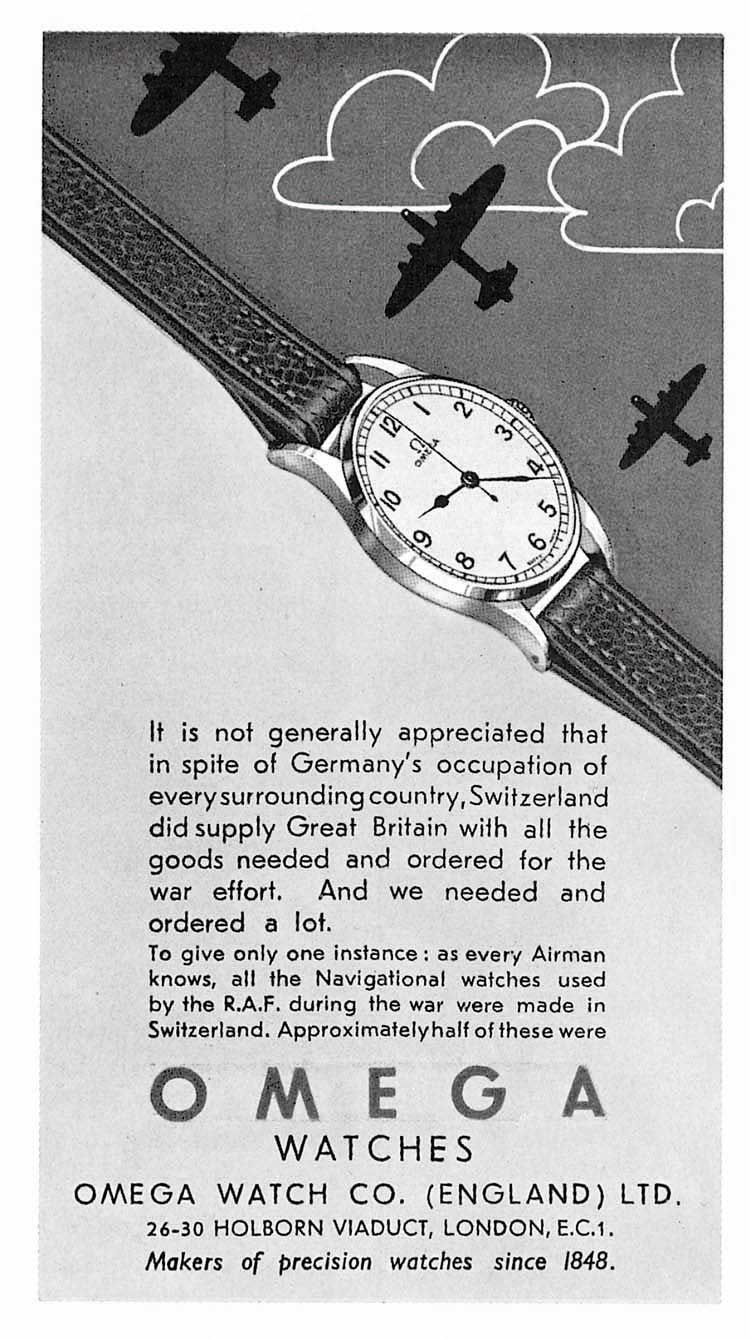
The watch’s precision was one of the first advantages. The brand has always had a strong history of observatory records that proved the accuracy of its timepieces. But more importantly, Omega’s manufacturing ability meant that it could deliver high quantities of these precise wristwatches and pocket watches for service. As a result of this, Omega very quickly became the prime choice of Great Britain’s Ministry of Defence as well as its allies.
When warfare moved into the trenches, Omega’s wristwatch chronographs, which were amongst the first ever made, became essential tools for commanding officers. By timing the exact difference between the flash and sound of opposing gunfire, they were able to work out the distance between themselves and the enemy; a calculation which can often make all the difference when planning an attack.
Omega’s good reputation continued into World War II. In fact, the brand delivered more than 110,000 pilots’, navigators’ and soldiers’ watches to Britain’s Ministry of Defence to support its Air Force and Navy. Incredibly, this meant that more than 50% of all of Swiss watch deliveries to the United Kingdom during the war came from Omega, with all other brands sharing the remaining 50%.

He may be flying solo in his spitfire for the entirety of Christopher Nolan’s ‘Dunkirk’, but you might have noticed that the character of Tom Hardy’s RAF pilot Farrier did also have a fairly lovely watch for company. Those of you who have seen the film will remember the vital role that the watch plays for Hardy’s character as he attempts to clear the sky of enemies to aid his allies stranded on the beaches of Dunkirk. This wasn’t just creative license either, as the importance of this timepiece reflected the role it often played during the actual conflict.
Thankfully for any of you watch fanatics who spent half the film trying to figure out exactly what model he was wearing, we’ve managed to find out for you. It was none other than the CK2129 – which means you can go back and actually enjoy the film now.
.jpg)
Known for his rather meticulous attention to detail, director Christopher Nolan was pretty spot on when strapped the CK2129 to the wrist of Tom Hardy’s RAF pilot throughout ‘Dunkirk’. The CK2129 was in fact the most commonly worn OMEGA timepiece for RAF personnel in the early days of the Second World War. Its unique rotating bezel was highly valuable for pilots and navigators during missions as it enabled the timing of specific intervals. On bombing raids, for example, these timing intervals became crucial and often lifesaving.
The rotating bezel could also be locked by the watch’s 2nd crown, so that the timing couldn’t be affected by accidental knocks. Because when you’re 30,000 feet up in the air you can probably expect to receive your fair share of accidental knocks. I think we can also all agree that it also looks fairly slick. We’re not exactly keen to get up in a Submarine Spitfire ourselves, but if it means getting our hands on one of these classic timepieces then we might just be convinced to brave it.
.jpg)
Towards the end of World War II, as warfare moved towards the Pacific Ocean, another Omega watch also came into service. The CK2444 became known for its superb water resistance. In fact, it was the Ministry of Defence who gave it the w.w.w engraving on the caseback, which stood for “Waterproof Wrist Watch”. There was also a Broad Arrow marking on the dial and caseback which was typical of the British military.

As the war progressed, Omega delivered even more models to the MoD. The UK/CK2292 is perhaps the most famous and most widely used of all these models. These watches were supplied to the majority of RAF and Fleet Air Arm personnel. Inside was the innovative 30mm calibre, which had set numerous world precision records at observatory trials. It was far more resistant to magnetism due to a new alloy used in creating the balance spring. This greatly served the pilots flying the Hurricanes and Spitfires, who were sitting just two feet behind a huge magnetic field within their powerful engines.
With the war won by the allies, legend has it that Field Marshal Lord Montgomery, the hero of El Alamein and Operation Overlord, specifically requested a visit to Omega’s factories in Biel, Switzerland to thank the brand personally for the help they had given.
Continuing to provide military watches throughout the years and having themselves learnt a few lessons on what exactly makes a watch durable and pretty damn decent, Omega used their experience to build an important platform for progress. In many ways the war effort is one of the defining reasons that, in 1948, so soon after the war had finished, Omega’s iconic Seamaster collection was born.


.jpg)
