
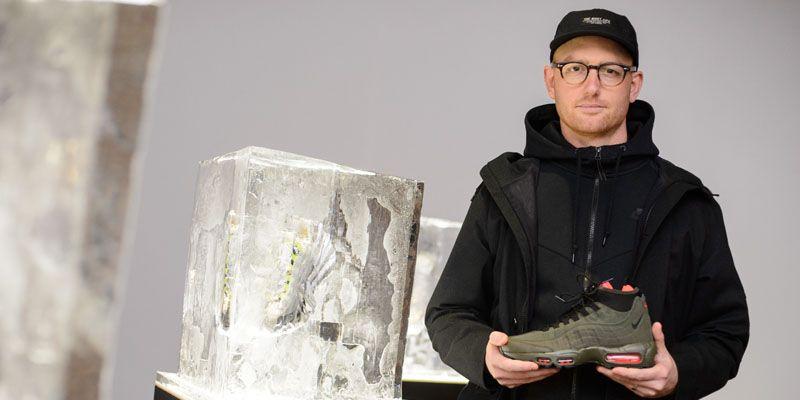

Esquire sat down with Dylan Raasch, the Design Director of Nike Sportswear, to talk about the new sneakers of the season:
***
Can you talk us through the new collection?
Sure. The new Nike Flyknit Trainer Chukka SneakerBoot feature a double-layer Nike Flyknit upper that is mixed with wool for extra warmth and finished with Defender Repellent Systems spray for increased water resistance. The men’s Air Max 95 SneakerBoot is also new and the Air Max 90 returns as the Air Max 90 SneakerBoot. The Air Force 1, reworked Lunar Force 1 Duck Boot also makes a return appearance.
Any challenges?
The big difference is taking the FlyKnit innovation to new places for the cooler months. There’s always a challenge when making modifications to iconic silhouettes. The key is to maintain the integrity of the original, while adding functional elements.
The Air Force 1 is popular in the Middle East. Why do you think this is?
The Air Force 1 is one of the most popular shoes Nike has ever released. Since being introduced in 1982 it has been regarded as a canvas for self-expression with firm roots in the sport and music industries. It revolutionised basketball shoe construction and played a pivotal role in the evolution of streetwear. It allows people to express themselves through their footwear and with many options available, shape a look to your own personal style.
Are there any new elements of innovation that makes this collection so exciting?
We set out to change the perception of what people think is possible for performance from a winter sneaker. I think we have achieved that. Adding elements to increase warmth, visibility and water resistance to these styles will ensure that wearers can attack the elements head on and in some of the silhouettes they love. That for me is the most exciting part.
“People have a very personal connection to their footwear; it’s part of their everyday life, and literally connects them to the earth”
Tell us a bit about your design background?
Before joining Nike in 2009, I had done footwear and industrial design work for companies such as DC Shoes, Fallen, Osiris, Spy and One Industries. I studied Industrial Design at Long Beach State University and the Art Center College of Design. I knew half way through my time at Art Center that I wanted to focus on footwear. I grew up skate boarding and footwear was a big part of the sport. People have a very personal connection to their footwear; it’s part of their everyday life, tells a lot about who they are, and literally connects them to the earth. I didn’t get that connection with many other design products.
What design codes do you apply to your work?
My design philosophy is twofold; first, I always want my work to solve a problem or improve on an existing one, and two is for it to be timeless. I think a lot of modern products are designed on planned obsolescence, which I think is detrimental to the earth and the environment.
What’s your favourite sneaker right now?
I probably would have to say the first few Roshes that hit the market. That was an exciting time for me in my career so they have a lot of sentimental value to me.

Why do people resonate with the Roshe so much?
People love innovative looks and designs. They also love to be comfortable when they are out in a pair of shoes for 18 hours a day. I think that is why people love the Roshe. It was a simple, minimal shoe that provided comfort to last throughout the day. It also looked good when styled a variety of ways.
Timeless classics or the latest ‘it’ sneakers?
Personally, I’m not a big sneaker collector. I typically gravitate towards shoes that provide me comfort and a clean look. The shoes in my closet are helping me travel, work, commute, etc. It’s this type of thinking that helps me create products like the Roshe. So for me, if it’s a clean design and comfortable shoe, I’ll take it.
What are you wearing right now?
I really love the LD-1000 shoe. It has a more vintage feel but shares a lot of the comfort attributes of the Roshe.
You designed the Roshe when people weren’t quite ready for it. What is the future for sneakers?
I think the future will be more focused around customisation and personalisation. Getting the perfect shoe for you, the way you want it to look and fit. Imagine a shoe that is designed around your exact specifications and goals; a shoe that allows you to walk longer, run faster or jump higher…