


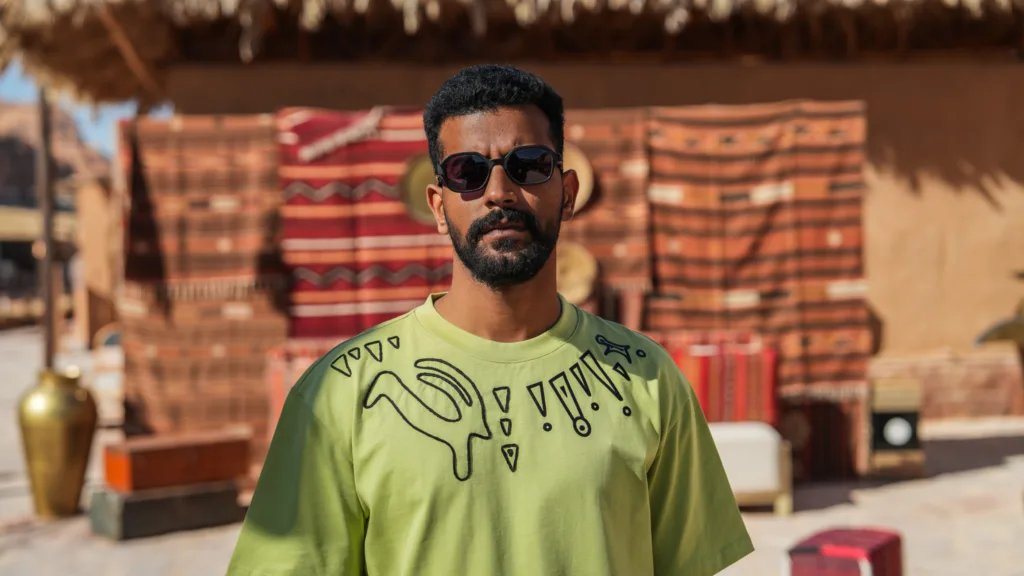
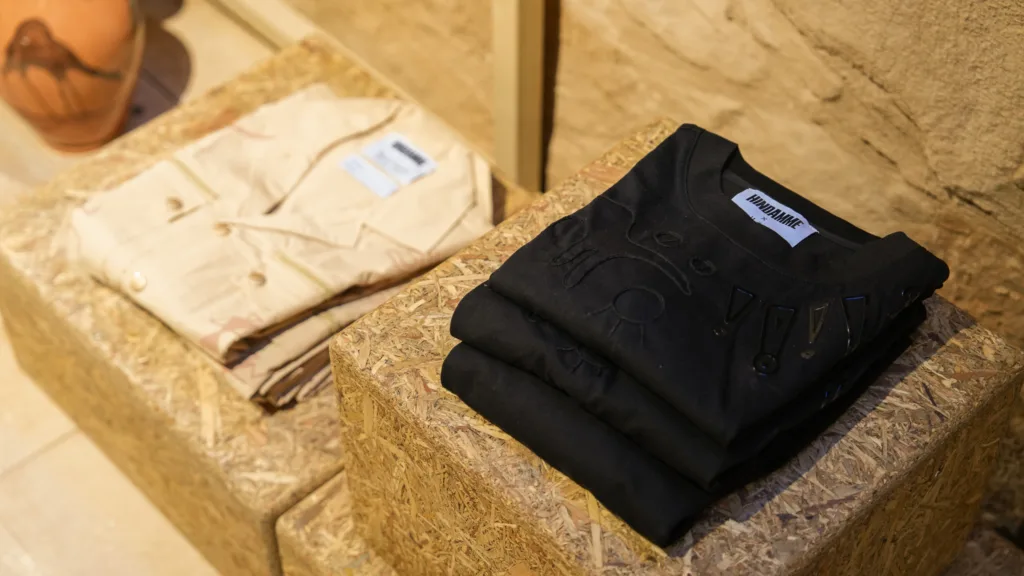
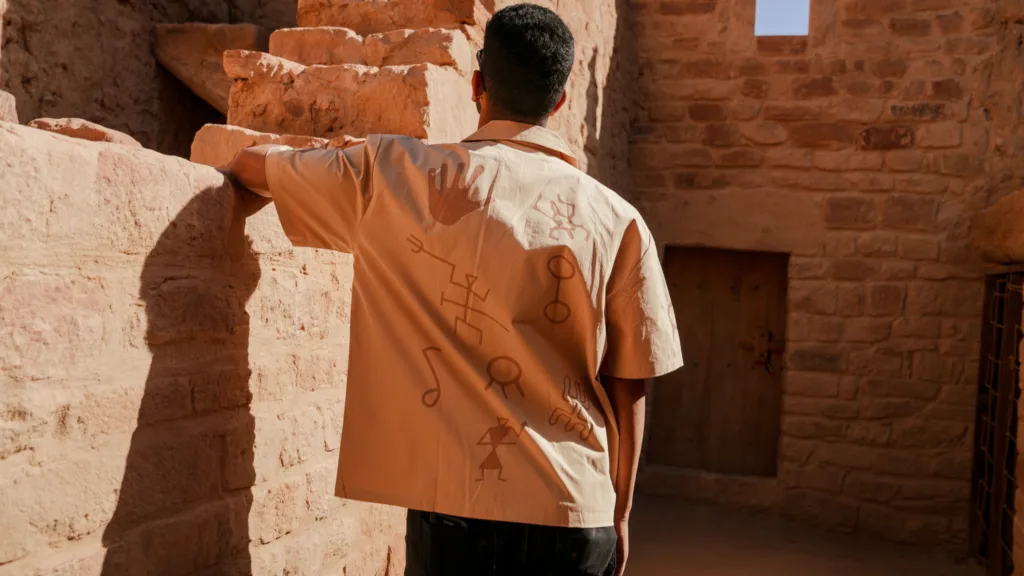
In AlUla, history sits in the stone, shaped by wind and engraved into rock long before modern language existed. It is also, increasingly, becoming something to wear, thanks to a new collaboration between Saudi label HINDAMME and design centre Madrasat Addeera that has created a limited-edition collection that treats heritage as raw material.
The result is a series of abayas and shirts shaped by one of the world’s oldest continuous human landscapes, where 7,000 years of civilisation are not archived behind glass but reinterpreted in cloth, thread and print.
At the centre is Saudi designer Mohammed Khoja, working alongside more than 26 artisans at Madrasat Addeera in AlUla’s AlJadidah Arts District. Once the region’s first girls’ school, it is now a workshop for craft, design and cultural preservation. For Khoja, it becomes a studio of translation, where ancient marks are transformed into fabric.
“AlUla has always been a profound source of inspiration for me,” Khoja says. “It is a place where history feels alive, layered and deeply present. This collection is about proving that heritage is not something we preserve behind glass, but something we evolve, wear and carry forward. The artisans were central to this collaboration. Their knowledge, intuition and approach to craft added depth and authenticity.”
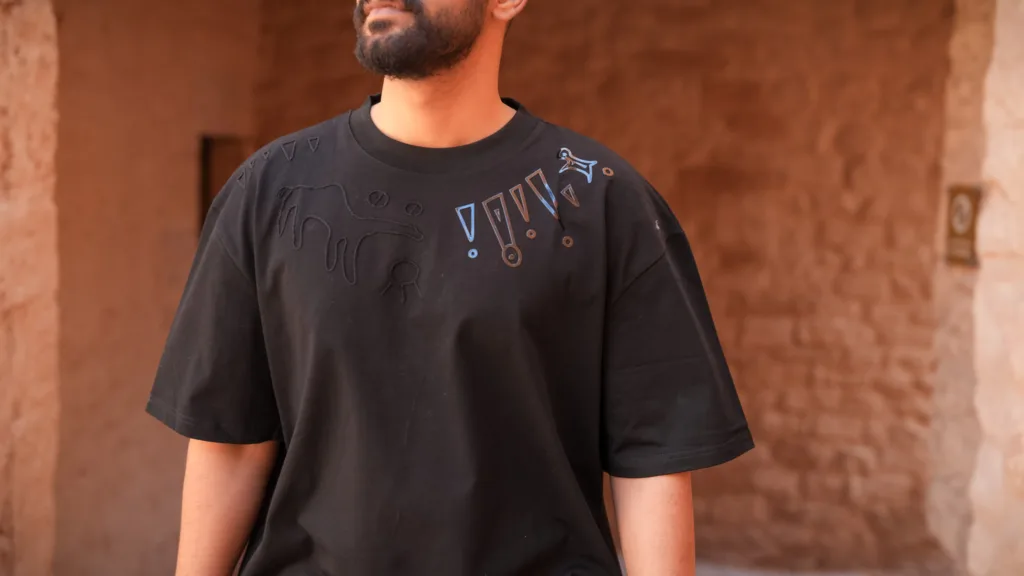
The collection is inspired by AlUla’s nature and ancient writing. It mixes real historical references with artistic interpretations, balancing facts with feeling.
Khoja describes that balance as the result of years of evolving engagement with the region. “Having spent years researching and studying AlUla’s history, translating it into design felt like a natural evolution rather than a challenge. In 2019, I created one of the first HINDAMME collections inspired by the Nabataean civilisation and its cultural exchange with the Roman Empire. Then in 2024, I explored AlUla’s petroglyphs in a more abstract and contemporary way.”
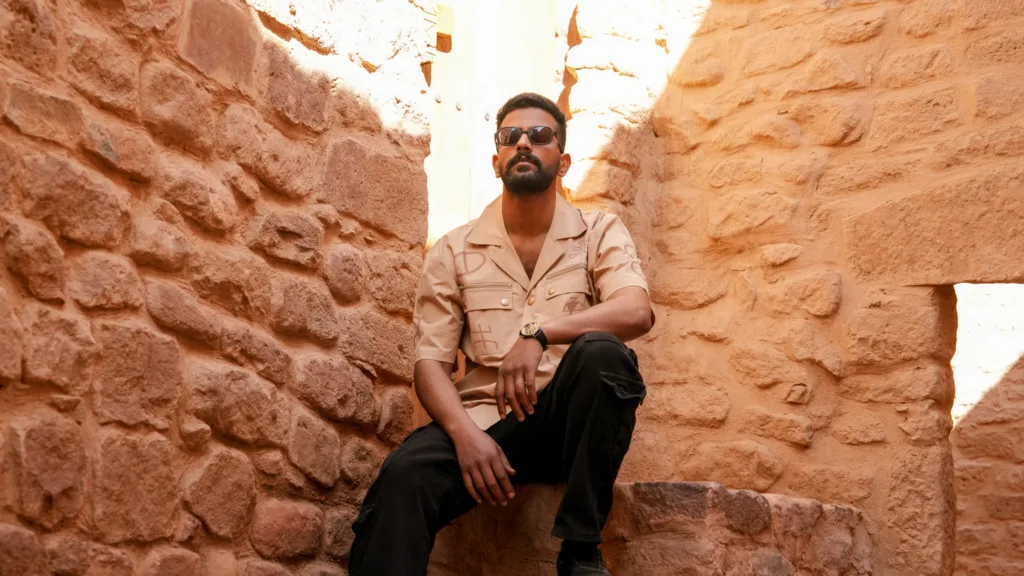
What changes now is proximity. This is no longer a designer interpreting a place from a distance. It is a collaboration embedded in process. “With this collection, what felt new and exciting was the opportunity to collaborate directly with artisans and discover fresh ways of interpreting AlUla’s natural and human legacy,” he says. “It became less about referencing the past literally and more about capturing its essence in a way that feels relevant today. Wearability was always at the core of every decision.”
That word, wearability, anchors the collection back into the present. These are garments designed not only to be looked at but to be lived in, moving between cultural memory and contemporary life. The artisans, Khoja stresses, were not executing ideas but shaping them. “Working with the artisans shaped every part of the process. They were not just contributors; they were the foundation of the collection. Their knowledge, craftsmanship, and attention to detail brought a level of depth that would not have been possible otherwise.”
He continues, “It was a true collaboration in every sense. Their techniques and way of thinking influenced the designs from concept through execution. It was both an honour and a responsibility to work alongside them.”
In an industry still defined by speed, Khoja positions this project firmly in opposition to excess. “To me, slow fashion is a necessary response to the pace and excess of fast fashion,” he says. “There is a growing shift toward pieces that carry meaning, intention, and story. People are becoming more interested not just in what they wear, but in how it was made and why it exists. Slow fashion allows space for craftsmanship, for thought, and for emotional connection.”
That sense of emotional connection is ultimately what the collection is designed to evoke. “I want people to feel a sense of connection,” Khoja says. “To know they are wearing something meaningful, something created by artisans, something that carries the spirit and history of AlUla. There is also a sense of quiet transportation. Almost as if, through the garment, they are momentarily placed within AlUla’s extraordinary landscape and history.”
Saudi Arabia’s fashion scene, he adds, is now operating in a moment of acceleration and self-definition. “The fashion scene in Saudi Arabia is evolving at an incredible pace. What I find most exciting is the diversity of perspectives. Each designer is developing a distinct voice, and that individuality is what makes the scene so powerful right now.”
For Khoja, collaborations like this are essential. “When designers and artisans work together, it creates a dialogue between heritage and modernity. That exchange allows us to preserve culture while presenting it in a way that feels relevant, and globally resonant.”