
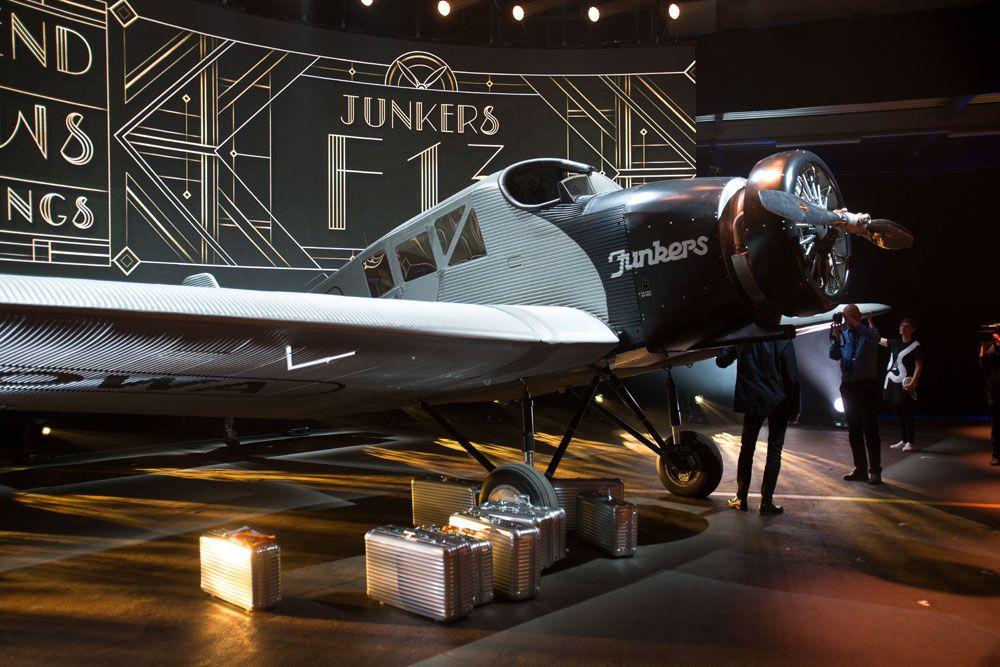

The success of a major project often begins with the vision of one man. For Dieter Morszeck, general manager of luggage manufacturer Rimowa, firing up the nine-cylinder Pratt & Whitney rotary engine on his replica Junkers F13 airplane for its maiden flight was reward enough for the persistence he and his team had poured into the project over the last seven years.
The Junkers F13 holds a special place in the hearts of aviation enthusiasts such as Morszeck. Commissioned by German engineer Hugo Junkers in 1918, at the close of World War One, the six-seat F13 was the world’s first all-aluminium, low-wing cantilever, commercial aircraft to take flight.
This was a difficult time to launch a new plane, since it faced stiff competition from surplus warplanes. Many observers questioned the use of metal to skin the aircraft. However, German metallurgist Alfred Wilm had patented a lightweight version fortified with magnesium, produced in corrugated sheets to aid rigidity. He called it Duralumin, and it was a huge leap forward from most other planes that still used wood as the basic structural material, with fabric-covered wings relying on external wire bracing.
The Junkers F13 first flew in 1919, and the plane’s combination of light weight, 160kph cruising speed and 1,400km range meant it soon became the mainstay for a number of fledgling commercial airlines. Around 350 F13s were produced between 1919 and 1930, and it saw service in 32 countries, but that success didn’t come without tragedy. After 1933 the new Nazi government tried to make Junkers a tool of German re-armament. Junker, a socialist and a pacifist, was forced to give away his shares in the company and patents to the authorities. He was also placed under house arrest and died in 1935.

His plane lived on, though, with the last one being finally retired in Brazil in 1951. And, until Morszeck throttled forward and got HB-RIM rolling down grass runway 29L at Dübendorf airfield, Zurich’s first airport, 65 years later, not one of the surviving six F13s had taken flight or was even airworthy — something that bothered Morszeck tremendously, given the importance of the F13. “As a boy, I experienced the rapid development of air travel first hand, and my passion for travel was matched by my passion for flight,” he told Esquire at the plane’s rebirth in Zurich.
Those twin passions specifically relate to Rimowa luggage because Morszeck’s father used the same corrugated aluminium used on the F13 to fashion his travel luggage (Rimowa was founded in 1898 by Morszeck’s grandfather). That same style exists today, and has become emblematic of Rimowa’s range.
Faced with the desire to recreate history, the next step was to recreate a complete set of drawings, since only incomplete ones were found in the archives at the Deutsches Museum in Munich and the American National Museum of the US Airforce in Ohio. The team focussed instead on finding a suitable original plane to study, measure and create a blueprint for. They decided on an America-built version, the Junkers-Larsen 6, housed at Le Bourget, near Paris, for several reasons. Researchers discovered the JL6 F13 was available with an inline engine, or a Wasp radial engine — and, as there were still plenty of functioning units still on the market, that meant spares were readily available. “It is nearly a complete copy of the JL6 in Le Bourget. We have made some improvements because the original one had no brakes. But in terms of its dimensions, it’s an exact copy of the one in Paris,” Morszeck told us.
The aircraft is the antithesis of modern travel, Morszeck explained. It’s equipped with a transponder and a radio, but those are the only major modern additions to the F13. “It’s fascinating. It’s an old design, an open cockpit, you are sitting outside behind the engine, which you can feel, and there are no computers inside.” He described the experience as being a completely different feeling to being in the cabin as a passenger. “It’s not like you’re in an aircraft; it’s as if you’re sitting in a coach. So when you’re piloting the F13, I think it’s more like driving a convertible car.”
Seven years on, Morzeck is clearly pleased with the results. He plans to log around 130 hours a year in the Rimowa F13, and get to as many international airshows as he can over the next year or so. The long-term plan is to start producing them for customers once certifications have been completed.
The fact that this project ever got off the ground, both figuratively and literally, is testament to the brilliant originality of that original F13 design. Many thought Junkers’ use of aluminium to be foolhardy, and some may have also thought the same of Morszeck’s desire to take on such an enormous project. “Something like this is always a little bit crazy, but if there is no risk there is no fun. When you have good idea, of course you get some problems at the beginning, but you have to solve them, and that’s always the way.”
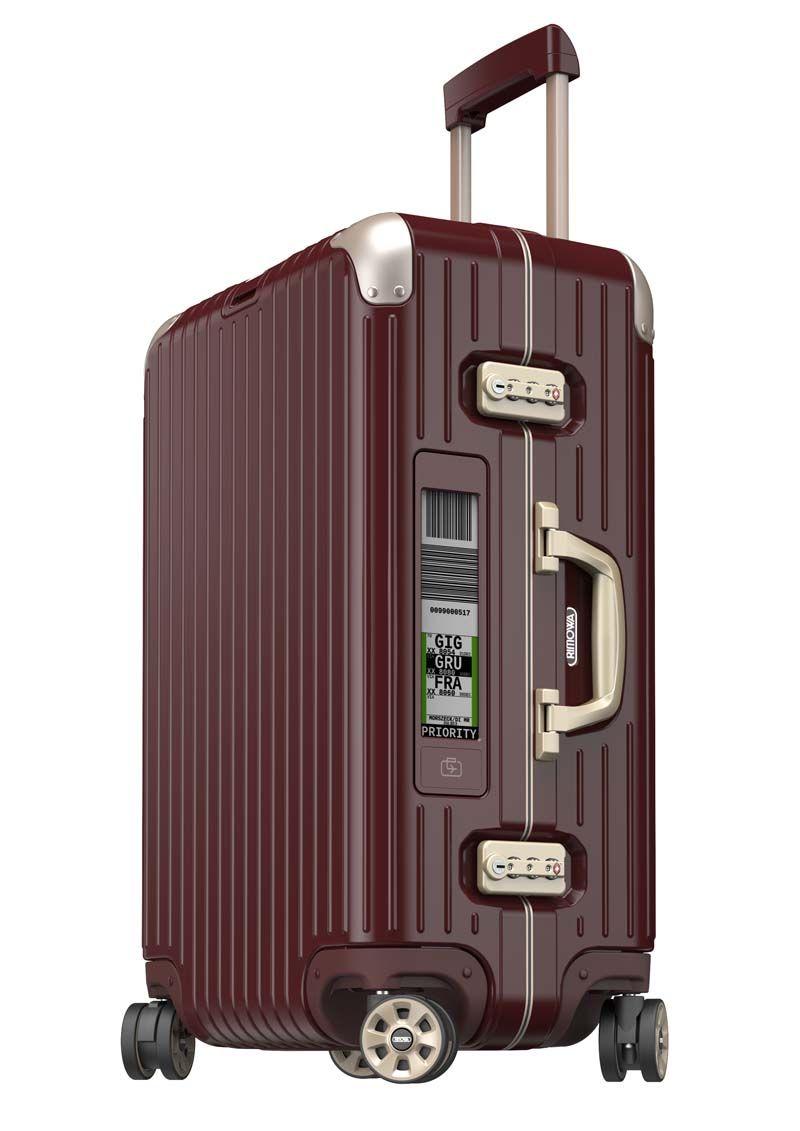
It helps that he is the proud steward of a venerated family firm that specialises in both quality and innovation — one recent example is Rimowa’s electronic travel tags — which makes his closing words feel especially apt. “You have to know your direction. We had a target and we had a wonderful team and qualified engineers to complete what we did.”
rimowa.com


.jpg)