
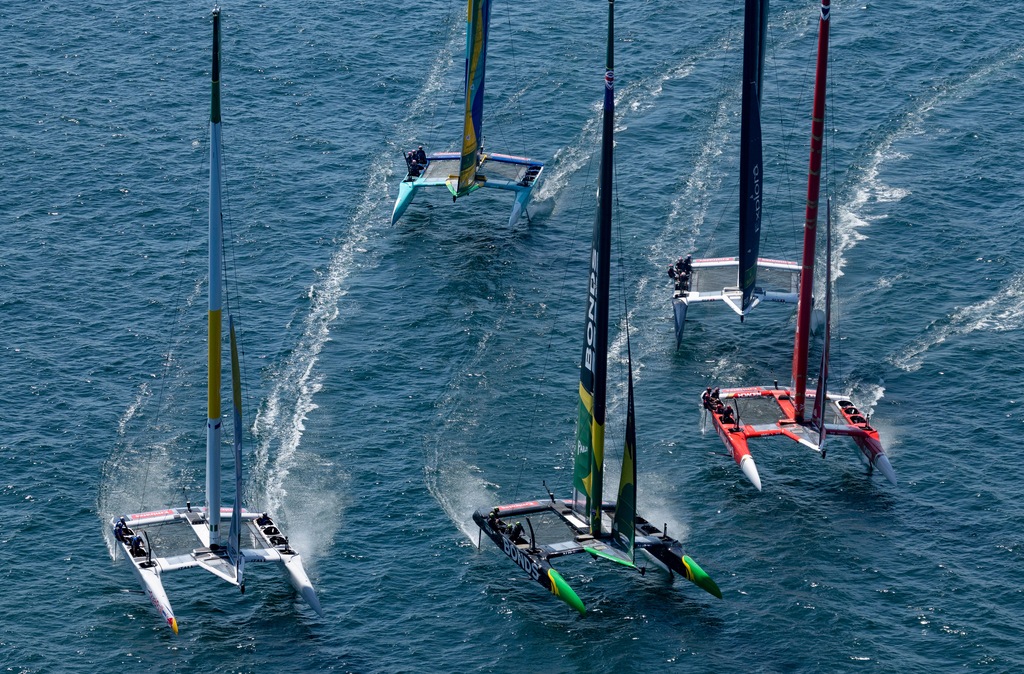

Ever wanted a new sport to get into? Perhaps one that combines adrenaline, high-tech thrills and spills, and exotic locations? SailGP might be for you. Think of it as Formula 1 on water, with 13 nations battling it out in 50-foot-long, 80-foot-tall high-tech racing catamarans powered entirely by the wind. But here’s the thing: They don’t sail. They fly—and fast.
SailGP, founded in 2019, is the brainchild of billionaire sailing nut Larry Ellison and SailGP CEO, Sir Russell Coutts – arguably the most famous and successful competitive sailor in the sport’s history.
From the get-go, the pair’s idea was not to create just another race series for yachty insiders but a global, spectator-friendly event that could capitalize on the new advances in sail racing afforded by foiling technology. This year, the season reached 193 million viewers, up 48 percent from 2023. Taking more than a little inspiration from Formula 1, SailGP set out to attract non-sailors to this burgeoning sport, partly by staging the races in nontraditional waters, like Abu Dhabi, Bermuda, and Halifax, Nova Scotia.
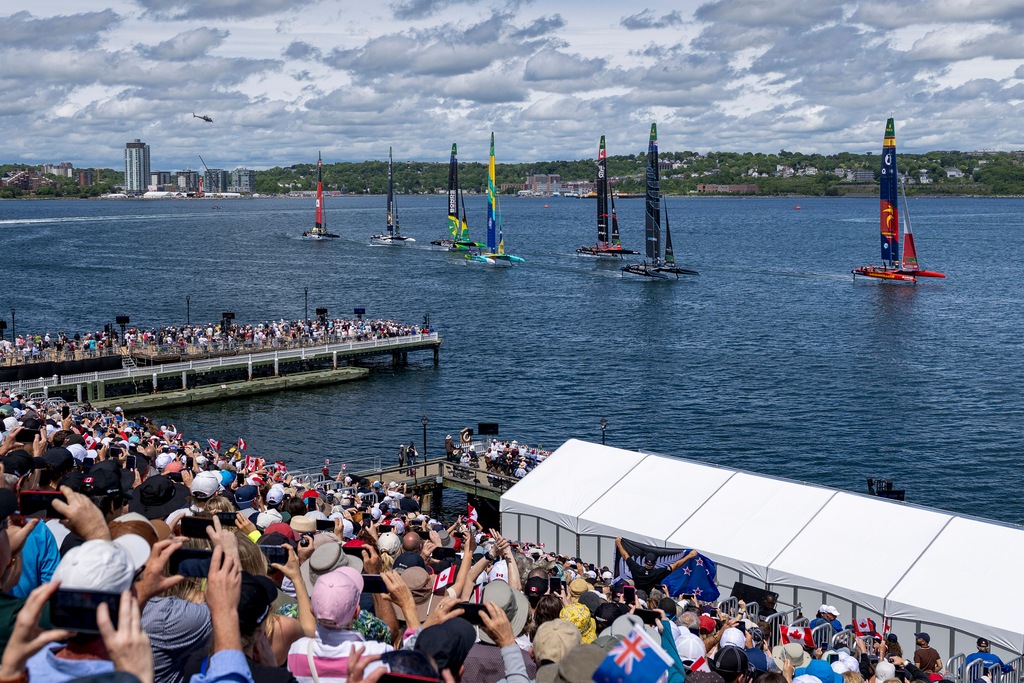
Since its inception, the SailGP competition has been sponsored by Rolex, which has long been a supporter of all manner of sailing. Recently, the brand extended its support by ten more years. The winning team, crowned at the grand finale which happens in Abu Dhabi this month (November 28-29) receives a $2 million prize.
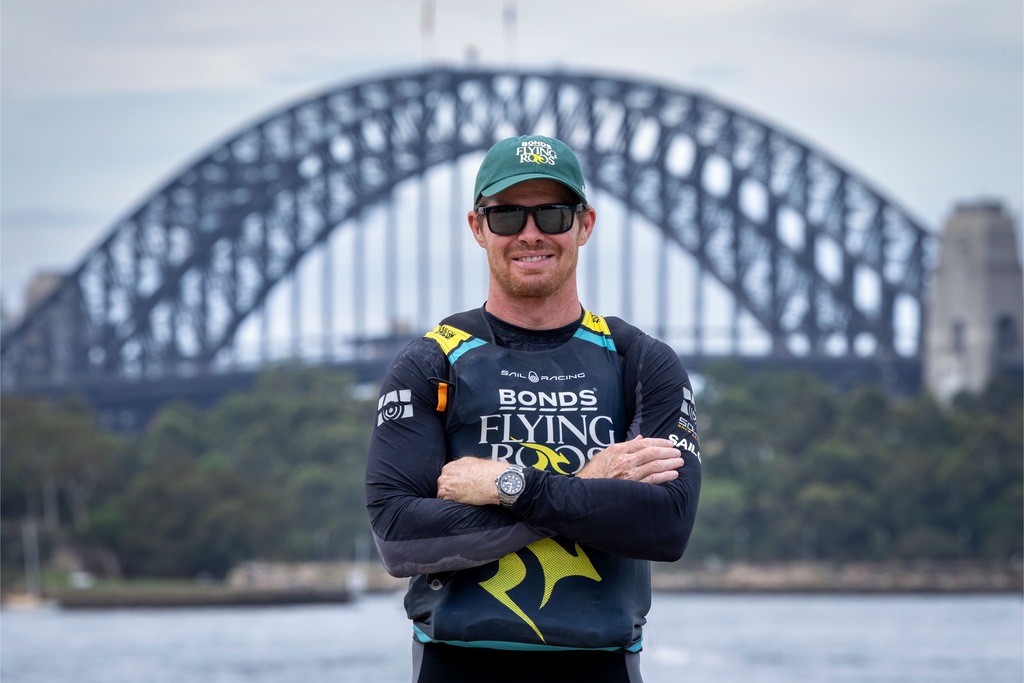
Many of sailing’s luminaries are also key members of Rolex’s Testimonee program, evangelizing for both sailing and its unique connection with ocean sustainability. One of them is Tom Slingsby, helm and CEO of SailGP’s Team Australia and three-time Rolex Sailor of the Year. At the top of his game, Slingsby, 42, has carried off three of the five SailGP championships for Team Australia since it began in 2019.
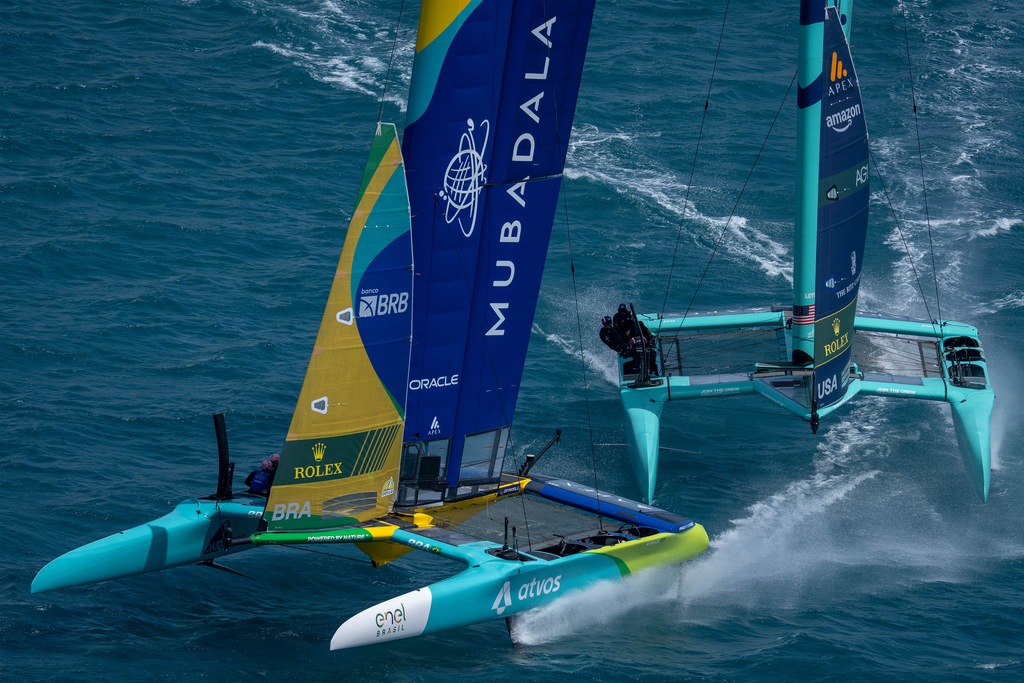
Foiling, just a decade-and-change old, has transformed competitive sailing. Put simply, thanks to the physics of hydrostatic pressure, by sailing on carbon-fiber blades, an entire 50-foot racing catamaran can lift itself out of the water, reducing the drag coefficient to almost nothing and producing speeds unimaginable just 15 years ago. Often this means the boat moves three, even four times faster than the wind.
“You see spectators’ faces when you go past them doing nearly 100 kilometers an hour on the water and at four times the wind speed,” Slingsby has previously told Esquire. “It’s unbelievable.” Foiling has almost doubled competitive sailing’s top speed—and it’s getting faster all the time. Not that speed is really the aim here.
“I don’t think it’s SailGP’s goal to set an outright speed record or anything like that,” Slingsby explains. “What we want is a good racing product. Our hydrofoils don’t need to just go super fast in a straight line; they need to go around a racetrack efficiently, to take off in light airs and sail well in strong airs, and be maneuverable when tacking and jibing.”
But getting there requires both skill and experience in a fast-evolving sport, as well as an array of technology and data gathering. So called “aviation officers” on each team have one job: to keep the race boat flying on its foils in constantly changing conditions.
Unlike Formula 1, there’s a deliberately bare-bones vibe to the infrastructure of SailGP to make the whole competition as environmentally sustainable as possible. The tagline is, after all, “Powered by Nature.”
For instance, the race catamarans—which all have the same design—were designed so they can be disassembled and fit into a single 40-foot container.
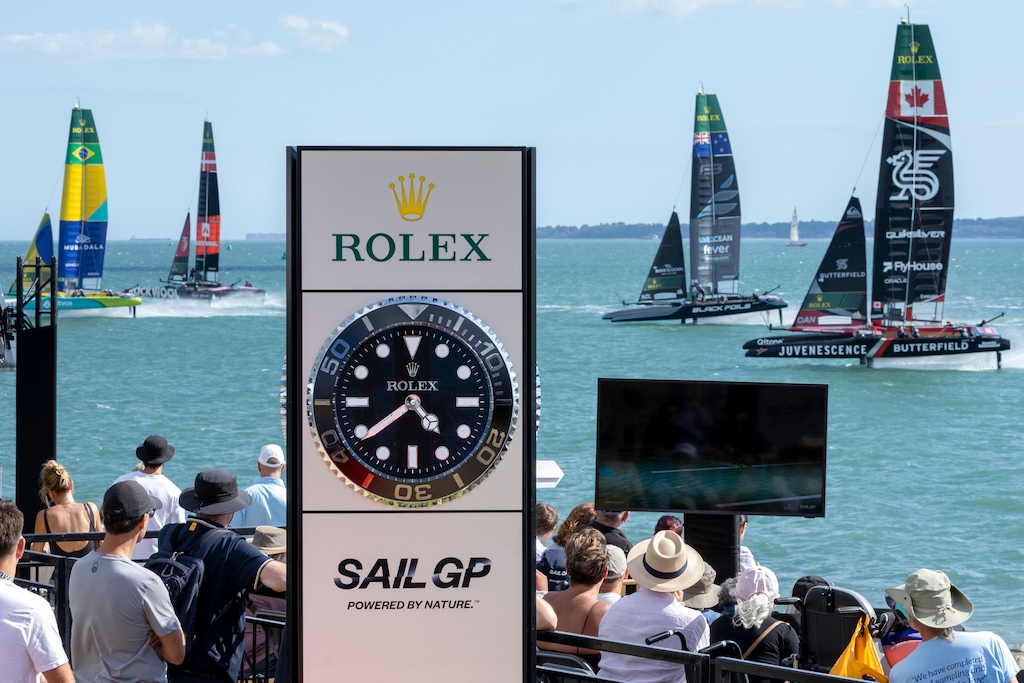
The benefit of one-design racing is that it levels the playing field. Skill becomes much more pivotal. Each boat has around 160 electronic sensors, tracking every setting of the boat, especially below the waterline, where the angle of attack of the foils is critical. Win or lose, at the end of a race day, all those recorded settings are beamed straight to the cloud and are immediately accessible to the other teams and their tacticians.
Another curiosity of SailGP is the way the finals are set up. The point system gives the race winner ten points, second place receives nine points, and so on. But the finals are where it gets interesting. The grand-finale weekend consists of five qualifying fleet races featuring all ten teams, and then the final race itself. Only the top three teams get to race in the final, with their seasonal scores effectively erased. Which means a team could be third overall for the season and still win the grand finale in the last few minutes of the season. It makes for a gripping race.