
Devon Larratt skips leg day. Always. “I mean, I might go for a walk sometimes,” he chuckles. “But otherwise, my training is like other people punching the clock. All day I do the same motions that are super monotonous to the point that it’s boring in a way most people can’t handle. There’s no scope here to be a general-purpose athlete. I only work my arms.” he says. “Actually, just my right arm”.
Larratt is the world heavyweight champion of arm-wrestling, a title he recently won—not for the first time—in front of an ecstatic crowd of 5,000 people who love to make heroes and villains out of the sport’s stars. “That the sport has so many big characters now has been really important to its growth. People love to get behind their guy,” says arguably the sport’s biggest star. “The more we can put on a show, the better”.
Certainly, there’s a touch of WWE flair to this level of arm-wrestling: the tongue-in-cheek bad-mouthing of opponents in the lead up to a match; the dramatic walk-in to the arena to booming pomp rock or hip hop. But everything about the fights are legitimate. And hard.
Any illusion that its players are not athletes is quickly dispelled watching a match: they’re soon drenched in sweat; they contort their entire bodies into the service of bringing power to their arm; they leave depleted.
“I feel terrible afterwards,” says Larratt, whose GOAT status is the subject of a forthcoming documentary. “I can barely walk. It takes two weeks before I’m functional again. It’s soul-destroying. It really does a number on you”. Larratt, by the way, is not one to get going when the going gets tough: he’s ex Canadian special forces. That’s a testament to the seriousness with which its pros take what some might perceive as more a fun activity than a battle to the death.
But that, argues Robert Baxter, seven-time world arm wrestling champion, now retired, is precisely why arm wrestling is going to be huge. “Everyone understands it. We’ve all done it and anyone can do it—anyone can train for it, anyone can start an amateur club. You don’t need any special equipment. You can arm wrestle on the floor and there’s only one clear winner,” he enthuses. Arm wrestling also offers all the thrills of a combat sport without opponents trying to kill each other. There’s no concussion. It is, in a way, family-friendly.
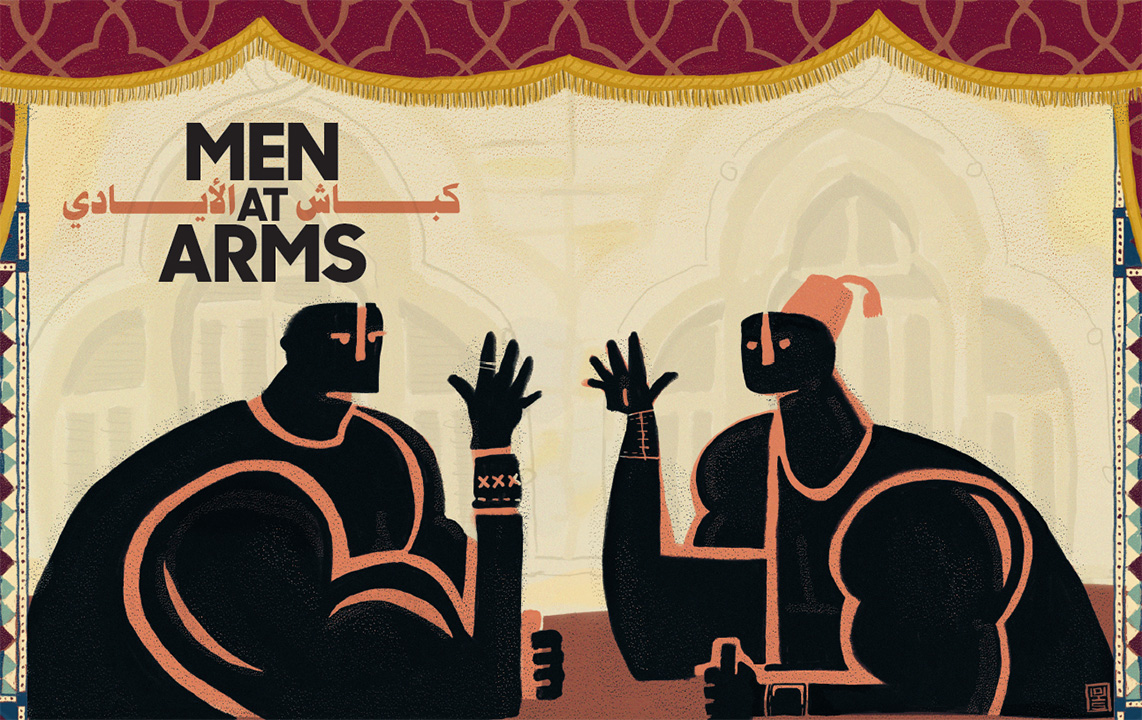
Certainly, arm wrestling is as old as the hills. Debates rage as to its origins—some claim there are depictions on ancient Egyptian tombs of men having at it; others that it grew out of feudal Japan, the country later establishing the first associations in the 1920s, or the Middle East (and Lebanon specifically), where it was long used as a way of working out conflict between villages without resorting to bloodshed.
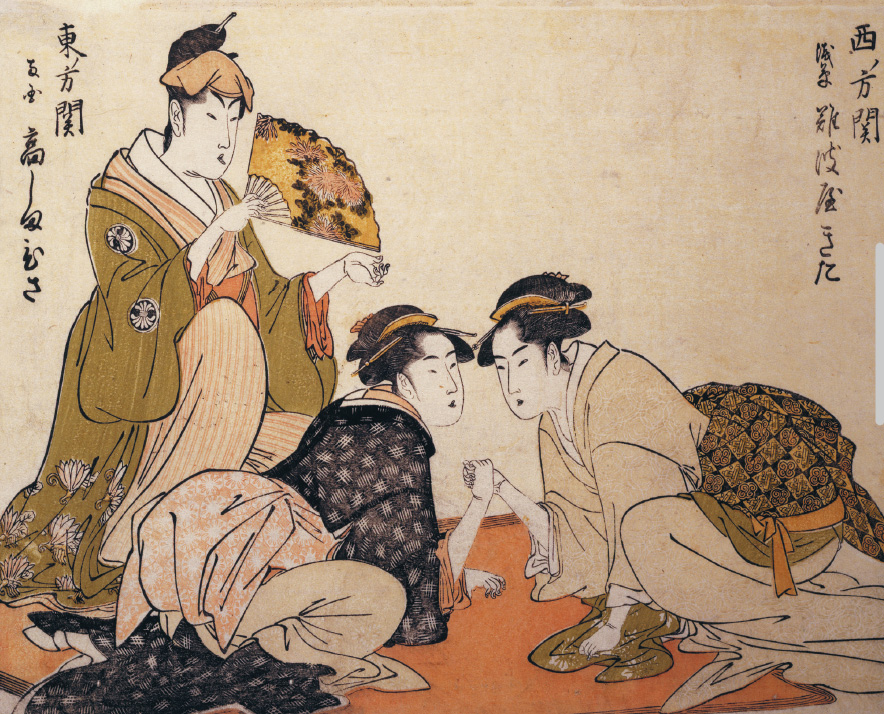
It was in California of the early 1950s that more formalised arm-wrestling competitions grew out of weightlifting or bodybuilding championships, with the first ‘world’ championship held in 1962. Its first big moment in the public spotlight? When Charles Schulz featured it in his Peanuts comic strip, at the time the most widely-read in the world. By the end of the decade the ABC TV network was televising what was being called the World’s Wrist Wrestling Championship. Later would come weight divisions and titles for left arm or right wrestlers, the elite competing in both.
Although late to this kind of more organised arm wrestling, the UAE and Saudi Arabia are rising hotspots for the sport. The Arab Arm-Wrestling Federation was founded just six years ago, and two years ago saw the inaugural Arab Arm-Wrestling Championship bring together 150 athletes from 12 countries. Meanwhile, the International Federation of Arm-wrestling’s European Arm-Wrestling Championship in Romania in June was the tournament’s biggest yet, bringing together 350 athletes from 20 countries.
“All that surprises a lot of people, even though it’s long been a national sport in some parts of Eastern Europe, for example, which is why a lot of the best players are coming from Azerbaijan, Kazakhstan, Georgia [just check out Vitaly Laletin] where the sport has been supported by governments since Soviet times, and even if it’s now up against private sector support in the West,” says IFA’s treasurer Marian Capla. “It’s promoted in schools. More and more women are getting into it, as they are boxing. There’s a huge opportunity here for arm wrestling if [the various organisations] can all come together. The biggest hurdle it faces is getting across the message that it’s not just about two guys in a pub”.
Certainly, that arm wrestling is deeply familiar isn’t to say there aren’t rules at the pro level—albeit with slight variations between leagues—as the careful, precise, often laborious set-up required before a match bursts into action might suggest. Battle takes place at a table of fixed height. Players must use their non-competing hand to hold onto a peg fixed into the table—prior to this innovation athletes just clenched each others’ spare hands instead. Referees have to ensure that elbows of playing arms mostly remain in contact with the pads on which they sit and that shoulders don’t cross the centre line nor dip below the level of the table. More particularly, they must make sure—before battle commences—that the competitors’ locked hands are straight and that thumb knuckles are showing.
“And it’s unlikely that two competitors will agree on the grip because matches are too often won or lost at the set-up,” explains Luke Pulscher, one of the world’s top referees. “It should really be called hand wrestling, not arm wrestling, because control centres in the hand”. If players can’t settle on a grip in 30 seconds, it goes to what’s called the ‘referee’s grip’—palm to palm, with closed hands and closed thumbs. And if players can’t maintain that (maybe because it’s not to their advantage, or simply because they’re too sweaty) their hands are literally strapped together.
Lifting the elbow, or making your move before the referee’s say so—like sprinters coming off the blocks before the gun—results in a foul. Some third of world titles are decided on fouls, which makes for a less entertaining bout but also necessitates the use of video playback. “The fact is that you’re talking about a very small playing field with very large players, so it’s hard to see everything,” says Pulscher.
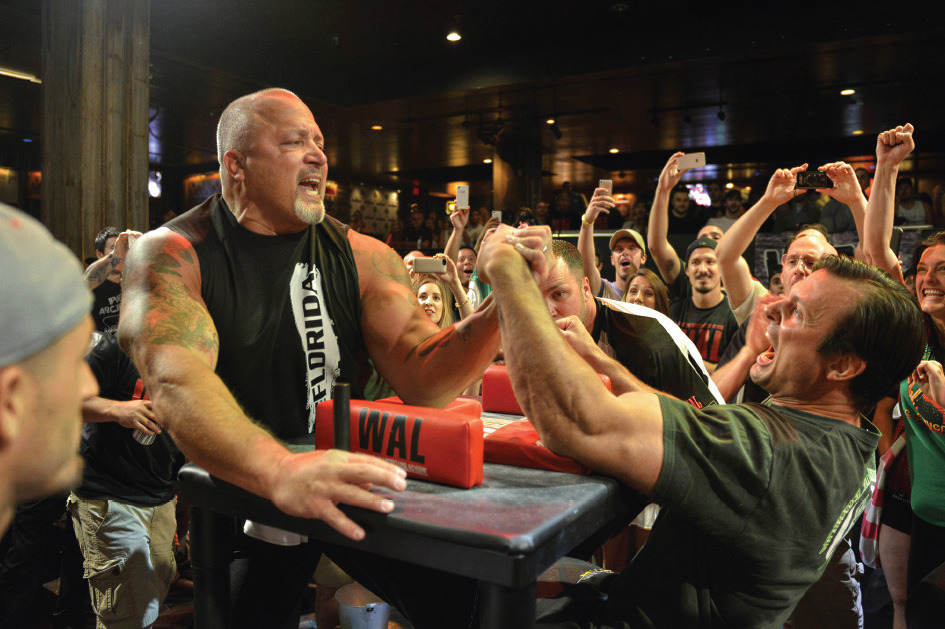
But it’s the essential simplicity of the sport that has Baxter convinced of its bright future. He is also now owner of the ‘East Vs West’ competition league, the biggest, and also of the ‘King of the Table’ competition, historically hosted in Dubai and Istanbul, and the second most influential event. He’s also a burger entrepreneur, owning 93 Five Guys franchises across the US. If fast food seems somehow at odds with professional athleticism, visit the green room at an arm-wrestling event and the smorgasbord of pizza, muffins, biscuits and Haribo perhaps underscores the demand for cheap carbs and sugar before a fight.
Baxter also has a plan. While the sport today has been a collage of various federations, promoting national or regional events, East Vs West aims, critically, to bring the best of the best together in super matches, “because that’s what people want to see: the cream of the sport facing off,” he says. It’s also following what he describes as “the UFC model”—travelling with events in order to pick up fans, “because once people see arm wrestling in person, they tend to become hardcore fans,” he reckons.
There may be 84 countries running amateur leagues through the World Arm Wrestling Federation already, but China, where there are many homegrown clubs with memberships in the thousands, has been closed off. Russia too. So, he’s driving into those territories. He’s also pushing for much greater visibility for the sport. Right now, East Vs West, for example, can be enjoyed online through pay-per-view. There’s a massive following via social media too. He’s working to bringing major broadcasters, and the big streaming services, on board.
That would allow for more sponsorship and, in turn, for the best arm wrestlers to make a better living from the sport. Right now, a handful do nicely—primarily not from any purse, but by making their online presence pay through merchandise sales and training apps—but most have to hold down a day job, inevitably leading to competitors playing on an un-level field. Baxter is tempting the broadcasters with a re-union of John Brzenk—one of the all-time icons of the sport—and Sylvester Stallone, who starred together in the arm-wrestling movie Over the Top. He’d like to host a celebrity battle between, say, Elon Musk and Mark Zuckerberg.
“Why not? Arm wrestling is the best way to settle a score without killing each other,” he laughs. “But certainly, broadcasters now see arm wrestling as having the same kind of potential as darts—which has massively taken off over recent years—and just need convincing that it’s sustainable. They want to test it, televise a limited run of shows. They can see the appeal in the theatre of it all, in those big characters”.
Take the Manifestor, for example—real name Oleksandr Telyatnik—who recently became the welterweight world champion. “He’s a young kid who can do 19 one-arm pulls-ups,” says Baxter. “I mean, he’s a freak—in the nicest way possible. And while he’s very shy off stage, he’s a great character on stage. Arm wrestling is full of characters like him who are going to be big stars”.
Not that the stars always win. Perhaps one of the biggest appeals of the sport is its unpredictability.
If you’re a betting man, don’t bet on an arm-wrestling match. The assumption that the winner will be the athlete who is biggest is wrong, even though the sport is a veritable Himalayas of man mountains. It won’t be the tallest, the most jacked, or even the youngest. It’s a quirk of the sport that age is no barrier, because tendon and ligament strength—critical to success in arm wrestling—can actually grow with age and exercise. “I joke that I used to be in really good shape,” Larratt says. “But I’m stronger now than ever”. He’s 51.
Indeed, more and more pro sportsmen and women reaching the end of their careers in other sports are finding a second career in arm wrestling—from rugby to MMA, even baseball, in which the pronation required to bat well proves particularly useful. One of the future stars of the sport is tipped to be Brian Shaw, 6’8” in his socks and four-time World’s Strongest Man winner. Many of the sport’s big names were well into their 30s before starting out.
Of course, strength matters. Some are power players —hoping to apply overwhelming force as quickly as possible, resulting in a round that’s over in seconds (matches tend to be best of seven rounds). Take a look at the physique on the 27-year-old Leonidas Arkona— like a pocket battleship on legs—and it’s easy to guess that this is his approach. It was enough for the German— at a more standard 5’11” tall though with 24-inch biceps —to recently see off Brian Shaw.
“I thought it was a safe match for me actually,” says Arkona, casually. His background as a power-lifter and sizeable online profile—something like the Mr. Beast of arm wrestling—has done so much to get younger viewers especially into following the sport. “You can have the strongest arm in the world and not get anywhere, but sometimes there comes a point when strength can be overwhelming. It’s a complex, beautiful sport even if from the outside it can look brutal. Because it is”.
Tell that to prison officer and 115kg world title holder Dave Chaffee. He broke his arm in his second match—“the sound of someone’s arm breaking is baaaad,” he reveals—but had so much adrenaline running through him he didn’t even realise. A few years ago, he had to have stem cells injected into his elbow to keep it working. He has permanent tendonitis in his forearm and shoulder pain kept him out of action for a year. “I’m always icing. I get a lot of massage. It’s all very taxing on your body. But I love how elemental arm wrestling is. Just two guys going at it,” he still enthuses.
With other bouts they’re doing that for what seems like an inordinately long time. These bouts are more a matter of grinding down an opponent, fighting back even when an inch from losing. And for this strength is not enough. Technique too is key—players become masters of not just of leverage and geometry but various moves like the hook, press and top roll, cupping, rising, posting—each finding their focus more in tricep than bicep, or back than arm, shoulder rather than palm—all executed at exactly the right time to attack or counter.
Being able to arm wrestle in the aforementioned strap is itself a particular skill-set that athletes must practise—because it changes the dynamic of the hand—and which, since it favours power players, some strongly prefer, to the point even of forcing its use. “Guys like Devon can play the table like a violin,” as Dave Knox, head umpire of the Canadian Arm Wrestling Federation puts it, partly in admiration, partly in exasperation.
Indeed, while he stresses that there’s a dividing line between the approach of the World Arm Wrestling Federation—which, he suggests, is more akin to the Olympics, with amateurs able to slowly climb the ranks, and that of East Vs West, “in which if you’re terrible on stage you won’t be invited back, because you’re not helping to make money from pay-per-view”—all the same he’s conscious of the sport’s need to entertain if it’s going
to grow. He’d like to see formats that reduce the rate of fouls —“people want to see arm wrestling not refereeing” —and more overhead cameras, so spectators can see technique in action.
To power and technique Larratt adds state of mind.
Yes, there are huge frames and massive muscles. There’s form. But there’s also willpower. “There’s a technical flow to arm wrestling and parts that are important in that flow are the ones really fought over—and that’s where the mental game really matters,” he says. “You can try [for a position], fail and it’s catastrophic. So you may opt for something safer. Then the battle is in convincing the other guy that he shouldn’t try for that special spot either”. There’s a lot of talk at the table, especially from Larratt. Some matches are more psychological warfare than a battle of arms. Some of those battles are happening inside the player. Just ask Matt Mask.
“I’m not as strong as most guys I compete with. They’d lift the s*** out of me in a gym,” says the 44-year-old multi-world champion arm wrestler by night, oil industry field specialist by day. “But I can channel my adrenaline. I put myself in a very bad place coming to the table. I pick a fight with my demons. That’s good for people watching—carnage sells—even if it means my opponent thinks I’m a prick. But I’m a firm believer in being able to channel [that negative energy], that your body is then far more capable of doing extreme things.
That also means it’s not so family-friendly when I’m up there. I speak pretty fluent French”.
Mask was 16 when his dad told him about a local arm wrestling competition and he decided to enter—despite being warned that, “since it was all loggers and miners, I’d probably get my arm ripped off,” Mask recalls. He won C$45 and a t-shirt, and a fascination was ignited. “A decade into it the pinnacle for me was if someone paid your airfare and you might win C$500. That was the dream. I never thought that arm wrestling could be another means of income for me. But it’s a sign of how quickly arm wrestling is progressing. It’s my passion. And it’s only going to get bigger”.