
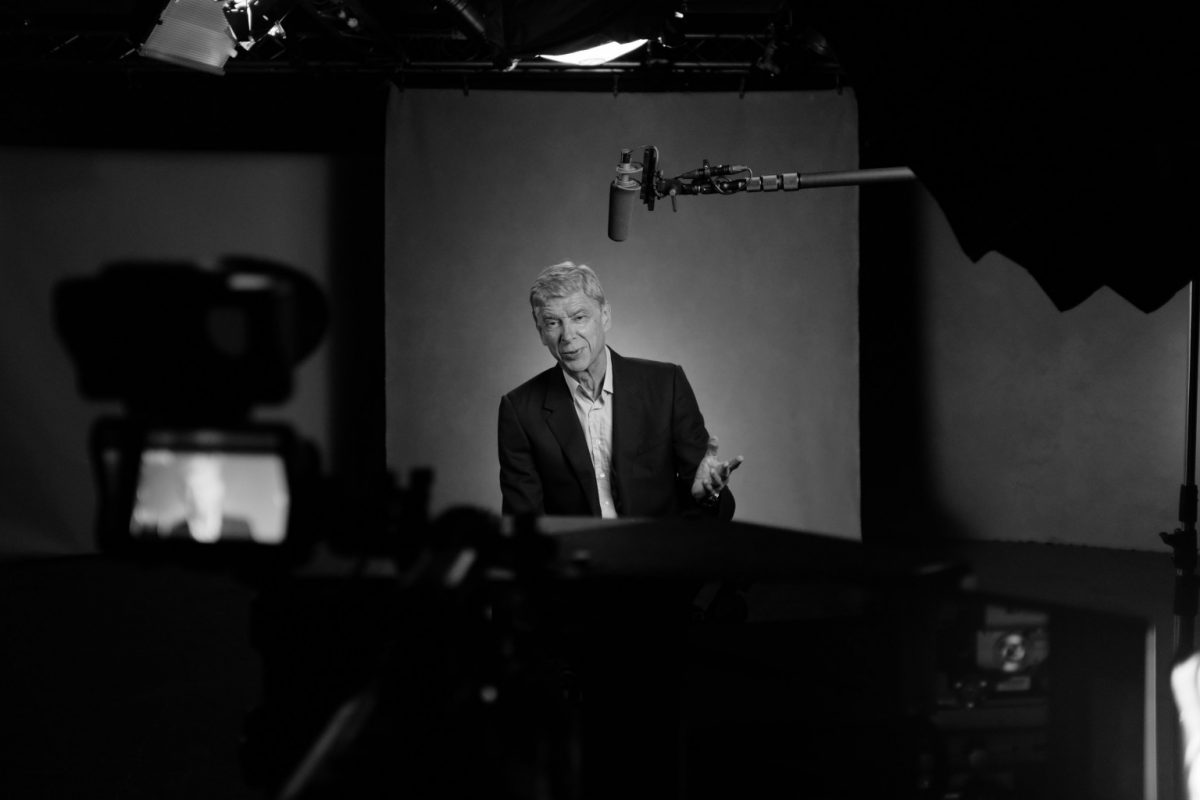

Even to those who never fell in love with the game of football, Arsène Wenger needs little introduction.
Heck, the long-time Arsenal manager was so iconic during his 22-year tenure with the team that his name was even used in an episode of the 00s comedy The IT Crowd as the perfect example of a name an outsider could drop into any conversation and look like you know what they’re talking about–and probably fuel an argument. Quite simply, the man has a legacy few can touch.
Four years removed from his retirement as a manager, the current Chief of Global Football Development for FIFA, 72, is ready to look back. In Arsène Wenger: Invincible, a new documentary on Discovery+, available to watch through Starzplay and Jawwy TV in the Middle East, he recounts his legendary career–including his ‘Invincible’ season with the club–in his own words, with an starkly honest look at his triumphs and personal failures, and the ways in which his obsession with winning both drove him forward and ate a piece of his soul.
To celebrate the film’s release, Esquire Middle East sat down with Wenger to discuss his past, present and future, with an honest discussion of his personal flaws, as well as his thoughts on the 2022 World Cup in Qatar, coming this autumn.
But this isn’t just a retrospective. From our conversation, it will be clear that Wenger is not done with this sport by a longshot, and could return to management once his FIFA tenure runs out at the end of this year.
And before you ask, no, he hasn’t seen Ted Lasso. We checked.

Read our full interview with Arsène Wenger:
Has the way you love football changed over the years as you have changed and transitioned to different phases of your professional and personal life?
Arsène Wenger: Well, I think the way I’ve loved football has not changed because what I love in football is to do something together, and to make it as beautiful as you can. I believe that has not changed. Have I changed? Basically, I’ve matured. And all I believe as well you never change completely your character.
I was still happy when I win and unhappy when you lose. And of all the ways you behave, what changes with age is you anticipate better what’s going on, what will happen, and you measure better the consequences of what you say, and what you do.
Do you find you savour your wins more, or do you move on more quickly?
Arsène Wenger: It depends. I spent the last 31 years — 28 years by being in the top four, 21 or 22 times in the top three. So, you win more than you lose. What is terrible for us is losing games. Overall, I would say when you lose a game, it stays with you. It haunts you forever. This has always been difficult to handle for me. That’s why maybe why I survived.

You said in the documentary that the desire of hating to lose makes you sometimes inhuman. Could you elaborate more on what you meant by that?
Arsène Wenger: Well, I would say but you could become aggressive, angry, dismiss people who were not guilty, and you lose perspective. That’s why sometimes you can handle people around you in your environment in a way that they don’t deserve. With time going on, I isolated myself more to not do any bad things.
You mentioned that your father never complimented your wins. He always said you can do better. Do you feel that impacted your managerial approach and leadership style?
Arsène Wenger: Well certainly, it is a consequence on my character. When I was a kid, of course sometimes I wanted a compliment, but I didn’t get one. But at the end of the day in my life, it helped me because I looked always at how I can do better. And that’s an important ingredient to improve.
I would say many people arrive early in their life at a good level and don’t move too much anymore because they don’t have that internal desire to improve overall. I don’t think it makes you more happy, but it helps you certainly to question yourself.
Do you hold other people to the same standard or is that really just something that you’ve kept for yourself?
Well, no. I tried to do that with lots of people, to try to get them to think to have a clear picture of what could be the next level. I believe that on a daily basis, it’s very difficult to know where exactly we stand, so communication is important. You can give you a clear image of where you are and where you could be as well, and that is important.
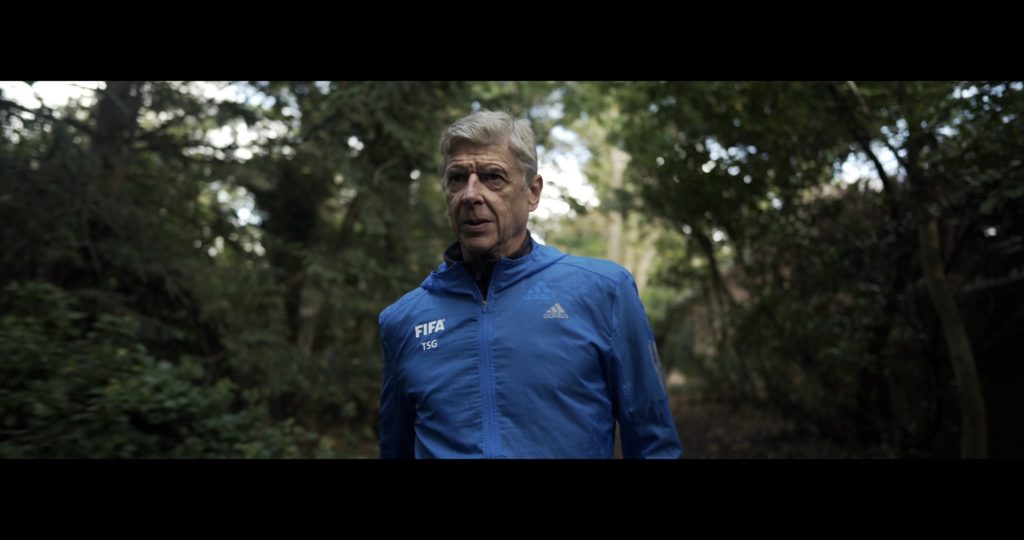
What are your thoughts on the increase in significance of the Middle East to football and both football to the Middle East vice versa?
Arsène Wenger: Before Christmas I spent some time in Doha because there was the Arab Cup. I just came back from Abu Dhabi as well where they had the Club World Cup. Overall, it looks like football is taking off in the Middle East. It looks as well that there is quite a big competition going on between Qatar, the United Arab Emirates, and Saudi Arabia to hold big sporting events.
There is a huge desire in the Middle East to be a part of world sport. On the footballing side, I think that the structured world, the organization of the game, is increasing very quickly. The fact that they are involved as well in developing European clubs makes them conscious of what is needed, and certainly helps them to develop.
For me, football is taking off in the Middle East. How far will they go, that will be interesting to see.
What do you think they need to do to continue to grow in the right direction?
Arsène Wenger: What they need to do is to educate their children. There was a huge study made in 205 countries that shows there’s a huge correlation between the quality of education and results in the top team. The best top FIFA ranked teams, the best 20 have the best education of youth.
And that means the identification of talent, the quality of the youth program, integration into the first team. That is very important for them to do it.
Absolutely. What do you think distinguishes the upcoming World Cup in Qatar? What’s on your mind most regarding the event, anything specific?
What distinguishes it is — it will be the most compact World Cup in history. This is the first time you have 32 teams in the same city. You could watch four games in the first 12 days. Not to mention, you will have 48 games in the first 12 days. Even in the first 16 days, you will have four games per day. That means it’s a possibility for fanatics to watch more football than usual. Then I would say what is special as well is it’s the first time it happened in the middle of a European season. The players who go there have fewer fatigue problems. They will have already played 20 games.
There will also be less preparation time for the national teams. They join on the 10th of November, and then on the 17th, the first teams start to play. They have only one week of preparation. So, that would be very interesting.
On the other hand, I believe the pluses are that it can be a fantastic world feast where you have 32 countries together in a very small space. As well, it will be very important to organize that well, so as not to have any disruptive behaviors.
You yourself never have coached an international team in an event such as the World Cup. Did coaching France or England never interest you, or is that something you would still consider doing in the future?
Arsène Wenger: Well, I’m not considering that at the moment. My mission is at FIFA, and that finishes in November. Until then, I will not do anything. I don’t think so. I always preferred always a club life. Now that I am a bit more quiet, why not. I don’t know. Honestly, it’s very difficult to know.
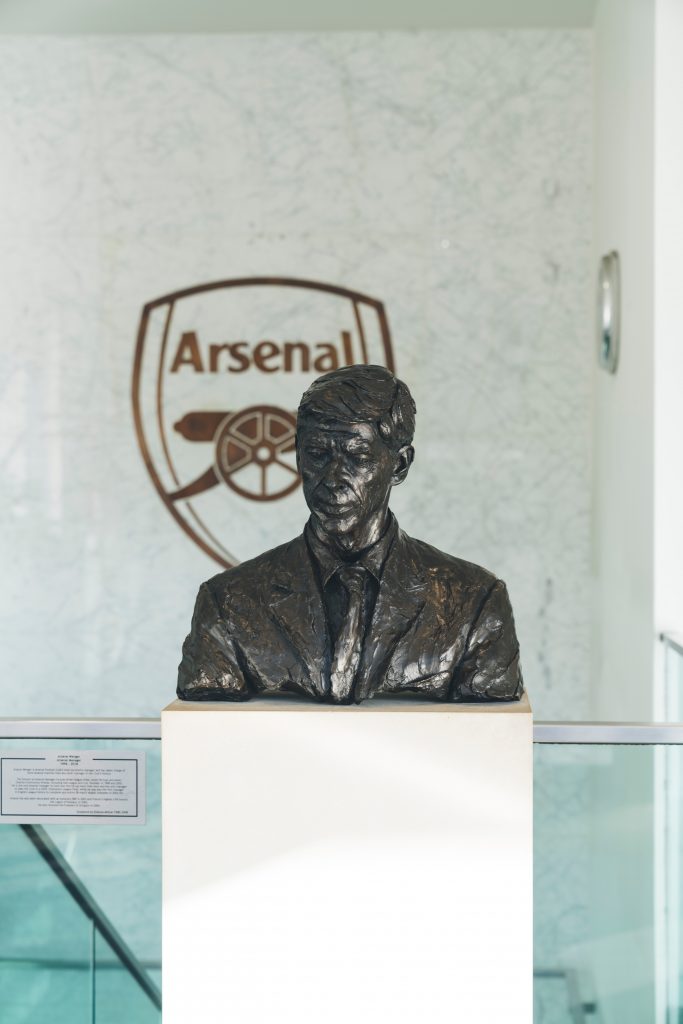
But what made you not want to before?
Arsène Wenger: For me, national team coach is a part-time job. You have 10 games per year. I love to be involved every day and to play 60 games. I love competition. I played every year at least 60 games. I love that, to be involved on a daily basis.
There’s a lot of changes you want to institute to the game itself. What’s driving that mission and what changes do you feel are most close on the horizon?
Arsène Wenger: Look, I’m guided by only one thing is to give every talent a chance. My program is called ‘to give every talent a chance’. That means that I want to develop the structures of the youth development in most of the countries, especially in Africa. When you look at the situation of the whole world, it’s very difficult to comprehend that when you live in Europe.
But in the rest of the world, there’s a lot of work to do. I have produced a talent development scheme to go into every country and help them to develop the youth team football. On the other hand, I have developed and analysed the game with specialists who could collect the data and explain well what’s happening in the game in all the competitions.
Overall, I’m involved a little bit in international match calendar—even a lot. People have spoken a lot about that, but that’s 10% of my mission—90% is of less interest for people. What is the most important for me is to develop football all over the world and give every talent in the world a chance to play.
What do you feel that most people most misunderstand about you?
Arsène Wenger: I don’t know how I am perceived by people. And so, I don’t know. Honestly, I cannot answer that question. I am somebody who is passionate, genuine, and lived his life with the values that are important for me. I must say, I am very grateful to the football world because I had until now a great life in this game.
I never had to compromise with the values and the integrity that I think is important in this job. I’m very grateful for that.
Are there moments that you’d think back to more than others?
Arsène Wenger: Well, I would say every defeat is hard and the moments. At the end of a day, the most important for me is the values you generate when you lead, that is more important. When you win something, the next day it starts all again. So, it’s important to win because you know that you can do it.
But I feel what remains at the end of the day is what you leave behind. And I’m very proud of what I left behind me at Arsenal. And I’m very proud of the values I generated at the club, and that’s still going on now.
What are the most challenging parts of managing a team through an unbeaten season?
Arsène Wenger: What is most challenging is the consistency and the quality. You can never have one weak moment in the way you want to do things. It was a very interesting to see that people can raise above their ego. That is more about what’s going on with me, though. Am I better than others and looking for self-confidence, and just being capable to focus on how can I be better, how can you make the team better? I’m grateful to have experienced that because it’s a unique challenge and a unique experience.
It’s just driven by excellence on a daily basis and refusing to be mediocre at any moment of a season.
What do you feel that this documentary captures that nothing had before?
Arsène Wenger: I don’t know. Maybe, people had an image of me of maybe I’m a bit more human than people think I was.
And one last quick question—have you seen Ted Lasso? Do you like it?
Arsène Wenger: Have I seen what?
The TV show, Ted Lasso?
Arsène Wenger: No.