

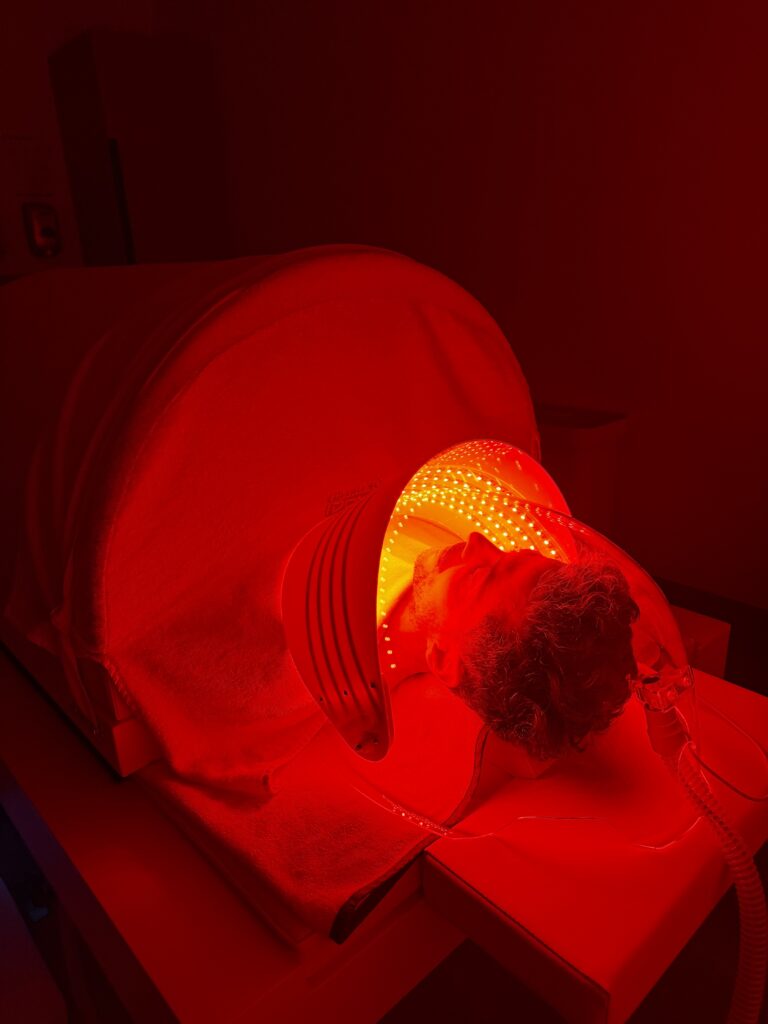
You may have seen people on social media wearing glowing masks, sleeping in red-lit tubes, or standing in front of red panels. While it may look like sci-fi, it’s just red light therapy.
Red light therapy is a type of phototherapy that uses low levels of red light to stimulate blood flow and energise cells, which may support healing and recovery. It can be done in a doctor’s office or longevity clinic, though a growing number of at-home devices have also entered the market.
The technology itself is relatively simple. It uses continuous beams of low-energy red light, typically between 600 and 700 nanometres in wavelength. “What it does is basically energise your cells,” explains Dr Flutura Hasa Harold, GP longevity doctor at Longevity Hub by Clinique La Prairie.
Across wellness and recovery spaces, it’s skin health that has become the most visible draw, with users turning to it for wrinkles, age spots and sagging skin through its potential effects on circulation and collagen support.
Pain relief is another area attracting attention. Because the light does not penetrate deeply into the body, it appears most effective for issues involving muscles, tendons and ligaments close to the skin’s surface. By stimulating cellular activity, it may help reduce inflammation, improve circulation and support tissue repair.
“Red light therapy is increasingly explored in longevity and wellness settings for skin rejuvenation, collagen support, recovery, inflammation modulation, scalp and hair wellness, and broader healthy ageing support,” explains Dr Harold. “It is popular among both men and women. Men are often particularly interested in it for recovery, performance optimisation, scalp and hair wellness, and skin health.”
For skincare, devices are typically used for around ten minutes, three to five times a week, with results dependent on consistency rather than intensity.
“For best results, consistency matters more than intensity,” says Dr Harold. “Depending on the objective, treatment area and technology used, protocols often involve several sessions per week over a sustained period.”
The current appeal of red light therapy reflects a shift in how recovery is treated in modern wellness culture, where sleep quality, inflammation, skin health and physical resilience are increasingly viewed as part of performance itself.
Red light therapy is generally considered safe for most people, though experts recommend seeking guidance from qualified healthcare professionals before starting any new wellness or recovery treatment.