


People often tell me that I’m the first Chief Wellness Officer they’ve ever met. It’s not surprising. The role is very much a modern-day creation – but what is more surprising is where the story began.
When I was 18, I moved to the UK and got a job collecting empty glasses at a crowded bar. I needed work and I wasn’t very good behind the bar, nor did I not understand a word of English. The job was simple: walk through the crowd, pick up glasses, and clear tables.
One night a glass shattered on the floor. A man looked me in the eye, then knocked his friend’s glass down beside it, and told me that I now had two messes to clean up. When I got down on my knees to pick up the broken glass, he and his friends started nudging me with their knees, trying to knock me off balance.
That was my last shift. That year I learned something that stayed with me. Staying calm is a skill. If you lose your centre, the room wins.
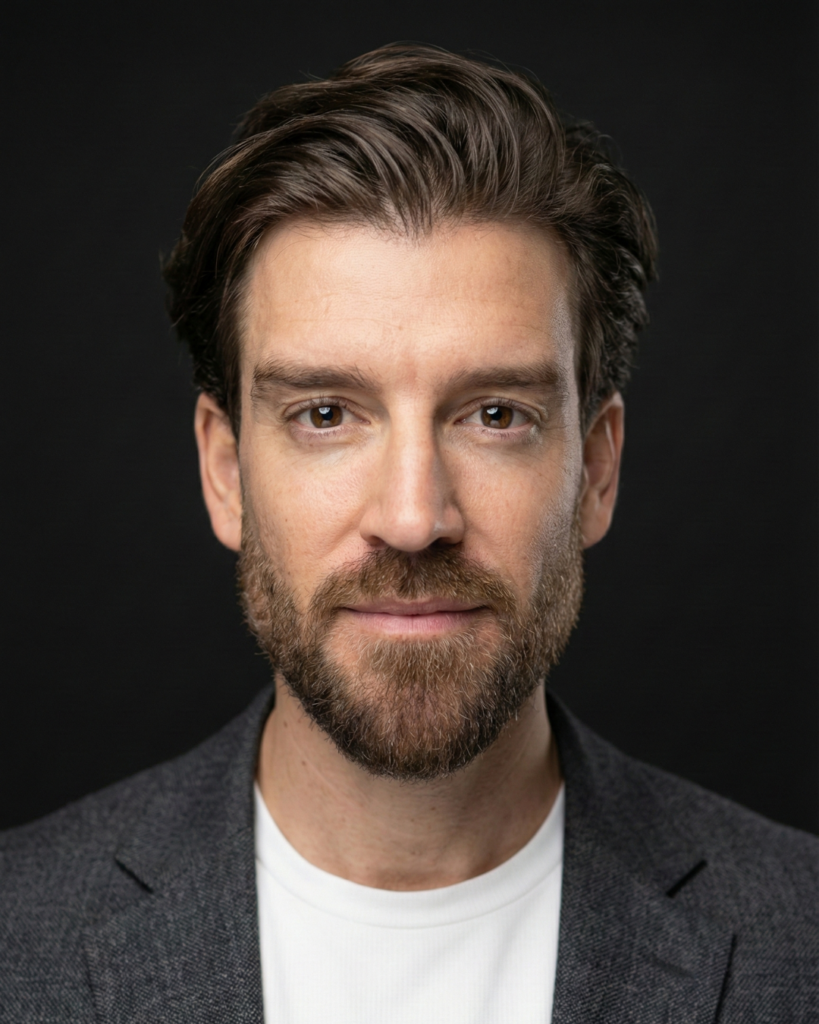
Years later, working in DIFC, I started seeing the same wobble in boardrooms. Different clothes, different stakes, cleaner floors, but the same loss of centre. I realized the shoves were no longer physical. They were digital. Endless meetings. Late-night calls. Constant connectivity. Travel. Fragmented attention. A day so badly designed it leaves nothing for the evening except what is left of your nervous system.
That, to me, is why the Chief Wellness Officer exists.
Modern work is stretching human limits. The Global Wellness Institute notes that health and wellbeing is shaped not just by individual choices but by the environments people live and work in, with environmental, socioeconomic, and lifestyle factors driving 80 to 90 percent of health outcomes.
The 2026 Global Wellness Trends Report adds that nonstop digital stimulation is keeping nervous systems in a chronic state of fight-or-flight. In that context, the modern workplace often asks for the biologically contradictory: constant availability, prolonged sitting, cross-time-zone alertness, and clear thinking in a state of continuous interruption.
Slowly, companies are finally discovering that the cost of ignoring these issues is not philosophical. It is financial.
One recent analysis from Gallup’s global workplace research found that only about 26 percent of employees are truly thriving at work, while employees with higher wellbeing are 1.5 times more likely to achieve their goals than those with low wellbeing. The takeaway is simple. Human energy is not a soft variable. It is an operating variable.
The mistake many organizations still make is treating health as an individual responsibility floating somewhere outside the system, as if a person can meditate their way out of a badly designed culture. But there is only so much an individual can do when the environment is built against them. If the schedule destroys sleep, if meeting culture kills focus, if leadership models reactivity instead of regulation, then the problem is no longer personal. It is structural.
This is where the conversation usually gets uncomfortable, because what I have seen most in senior leadership is not simply burnout. It is the normalization of dysfunction.
Executives wear exhaustion like a badge. Four hours of sleep becomes commitment. Midnight emails become proof of seriousness. On the outside, many look successful. The car, the watch, the title, the polished presentation. On the inside, many are wired but tired, emotionally flat, running on caffeine, urgency, and fake dopamine. They are applying small band-aids to large biological wounds.
And that state changes how people lead.
Behaviours are caught, not taught. What leaders normalize becomes what teams absorb. That is why employee health becomes an ethical issue as well as a commercial one. If a company knowingly extracts more energy than it returns, if it builds systems that deplete people and then calls the fallout resilience, it is not just inefficient. It is irresponsible.
The irony is that this conversation is becoming more urgent precisely when companies are investing most aggressively in artificial intelligence.
At first glance, AI and wellbeing look like separate topics. They are not. The more work is automated, the more valuable distinctly human capacity becomes. AI can process information, summarize patterns, automate workflow, and speed up the distance between point A and point B. But it cannot replace the human qualities that still matter most in leadership: judgment, empathy, ethical reasoning, emotional regulation, and the ability to make good decisions under pressure.
Those qualities are biological.
A sleep-deprived executive does not make the same decisions as a rested one. A burned-out team does not innovate like an energized one. The research is starting to reflect that reality. In a 2025 workplace wellbeing study commissioned by Indeed and conducted by Forrester Consulting, employees at companies that prioritize wellbeing were markedly more adaptable to AI than those at companies that did not, 72 percent versus 46 percent. Wellbeing, in that sense, is not separate from future-readiness. It may be one of its preconditions.
So the future problem is not that AI will make wellness irrelevant. It is that AI will expose which organizations have protected human capacity and which ones have quietly drained it.
This is why I increasingly think the next generation of leaders will need to think more like corporate athletes. For an athlete, speed matters. For a leader, cognitive capacity matters. Focus matters. Recovery matters. Emotional control matters. The ability to stay clear in chaos matters. In an age of accelerating technology, biology becomes more important, not less.
That is also why the Chief Wellness Officer should not be misunderstood as the person in charge of yoga classes and fruit bowls.
At its best, the role is strategic. While HR manages contracts, the Chief Wellness Officer ensures people are mentally, physically, and emotionally able to fulfil them: analysing data—from insurance trends to burnout signals—to address structural drains on focus and energy. Traditional wellness programs often sit on top of the business as a ‘perk’. The Chief Wellness Officer should work inside the business as infrastructure.
The wider market is already moving in that direction. The Global Wellness Institute (GWI) estimates the global wellness economy reached $6.8 trillion in 2024 and is projected to approach $9.8 trillion by 2029. More tellingly, the MENA region is already among the fastest-growing regional wellness economies in the world.
The UAE is part of a region that is starting to see human performance as strategic infrastructure.
And that is really the point.
The Chief Wellness Officer is not a trendy title in search of a problem. It is a response to a problem companies can no longer afford to ignore. Modern work has broken something fundamental in how people live and lead. The data now shows up in performance, retention, stress, adaptability, and cost. The human consequences show up in quieter places too. In shorter tempers, flatter evenings, poorer decisions, and leaders who arrive home with nothing left for the living room after giving everything to the boardroom.
In Antifragile, Nassim Nicholas Taleb argues that systems become fragile when they are pushed beyond their natural limits or designed without room for stress and recovery. Organizations are no different. When human capacity is treated as infinite, the system eventually pays the price.
By 2030, I believe most large organizations will have some version of this role. Not because wellness became fashionable, but because biology became impossible to ignore.
Companies have spent decades optimizing technology, strategy, and capital. The next frontier is optimizing the people making the decisions.
Artificial intelligence may process information faster than humans ever could. But organizations will still rise or fall on something machines cannot replicate: human judgment, human resilience, and the capacity to stay centred when the room starts pushing back.
In the age of AI, wellness intelligence may become the most human advantage of all.
Byline by Diego Carrete