
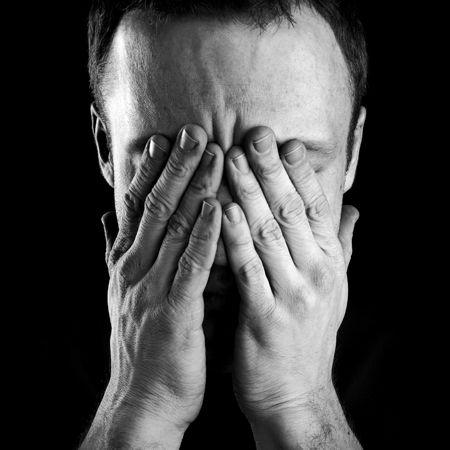

We need anxiety.
I know, it’s hard to believe anxiety could ever be a good thing, especially when you’re gripped with that terrible feeling of worry or unease. But when a vicious dog is racing towards you, or when you’re standing too close to the edge of a crumbling cliff, anxiety is actually doing a very important job of protecting you. It’s acting as an internal warning system.
So why is it also such a problem?
Well, it’s a problem when this warning system won’t switch off or when the alerts it sends to you are out of proportion to the actual threat you are facing. And we all know this feeling – heart pounding, palms sweaty, thoughts muddled, hands tingling. All this and no sign of a crazy dog or treacherous cliff – in fact, no clear reason at all.
Or is there? Look around you. It’s 2015 and we are living in the age of anxiety. Don’t believe me? Well, did your grandfather turn on his phone at 7am to juggle angry emails from his boss while simultaneously booking a flight, updating his Facebook status, resetting his bank account password, and finishing a Twitter spat with someone he’s never met?
Okay, it sounds silly but there’s a serious point here. New research is showing that multitasking is a myth, and that rather than doing ‘everything at the same time’ we are in fact simply switching between tasks too quickly, the result of which is an increase in both adrenaline and the stress hormone cortisol, leading to anxiety.
What is anxiety?
So what is actually happening when we’re freaking out but are not in imminent physical danger?
The answer is this: We are over-estimating the threat we’re facing and so our brain is sending signals that we’re under pending attack and our body is reacting accordingly. This is great if you are going to suddenly need to make a split-second decision to either stand very still or run away from that crazy dog, but it’s a major problem if you’re just lying in bed at night staring at the ceiling.
Let’s take a step back in history to examine the idea of a threat. For primitive man, the threat was always something external, something or someone coming to attack him. For us this might be the case, but often it isn’t. In fact, regularly the attack we are dealing with is coming from within, our own negative thoughts. It’s that constant ‘What if, what if?’ spiral which can quickly degenerate into what is known as ‘catastrophic thinking’ – always imagining the worst possible outcome for any challenge we are facing in our lives, even if that outcome is highly unlikely.
This kind of negative thinking makes it difficult to concentrate, sleep, or function in our daily lives, and so we get into a vicious cycle. And it’s this link between physiology and psychology – the way our body is functioning and the way our mind is working – that is at the centre of the anxiety problem. In the end, we start to feel anxious about feeling anxious.
”It’s 2015 and we are living in the age of anxiety. Don’t believe me? Well, did your grandfather turn on his phone at 7am to juggle angry emails and Facebook?”
The manageable
Here it’s important to look at two different levels of anxiety – mild and severe. Let’s start with mild since everyone at some point suffers from this.
Mild anxiety comes in many forms. It might be the kind that you feel before an important event in your life – a job interview, for example. Once the event is over, the anxiety will dissipate. Alternatively, it could pop up when there don’t appear to be any obvious causes and from there become a persistent problem.
So if it does become persistent, what should you do? First, you need to look for the root of the problem. What is on your mind at the moment? Are there any feelings (such as sadness or anger) that you’re supressing and not dealing with? These emotions soon turn to anxiety if not recognised and accepted. This is where talking to close friends or family is really helpful, because the issue may be invisible to you but clear to someone on the outside. You can also try relaxation and breathing exercises, and start observing how you ‘talk’ to yourself, cutting off the spiral of negative ‘What if?’ thoughts before they get out of control. Exercise, yoga, and meditation can also provide a good deal of relief.
Lifestyle choices are also important. Yes, you know where I’m going with this – good sleep is vital so it’s time to cut out anything that might help cause insomnia, and that means watching your consumption of sugar, caffeine and alcohol while also ensuring you exercise regularly. You might also want to add my favourite sleep cocktail: 5,000 IU of vitamin D3, 400 mg of magnesium, and 3 mg of SR (slow release) melatonin.
The ugly
If you’re suffering from severe anxiety, you are finding it difficult to function at all in everyday life. This is a very scary feeling. You may be suffering from phobias or panic disorders (such as recurring panic attacks), or it might manifest as a social anxiety disorder. Severe anxiety can also take the form of GAD, or Generalised Anxiety Disorder, which is a long-term condition where the person feels constantly anxious.
The good news is that there are positive steps you can take no matter how severe the anxiety. The first is to speak to someone, most likely in this case it would be your doctor, social worker, or a counsellor. Many people suffering from severe anxiety find psychotherapy (such as cognitive behavioural therapy) extremely helpful.
A great organization to turn to for help is HeartMath (www.heartmath.org). They have an inexpensive heart rate variable (HRV) biofeedback-like monitor that can be a huge help in reducing stress and anxiety.
Can you let go?
In the end, uncertainty about the future is part of life, and accepting this goes a long way to dealing with the causes of anxiety. The more we’re able to accept what we can’t control, the more likely anxious thoughts will evaporate.
As I mentioned, anxiety often manifests because we are supressing real emotions, and so in mild cases simply admitting to ourselves that we feel sad or angry goes a long way to allowing the real emotions to come out, rather than blocking them. For severe cases, speaking with a professional and, at times, taking medication can go a long way to alleviating the pressure and allowing you to lead a normal, healthy life.
 Graham Simpson, MD is Chief Medical Officer and Founder of Intelligent Health, a preventive medical centre located in Jumeirah. Dubai. He graduated from the University of the Witwatersrand Medical School in Johannesburg, South Africa, and is board certified in Internal Medicine and Emergency Medicine. As a founding member of the American Holistic Medical Association (AHMA) Dr Simpson is also a licensed homeopath.