
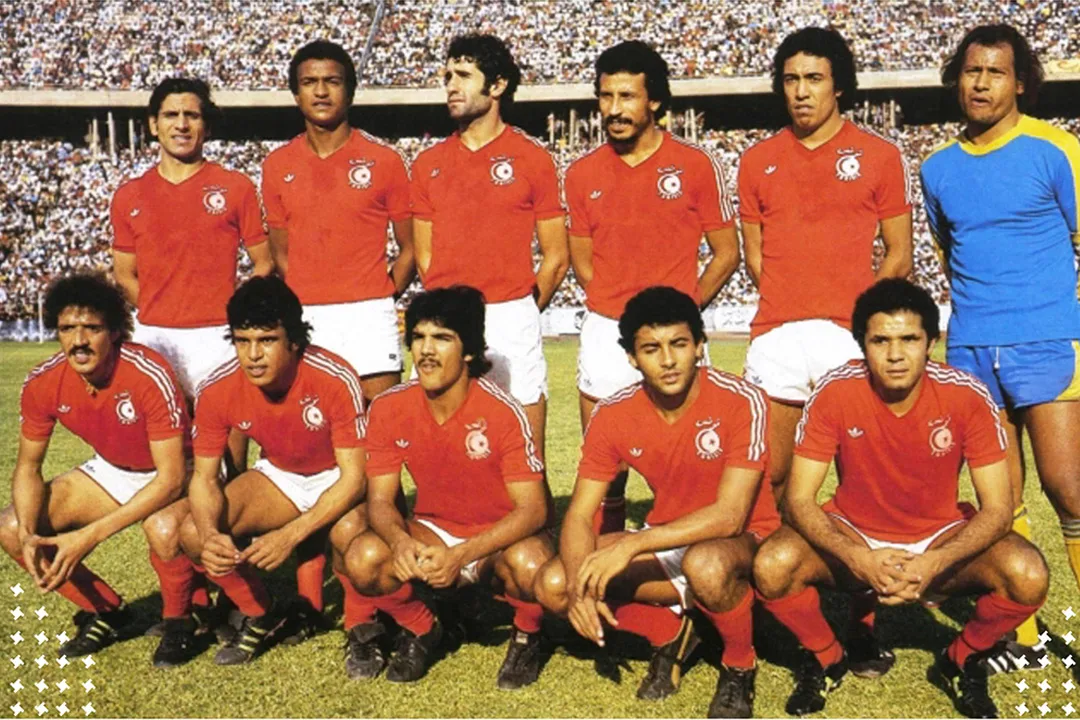
In an exclusive excerpt from his new book ‘Yalla! The Turbulent History of Arab Nations at the World Cup’, author Ali Khaled tells the tale of Tunisia’s history-making exploits at the 1978 World Cup in Argentina.
For modern day Arab football fans, the familiar figure of Tarak Dhiab is one of BeIN Sports’ leading analysts on regional and European football, weekly imparting his expertise to audiences tuning in from the Middle East and Africa. Dhiab’s elegance continues to have a major influence on Tunisian—and Arab—football and sport. He was named the greatest Tunisian footballer of the 20th century, and served as Minister of Youth and Sports in Prime Minister Hamadi Jebali’s government between 2011 and 2014. Before that, however, he was one of the greatest Arab footballers of all time. The 1978 World Cup in Argentina would prove the ideal platform for the then 24-year-old to showcase his remarkable range of skills.
One of the beautiful things about the World Cup in this era was that it could still throw up complete unknowns to all but the most knowledgeable of football fanatics. It is hard to imagine that someone of the Dhiab’s calibre could today remain unknown to most fans, and more importantly, opposition coaches and players. In fact, it is unlikely that a reigning African Footballer of the Year, as Dhiab was from 1977, would not already have been snapped up by a team from Europe’s top leagues.
Dhiab had turned professional six years earlier, and remained at his hometown club of Espérance Sportive de Tunis until after the World Cup in Argentina. By then, the world knew exactly who he was, his extraordinary passing and dribbling skills no longer a well-kept secret. Comparisons with some of Europe’s top midfielders would follow, but Dhiab chose to play for Saudi club Al Ahli. After two years in Jeddah he would return to Esperance for another ten years.
During his two spells, Dhiab delivered outstanding service for the Tunisian club, scoring over 100 league goals, winning the Tunisian Ligue six times and the Tunisian Cup five times. Surprisingly, the only other player from Esperance in Tunisia’s 1978 World Cup squad was Témime Lahzami, who had developed a telepathic understanding with Dhiab as the performances in Argentina demonstrated. Even in a team of overperforming heroes, however, Dhiab stood out as generational talent.
Still, as manager Abdelmajid Chetali and his players landed in Argentina for their campaign their group rivals had little knowledge of Dhiab, the best player in Africa, and his teammates.
***
Before the 1978 World Cup, no Arab or African nation had ever won a match at the tournament. Of course, thanks to a qualifying allotment not exactly weighed in the favour of the global south, not many had even had the opportunity to achieve that elusive feat.

Egypt had one shot at glory in 1934 but lost to Hungary 4-2, while Morocco’s three matches in 1970 had produced losses to West Germany and Peru, and a draw against Bulgaria. Eight years later, it was Tunisia’s chance to break the duck. To say they were given little chance of success in Argentina by the world’s media would be an understatement. After all, those were still the days when minnows were expected to show up and meekly accept their fate; to make up the numbers.
Tunisia had been drawn in an expectedly deathly Group 2 that included reigning world champions West Germany; Poland, who had finished third in 1974; and, their first opponents in Argentina, a Mexican team which had won the CONCACAF Championship a year earlier and was expected to easily post two early points on the board. However, Chetali had other ideas.
Just three months ahead of the World Cup, Tunisia reached the semifinals of the Africa Cup of Nations only to lose 1-0 to eventual winners Ghana. However, the team’s resilience had been apparent in the prolonged qualifying campaign that secured their spot in Argentina.
The first three rounds of the CAF qualification campaign had already seen Tunisia overcome Morocco, Algeria and Guinea to reach the final, round robin group stage with Egypt and Nigeria.
Going into the last match, Tunisia were two points behind Egypt and needing to beat the group leaders to qualify for their first-ever World Cup. Egypt only needed a draw to reach their second. Against the odds, the Eagles of Carthage went on to pull off a trick that, in the coming months, would become familiar to anyone who underestimated their capabilities.
With a barnstorming performance that would go down in Tunisian football folklore, Chetali’s team destroyed Egypt 4-1 at Stade Olympique El Menzah in Tunis on December 11, 1977. The power and versatility of their display against an opponent that had beaten them 3-2 in Cairo just two weeks earlier, was, for anyone watching, a stark warning.
Apparently even their next opponents, Mexico, were not paying enough attention.
***
Things did not go according to plan for Tunisians on their World Cup debut. Perhaps Mexico were right to expect an easy win. At Estadio Gigante de Arroyito in Rosario on June 2, Chetali’s team started cautiously, as if overly conscious of their underdog status. When Mexico took the lead through captain Arturo Vazquez Ayala from the penalty spot after Amor Jebali had handled just before halftime, few football fans around the world were surprised.
But whatever Chetali said at halftime inspired Tunisia to deliver their finest half of football to date. What had weighed so heavily on the players in that first period was gloriously cast aside in 45 extraordinary minutes, perhaps the best sustained World Cup performance by an Arab nation to this day.
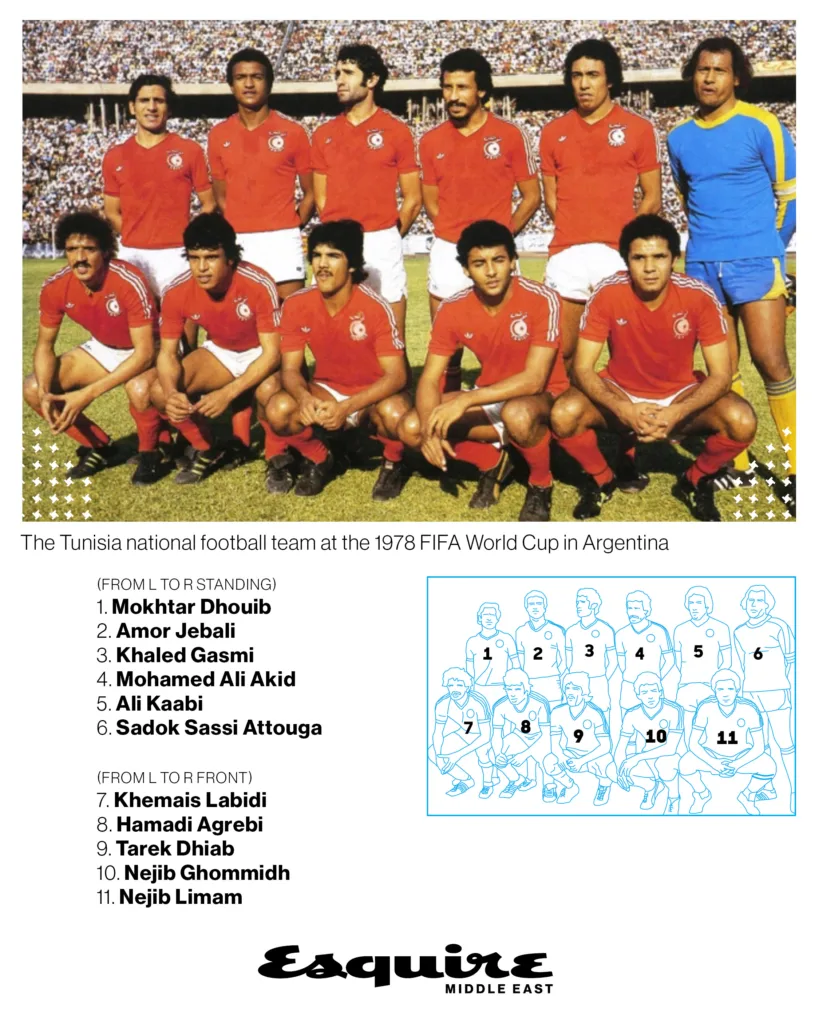
Mexico simply could not cope. Tunisia, orchestrated by the irrepressible Dhiab, simply tore them apart with a sustained display of one-touch, counterattacking football. The equalizer came on 55 minutes when defender Ali Kaabi, at the end of a flowing team move, curled a low shot past Jose Pilar Reyes in Mexico’s goal.
The Tunisians were now in the ascendancy, but for 25 minutes a retreating Mexican team managed to keep them at bay. It couldn’t last, however, and their rearguard was finally breached with 10 minutes left; another dazzling sequence of passes prompted by captain Temime Lahzami and the irrepressible Dhiab ended with Nejib Ghommidh finishing expertly to give Tunisia a priceless lead. Endearingly, the goalscorer received a kiss from a photographer behind the goal.
There would be no way back for the shellshocked Mexicans, and the mercy bullet came in the 87th minute as another Tunisian fullback, Mokhtar Dhouib, stormed into the penalty area to finish into the roof of the net; 3-1, and history made. Tunisia had just recorded the first-ever World Cup win by an Arab or African nation, and in their very first attempt. The match was a collective triumph for a wonderfully talented team and the methodical Chetali. Above all, it was an individual masterclass by Dhiab, who was showing he could play even on the biggest of stages.
The world swooned at his silky skills, which in time would earn him the nickname of “Tunisian Platini”. Gliding around the pitch effortlessly, it was no stretch to say that Dhiab was one of the standout players at this early stage of the 1978 World Cup.
Speaking to the BBC in 2008, Dhiab said: “At half time, coach Chetali told us we treated our opponents with too much respect. He insisted we could still win the game if we tackled hard and imposed our self-belief and confidence,” he said. “It was a great moment. Our joy knew no bounds.”
With West Germany and Poland having played out a dull goalless draw the previous day, Tunisia, remarkably, were top of their group. They could now dream of an even bigger prize, qualification to the second round, a barely considered notion only hours earlier.
Up next were a strong Poland team that included 1974 World Cup top scorer Grzegorz Lato, elegant captain Kazimierz Deyna and a young rising star by the name of Zbigniew Boniek. At Rosario Central Stadium on June 6, there would be no repeat of the result against Mexico for Tunisia, though their performance was no less impressive for long periods.
Just as in their first match, Tunisia conceded moments before halftime, a woeful miskick by Kaabi allowing the nimble figure of Lato to volley home from close range. Tunisia came storming back in the second half and the World Cup was denied a truly spectacular goal when another outstanding passing move by Tunisia ended with Lahzami volleying past Jan Tomaszewski in the Polish goal only to see the ball strike the crossbar and bounce back into the grateful goalkeeper’s arms. The captain threw his arms towards the heavens. Despite a flurry of late close calls for Tunisia, Poland held on for a hard-fought win.
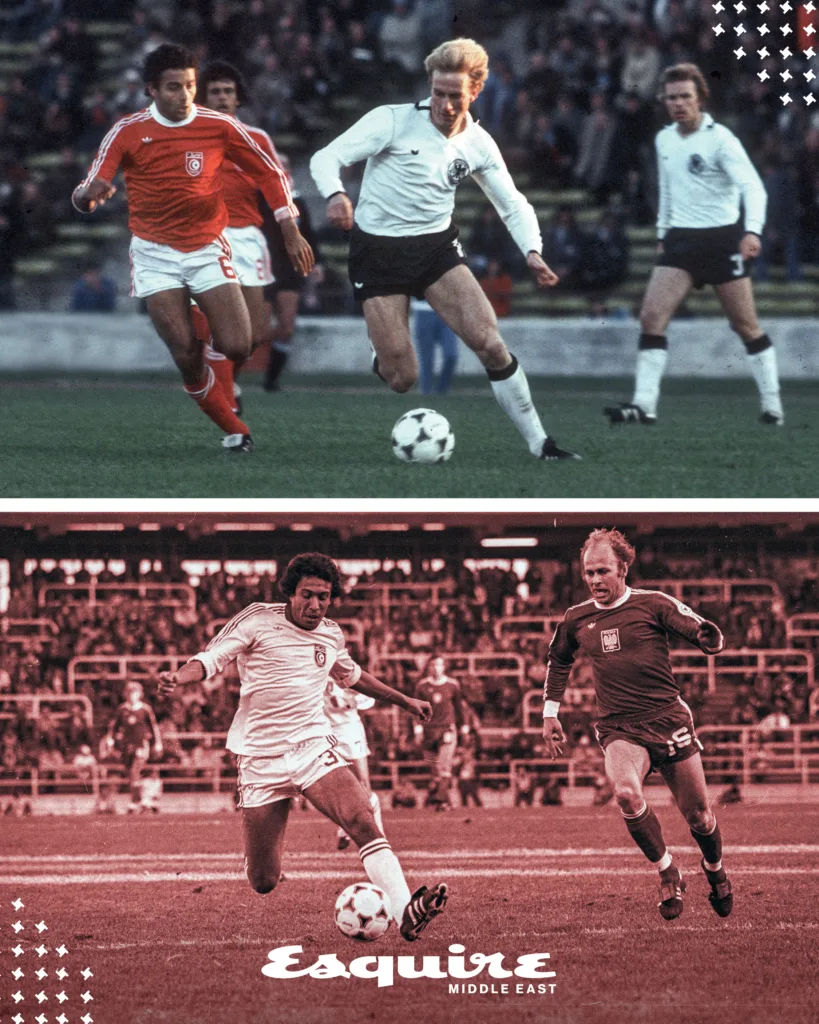
“[We] played really well and should have won,” Dhiab told the BBC. “We missed about four or five chances.” Tunisia could still qualify to the next stage provided they beat the reigning world champions West Germany at the Estadio Cordoba on June 10.
Though including the likes of goalkeeper Sepp Maier, Bertie Vogts, Dieter Muller, Rainer Bonhof and the brilliant Karl-Heinz Rummenigge, Helmut Schon’s team was not quite the equal of the Franz Beckenbauer-inspired one that had claimed the World Cup trophy four years earlier. In hindsight, a Tunisian shock would not have been the miracle it might have seemed at the time. Once again, the Eagles of Carthage gave as good as they got.
As the teams traded chances, mostly from distance, goalkeepers Maier and Mokhtar Nailli stood out in a mostly underwhelming match, with the Tunisian stopper saving spectacularly from a trademark Bonhof thunderbolt.
In the end, the world champions, with a formidable front four of Rummenigge, the Mullers—Hansi and Dieter—and Klaus Fischer, were happy to settle for a point. For the brave Tunisians, a commendable 0-0 final score was not enough for a top-two finish in the group and subsequent progress to the second group stage.
When the rules changed in future tournaments, their third place finish might well have seen them progress to then yet to be introduced Round of 16. In 1978, sadly, the dream was over. Still, Tunisia’s historic feats in Argentina set the standard for the likes of Algeria, Morocco and Saudi Arabia to record their own famous World Cup victories in the next two decades. The Eagles of Carthage may have just fallen short, but Chetali, Dhiab and the rest of Tunisia’s beloved Golden Generation had ensured their names will forever be inscribed in African and Arab football history.
Yalla! The Turbulent History of Arab Nations at the World Cup, by Ali Khaled (Empty Quarter Press) is available now.