

Cardiovascular disease (CVD) is the number one cause of death around the world, with almost 20 million people dying each year – the majority either from heart disease or stroke. Every 29 seconds an American has a heart attack, and every 53 seconds an American has a stroke. In the UAE, the average age of first-time heart attack patients is up to 15 years younger than the global average.
As Mark Twain once said: “It ain’t what you don’t know that gets you in trouble. It’s what you know for sure that just ain’t so.” And we are in trouble for this very reason. Because “what we know for sure that ain’t so” is why so many of us are dying due to CVDs.
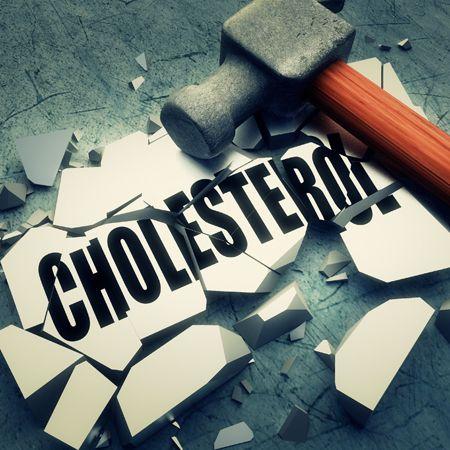
Misinformation spread on a massive scale has led to this problem. To be specific, it is not cholesterol, but rather grains and sugar – and the effect these have on insulin – that are the main cause of these CVDs. Yet for decades we have been told to watch our cholesterol levels and avoid eating those harmless saturated fats, and all the while we have been given cholesterol-lowering drugs that have close to zero effect on the problem.
The heart of the matter
Cholesterol is in fact, essential for life. Most of your hormones and all cell membranes are made up of cholesterol. Membranes are like gatekeepers, policing what gets in and what gets out of cells. And here is where it gets interesting: Very little of your cholesterol actually comes from diet. Your body produces most of it – as in upwards of 90%.
What this means is that cholesterol is not only not bad for you, but it is good for you. To take it a step further, it is not even about being good or bad – it is quite simply an essential component of life.
And now let’s round things out by explaining the most important piece of all this: The idea behind cholesterol bashing is that it clogs the arteries with plaque. Everyone has been taught to fear clogged arteries, and with good reason. Your arteries carry oxygen to vital organs such as the heart and brain, and clogging of these arteries causes heart attacks and strokes.
But cholesterol is not the culprit here. Plaque that accumulates on the inner walls of your arteries is made from various substances that circulate in the blood, and cholesterol is one of those substances. The thing is, it is not the presence of cholesterol that is the problem, it is your lifestyle – particularly diet – which causes that cholesterol to become a problem.
Specifically, when we eat those Western diet foods heavy on the grains and sugars, our insulin levels rise. The insulin response then leads to the oxidization of LDL cholesterol (not actually a cholesterol but rather a low-density lipoprotein that contains cholesterol). And that is what we need to fear, because the process turns the very harmless LDL-C into the very dangerous LDL-P, which then goes to work on the arteries – resulting in that plaque buildup. (Note that this is why you should only cook foods with butter, ghee, beef fat, or coconut oil. Plant oils oxidize LDL!)
Cholesterol is nothing but the innocent bystander caught up at the crime scene. The insulin response caused by the food you eat is making you sick, and those cholesterol-reducing statin drugs are having virtually no effect on the actual problem.
“In the UAE, the average age of first-time heart attack patients is up to 15 years younger than the global average”
How the misinformation started
One man played a big role. It was in the 1950s when Ancel Keys, an American scientist and the father of the heart-cholesterol hypothesis, delivered findings that showed a connection between fat consumption and an increased risk of heart disease.
The problem was that Keys, for whatever reason, was very selective in presenting his findings. He “cherry picked” results from seven of the countries included in the study, and left out data from the remaining 15 countries. And he focused on fats and left refined carbs and sugars – which were in fact the primary problem – out of the equation.
Why did Keys do this? Conspiracy theories abound. We do know that he was keen on promoting his conclusions at a political level. We also know that a closer look at the results from that same study showed that when all 22 countries were included, the results point to lower instances of heart disease in the countries that consumed more saturated fats (which in fact was due to those countries eating less refined carbs and sugars).
And there were opponents from the outset. As Keys started making his noise, a British physician named John Yudkin stepped up to challenge him. Yudkin knew that sugar was the cause of heart disease, and his book “Pure, white and deadly: How sugar is killing us and what we can do to stop it” presented very clear evidence. But Yudkin was more or less ridiculed by Keys, and for whatever reason Key’s work became accepted as medical dogma – despite being full of very obvious holes that many responsible scientists and nutritionists and doctors in addition to Yudkin saw right through and clearly countered.
Keys got the podium, and the result was that over the next six decades in the United States and other countries, government policy would help promote a diet that led to not only heart disease but all cardiovascular diseases – which in turn would be treated with medication that had little-to-no effect on the problem. And those meds would go on to be the best-selling drugs in the history of pharmaceuticals.
Angry yet? Sure you are.
Takeaway
It’s hard to conclude that no intentional deception was at play here. Keys was a smart man who was likely not acting alone. But while such a line of thought may lead to a fascinating discussion, the important thing for us is to take stock of where we are at today.
And where we are at today is about as follows: While most physicians may be well meaning, they are unaware that a lot of the scientific evidence they cherish is based on a very, very shaky foundation. What this all means is that you cannot play a passive role in the “doctor-client” relationship.
If I had to give you just one takeaway, it would be to get a clear understanding of how diet and nutrition really affect your health. By focusing on that you will learn a lot about how the body works in general, and how bad food choices make us sick and keep us that way – and how good food choices do just the opposite.
 Graham Simpson, MD is Chief Medical Officer and Founder of Intelligent Health, a preventive medical centre located in Jumeirah. Dubai. He graduated from the University of the Witwatersrand Medical School in Johannesburg, South Africa, and is board certified in Internal Medicine and Emergency Medicine. As a founding member of the American Holistic Medical Association (AHMA) Dr Simpson is also a licensed homeopath.