
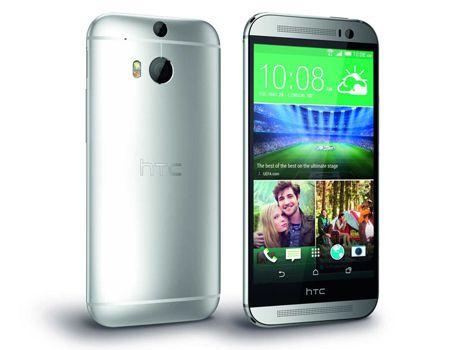

The smartphone is now the “everything machine” and the HTC One was widely regarded as the best phone on the market in 2013. As its successor, the HTC M8, is released, Esquire speaks to HTC’s VP of design, Scott Croyle, about the creative design process and relevant innovation. Here are his ten lessons:
The public usually doesn’t know what it wants
In some ways they know what they want when they’re out shopping, but if you ask people what they want in two or three years, you’re going to get “I want a flying car”, which sounds awesome, but I think it’s really difficult for people to root themselves between the present and also envision what’s three or five years down the line.
Follow your own path
Of course we are familiar with the competition, but the one thing that is in our nature at HTC is that we plot our own path and have our own perspective. When we come in and do a front-facing speaker it didn’t matter that nobody else was doing that, in fact we saw that as an opportunity. This year when we pushed forward on the all-metal uni-body — which was hard to do — there was this big engineering breakthrough but we now have something that nobody else has.
We’re already seeing the future now
Have you seen the [2013, Joaquin Phoenix-starring]movie Her? If you look at the interface he has and the voice recognition technology and the humanity he has behind the voice, that’s all pretty cool. Once we get over the hang-up of talking to our phone, it can be quite a powerful feature, and once you start using it, you start using it all the time. It becomes normal, then it takes you to the next level where it can get more intuitive or it can get more responsive and natural. There’s your generation change. I look at my son, who’s never been without some sort of touchscreen technology in his life and that’s now his understanding of how the world works. That was once the future.
Hire your target audience
People are going through a complex set of decisions to buy a phone, or any product — from hearing about marketing to going in and picking up a phone, to living with it, seeing what their friends are using and so on. So when you talk about what type of people you hire and the type of people we target they have to be one and the same. We hire people who are naturally curious and have passion and drive and at the end of the day, they’re all the same people we’re targeting.
Improve the basics
The battery life is a big issue for users, so we have a new mode called extreme power saving mode. Imagine you’re going out for the night and you have five percent battery life left. You put it in extreme power saving mode and you could last for up to 15 hours. And what you can do in that mode is make and receive phone calls, you can send and receive text messages and you can do a manual pull on receiving and sending emails. There will still be that day when you’re running out of power and so just finding a smart way to handle that situation is a universal problem addressed.
Technology is tactile
We’re really well known for industrial design. The new HTC One’s housing is about 90 percent metal. We wanted to introduce a new finish, which is this beautiful, hairline texture — something you mostly see this on watches or stereo equipment — so this is a big challenge in terms of making a new finish. We polish it to a mirror finish, we then apply the anodising on top and it turns out to be something really amazing. I think we’ve came up with something that stands out from the crowd. We retain the design DNA but take it a huge step forward in terms of execution.
There always room for more innovation…
It’s not just a case of adding more megapixels to the existing camera, you have to innovate the process. Look at the duo camera, it’s remarkable what we can do with that. It’s actually not taking another photo, what it’s doing is capturing depth information. We can then make tools that allow people to be really creative. It’s these little moments that show there is lots of room for innovation, and these innovations come from ideas like “Oh maybe we can re-architect our sensors on our phone to run on this low-power state.” We then create some experiences that are quite magical. So there’s a lot of room for innovation.
…But make innovation relevant
Everyone’s talking about innovation, but is it going to make a difference in your life? We want to be different, because that’s important, but you have to do it better and smarter. In the design department the phrase we use is “meaningful, relevant innovation.” For example, we realised that the number of times people hit the power button to unlock their phone throughout the day is huge. Up to 150 times for some people. So, what if you could just pick up your phone and double tap to check the time or double tap to turn it off? Innovation has to be functional.
Build an emotional connection
Philosophically, if we talk about a beautiful product there’s beauty through craftsmanship, beauty through simplicity and beauty through emotion. From a hardware perspective it’s good to make something beautiful, but it also needs to be something that you want to carry round and hold, so that’s an emotional connection. All we do is sit down and think: “How can we inspire people who love HTC phones?” and how could we make that emotional connection to them? We’ve overhauled the operating system to have more colour and more bold use of colour so if you go to the calendar or text messages you see hints of blue and if you go on an entertainment app there’s some orange. It’s not like someone sits around and thinks “oh I like those colours” or “I don’t” because you can change those colours to whatever you want, but it’s the reality of providing them something different, just that little spark that gets a response of, “Oh that’s nice, that’s fresh, that’s modern,” and what we refer to as “Little moments of delight” that create that emotional connection.
Target the creative, influential people
I hope that everyone will love this phone, but the people that we really target are those we refer to as “exceptional people who have unbridled creativity.” It comes from the idea of going out to dinner with a group and they are the person at the table who you find yourself asking, “What are those trainers you’re wearing” or “What’s that phone you have?” and those are the people that we try to connect with. They’re the people looking for something different, people that don’t just go with the status quo. They’re looking for some little spark that not only sets them apart but also inspires them and gets them excited for the project, such as the industrial design and the colour and what we’re doing with the camera, and all of these intuitive things that bring moments of delight.
Stick with it
“Sometimes I get asked, ‘So, where does the magic come from?’ but design is not about magic, it’s about passion and the ability to stick with it. When we hire designers we look for them to have that natural, curious aspect to their personality and that passion and drive. Yeah, we all draw pretty pictures, but at the end of the day it’s that execution part that is so difficult and that’s where you’ll stand apart — by really delivering something amazing and as a breakthrough because of that passion and drive.
Wearable tech is coming
“There’s potential, but it could be the combination of taking three or four items, putting a little twist on it and just getting the right mix of features and experiences that could get it there. There’s some exciting stuff coming with the whole “Google on the wrist” and it all sounds pretty powerful. Whether the watch is more of a companion device than a standalone device, remains to be seen.”