
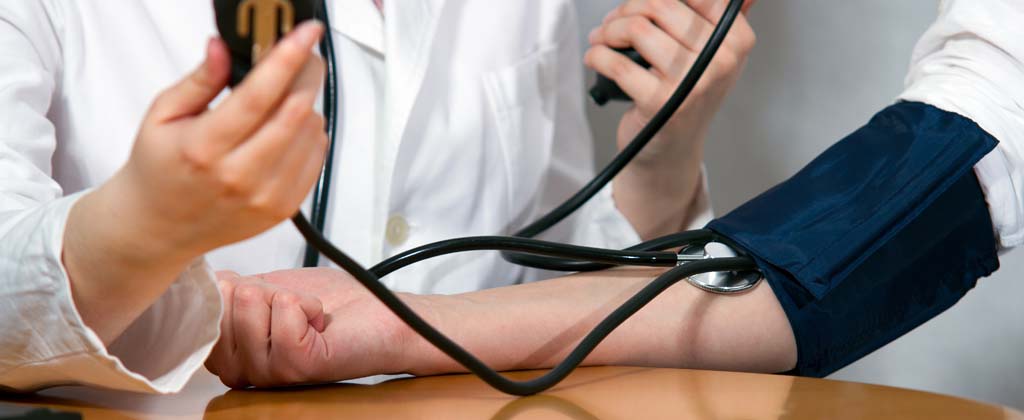

The very process of having the cuff strapped around your arm by the nurse or physician leads many to suffer from a condition known as “white coat syndrome.” That’s when your blood pressure rises mainly due to your nerves being put to the test. The anxiety experienced in that clinical setting can make many of us rather uneasy.
Whether white coat syndrome is a health risk or not is up for debate. But what we do know is that chronic high blood pressure does put us at risk for serious health concerns. To get the hard numbers out of the way: Borderline high blood pressure would be anywhere from 120 to 139/80 to 89. An ideal blood pressure is therefore 120/80 or lower. Anything above 140/90 is getting into the higher range and needs to monitored closely and possibly treated.
What is blood pressure?
In a nutshell, blood pressure is the strength of your blood pushing against the sides (walls) of your arteries. Your systolic blood pressure – represented by the top number – is the pressure on your arteries when your heart beats. As for the lower number, that’s your diastolic blood pressure, which is the pressure on the arteries in between beats – so when the heart is “at rest.”
Your heart is like a pump, and it beats about 100,000 times a day. There are two sides to the heart: The right side pumps blood to the lungs to pick up oxygen; the left side receives the oxygen-rich blood from the lungs and pumps it to the body through your arteries. The veins bring the blood back to the right side of the heart after the oxygen is delivered to the tissues.
As your blood travels throughout the arteries, it delivers energy and oxygen to your organs and muscles. The arteries manage the flow of blood, and in so doing they bear the pressure of that blood pushing against the insides of the artery walls. These walls contain tiny muscles that are there to keep them in their shape – and become wider or narrower when necessary.
But if your blood pressure is chronically high, the muscles in your artery walls will be strained under that excess pressure, and they will respond by pushing back harder. Over time this can make them grow bigger, which leads to thicker artery walls. Thicker artery walls mean there is less space for the blood to flow through, and so we begin the vicious circle that leads to blood pressure being raised even further as more and more pressure is exerted on the walls.
“Approximately 40% of the adult Emirati population suffers from high blood pressure. And it’s likely expats are the same”
The dangers
Often referred to as the ‘silent killer,’ high blood pressure (or hypertension) increases your risk of a heart attack or stroke. And it’s a problem on a global scale, with the World Health Organisation (WHO) reporting that one in three people worldwide are affected, leading to just under 10 million deaths every year.
The main concern with high blood pressure is that it can lead to heart attack or stroke. If the walls of your arteries become blocked – or if they burst – the part of the body that gets its blood from that artery will be starved of the energy and oxygen needed. If this occurs in the main arteries leading to the brain or the heart, then a stroke or heart attack occurs.
The reason we often refer to high blood pressure as the silent killer is because it can quietly damage your body for years before any symptoms develop. As those arteries become thicker and narrower, blood flow can be reduced to all parts of your body, including your organs, arms, and legs. In addition to the heart attack and stroke risk, damage from high blood pressure can include kidney failure, eye damage, peripheral artery disease, sexual dysfunction, bone loss, aneurysms in any artery throughout your body, and more.
Maintaining a healthy blood pressure
In the UAE we have bad news on the blood pressure front, with approximately 40% of the adult Emirati population suffering from high blood pressure. Living in the same environment, it’s likely that expats are facing similar health challenges. The main factor at play here is our diet. I don’t want to oversimplify. There are of course genetic factors that account for some of those suffering from high blood pressure, as well as factors such as stress, smoking, alcohol abuse, and other poor lifestyle choices. But the Western diet, heavy on sugars and grains, is at the core of the problem here in the UAE and in all parts of the world where this type of diet is prevalent.
As you know from my past articles, the problem with this type of eating is that it leads to chronically elevated blood glucose levels and chronic insulin spikes, which in turn leads to silent inflammation in the body and those cardiometabolic diseases – of which hypertension is included.
Research has uncovered that our hunter-gatherer forefathers had blood pressures of 115/75, and this did not rise with age. Our hunter-gatherer days came to an end around 10,000 BC with the start of the Agricultural Revolution and the introduction of grains to our diet on a mass scale. Things of course got much worse in the 20th century as big business found out that stuffing our foods with chemicals and sugars just made us want to eat more and more of them (meaning more profits for them).
Do get your blood pressure tested regularly, and if you find that it is high, look first at your diet and other lifestyle factors. If it is very high, then medications will be necessary as you look to bring the concern under control. But I caution against being told that this is a genetic condition and therefore treating only with pharmaceuticals. From my experience, genetics accounts for about 15% of those suffering from high blood pressure, with lifestyle responsible for the rest.
 Graham Simpson, MD is Chief Medical Officer and Founder of Intelligent Health, a preventive medical centre located in Jumeirah. Dubai. He graduated from the University of the Witwatersrand Medical School in Johannesburg, South Africa, and is board certified in Internal Medicine and Emergency Medicine. As a founding member of the American Holistic Medical Association (AHMA) Dr Simpson is also a licensed homeopath.